
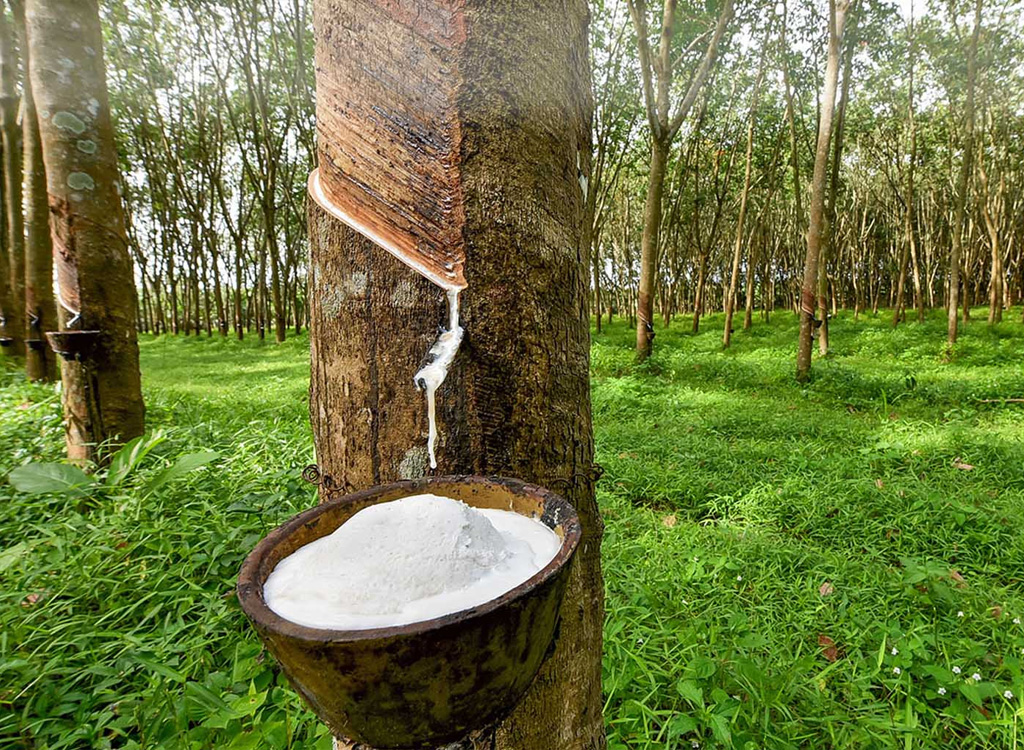
Sri Lanka’s rubber exports continue to decline as US-linked tariff pressures and weakening demand prompt machinery manufacturers to avoid imported components, the head of the Plastics and Rubber Institute of Sri Lanka (PRISL) said.
PRISL President K.A.C. Vidyaratne said exporters supplying rubber components to firms in Latin America, which then ship finished machinery to the United States, are reporting that buyers increasingly avoid imported inputs subject to component-origin tariffs.
Under US rules of origin, tariff rates depend not only on the final exporting country but also on the origin of individual components.
Sri Lanka was hit with a reduced 20% reciprocal tariff in August, in addition to a 10% baseline tariff applied universally.
Vidyaratne said higher prices for machinery containing imported rubber components have pushed US manufacturers and consumers to recondition existing machinery rather than replace it, extending typical replacement cycles of five to 10 years.
Sri Lanka’s export earnings from rubber and rubber-finished goods fell 5.92% to $793.7 million in the first 10 months of the year, official data show.
Export Development Board (EDB) Chairperson Mangala Wijesinghe last week noted the unusual drop below $950 million at this point in the year, compared with historical annual earnings of $1.3 billion to $1.4 billion.
The EDB said the decline was driven by a sharp 15.21% fall in exports of pneumatic and retreaded tyres and tubes.
Earnings from rubber and rubber-finished products dropped 5.4% year-on-year in October to $80.12 million.










Leave a comment