
By Wasantha Rupasinghe
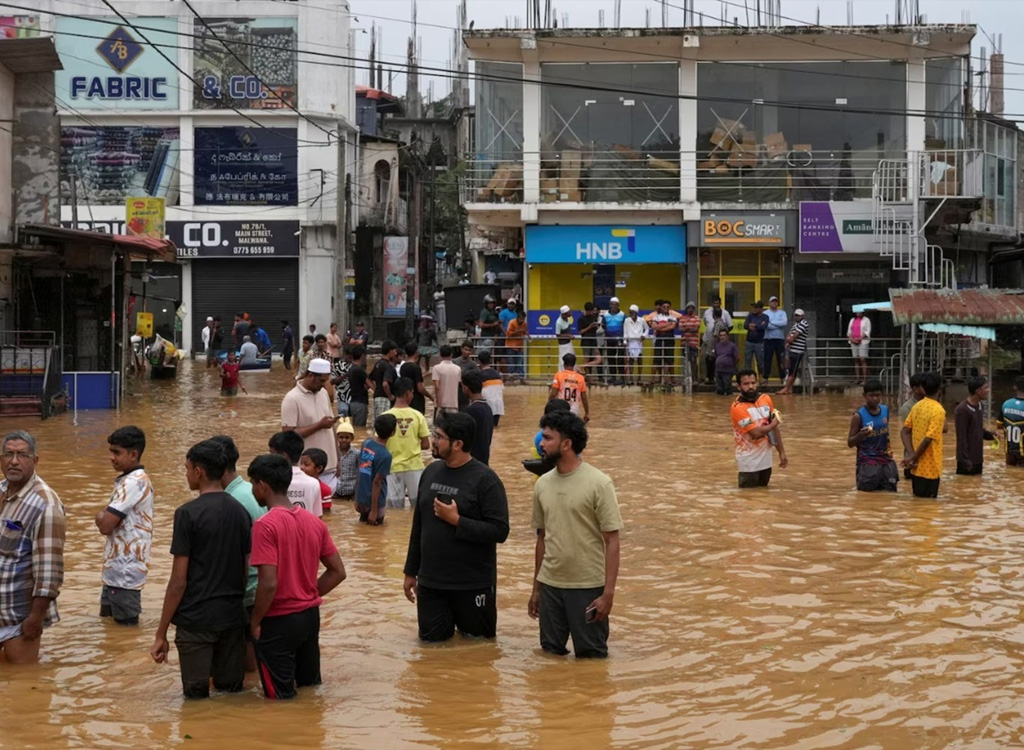
In the wake of Cyclone Ditwah, which has now veered toward India, Sri Lanka is in the grip of a rapidly worsening humanitarian disaster. The official death toll has surpassed 410, with more than 330 people still reported missing. Growing piles of recovered bodies suggest that hopes of finding survivors are fading, raising fears that the final toll could exceed one thousand.
According to the Disaster Management Centre (DMC), as of Tuesday morning (10 a.m.), 1,466,615 people from 407,594 families have been affected. Some 233,015 people from 64,483 displaced families are currently sheltering in roughly 1,441 makeshift safety centers. The DMC also reports that 565 houses have been completely destroyed and 20,271 partially damaged. While no official injury count has been released, estimates suggest the number of injured could be in the thousands.
Children and women are among the worst affected. In a statement, UNICEF reported that over 275,000 children are among the 1.4 million people impacted by Ditwah. It warned of sharply rising risks of disease outbreaks, malnutrition, unsafe living conditions and severe emotional trauma among children.
Most of the officially recorded deaths and missing persons come from the hardest-hit central hill districts—Kandy (88 deaths), Nuwara Eliya (75), and Badulla in the Uva Province (83)—where large numbers of tea plantation workers live in decaying, British-era line rooms.
Heartbreaking scenes reminiscent of the 2004 tsunami are now unfolding across Sri Lanka. Shocking accounts continue to emerge from flood- and landslide-devastated areas as survivors begin to access previously cut-off regions.
Relatives describe dozens of bodies being pulled from the rubble, while several major hospitals have quietly requested that families stop bringing in corpses, as mortuaries are full and staff are overwhelmed. In some cases, decomposition has rendered bodies unrecognizable, with remains—such as heads or fingers—found severed.
Amid these dire conditions, communities have been forced to bury victims immediately, often in mass graves and without medical examination, fueling anger and frustration among families.
With bodies still being recovered and access to many regions blocked, the true death toll remains uncertain. Comparisons with population records in affected areas may be the only way to eventually determine the scale of the tragedy. Television and social media show residents digging through debris with shovels and bare hands, due to a severe shortage of bulldozers and heavy machinery.
Although floodwaters are receding in some areas, hundreds of main roads and much of the railway network in the Central Province remain submerged or severely damaged, bringing transport to a standstill and hampering rescue efforts. Many villages are cut off from nearby towns as secondary and narrow roads have collapsed, been washed away or remain blocked by water and mudslides.
In addition, power and telecommunications outages persist in many regions, preventing survivors from calling for help. Repeated pleas for food, drinking water and evacuation highlight the absence of a centrally coordinated relief operation, despite repeated claims from the Janatha Vimukthi Peramuna/National People’s Power (JVP/NPP) government that such operations are underway.
In the Colombo district, which was hit hard by the Kelani River overflow, hundreds of thousands—mostly workers and the urban poor living in low-lying areas—have been displaced after the government failed to evacuate residents in time. Kolonnawa, 70 percent of which lies below sea level, is among the worst affected, with more than 175,000 people forced from their homes.
While government ministers insist they advised residents to evacuate, many in the area say no measures were taken to protect homes or belongings in their absence. Successive governments, including the current JVP/NPP administration, have repeatedly failed to implement long-promised flood-prevention projects. Residents accuse authorities of neglecting the area to pressure working class communities off commercially valuable land sought after by wealthy developers and investors.
Hundreds of thousands have lost everything except the clothes they were wearing when the disaster struck. Furniture and appliances purchased over years of hard work have been swept away. Even where homes still stand, their structural integrity is uncertain, with foundations and walls weakened by floodwaters and landslides.
Thousands of small and medium-sized businesses have been submerged, their equipment and stock destroyed. For many, rebuilding may take years—if it is possible at all. Without substantial assistance, many face bankruptcy.
Aside from the 25,000 troops deployed by President Anura Kumara Dissanayake, virtually no formal rescue teams are on the ground. Those providing aid are the survivors themselves—villagers, workers and ordinary citizens. While grieving the loss of loved ones, they are distributing food, clothing, medicine and other essentials. Displaced families are left to clean out and repair homes on their own or with the help of neighbors.
The full economic cost of the disaster is still unknown. On Tuesday, the Daily Mirror quoted President Anura Kumara Dissanayake as stating that the “government has begun discussions with the World Bank to prepare a detailed assessment of the damage across sectors and the financial requirements for reconstruction.” Given the scale of destruction to infrastructure—bridges, rail lines, roads, water purification plants and industries—the final bill is expected to run into the hundreds of billions of rupees.
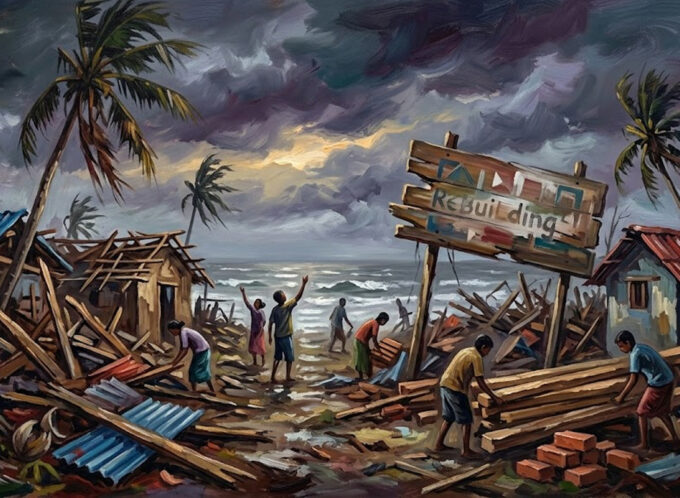
In a televised address Sunday night, Dissanayake indicated that the cost of recovery would be borne by a population already suffering under IMF-imposed austerity. He cynically defended the state of emergency, claiming it was needed to “provide legal protection and financial allocation” to “rebuild our country better than before.” While he promised not to use emergency powers repressively, the measure is certain to be used to enforce deeper austerity under the guise of “rebuilding” the country.
On Monday, Dissanayake’s Cabinet approved the creation of the “Rebuilding Sri Lanka” Fund, a statutory body under the Presidential Secretariat tasked with overseeing reconstruction.
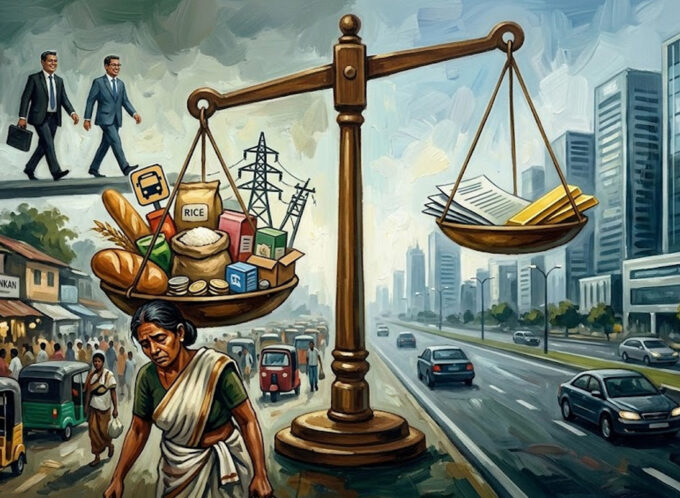
Notably, its Management Committee, which will assess needs, set priorities, allocate resources and disburse funds, is dominated by some of Sri Lanka’s wealthiest businessmen. These include Duminda Hulangamuwa (former chairman of the Ceylon Chamber of Commerce) as Senior Economic Advisor to the President; Mohan Pandithage (chairman of Hayleys Group); and Krishan Balendra (chairman of John Keells). All are staunch supporters of the IMF agenda, ensuring that “reconstruction” funds will prioritize debt repayment over relief for the millions devastated by the cyclone.
The disaster has already triggered a political crisis—not only for the JVP/NPP government, which ignored early warnings from the Meteorological Department, but also for the opposition parties now seeking to exploit the tragedy to rebuild support.
On Monday, the Samagi Jana Balawegaya (SJB) and others staged a parliamentary walkout, accusing the government of blocking debate on urgent policy responses. They claimed the administration failed to act on early forecasts. While this is true, none of the opposition parties can credibly claim they would have responded differently if they were in power. Millions of Sri Lankans vividly recall the failures of previous governments led by these same parties during past climate-related disasters.
Even today, many who lost everything in earlier calamities still lack proper housing. For decades, successive governments have ignored the threat of climate change, dismissed repeated warnings and abandoned the most vulnerable. This new catastrophe strikes amid an already staggering burden on the working class and oppressed masses, still reeling from the 2022 economic collapse and its aftermath.
According to a recent World Bank report, poverty in Sri Lanka has more than doubled since 2019, rising from 11.3 percent to 24.5 percent. For millions of working class families, basic necessities have become unaffordable. In the immediate aftermath of Cyclone Ditwah, vegetable prices have already surged, with other essential goods expected to follow, pushing the poor deeper into hunger and malnutrition.
The devastating toll of Cyclone Ditwah, which is part of a broader storm system that has killed around 1,000 people across Southeast Asia, exposes the class character of climate disaster. In Sri Lanka, the absence of early warnings, decaying infrastructure and the JVP/NPP government’s subservience to IMF dictates turned a natural event into a mass social catastrophe.
On the global stage, the absence of the US, China, and India from the COP30 summit, and the summit’s parade of empty promises, proves that capitalist governments and corporations will neither phase out fossil fuels nor fund meaningful protection for vulnerable populations. The conclusion is clear: climate-driven disasters will continue to kill the poorest—unless the working class organizes to fight for a socialist reorganization of society, based on human need, not profit.








Leave a comment