
By Shabeer Mohamed
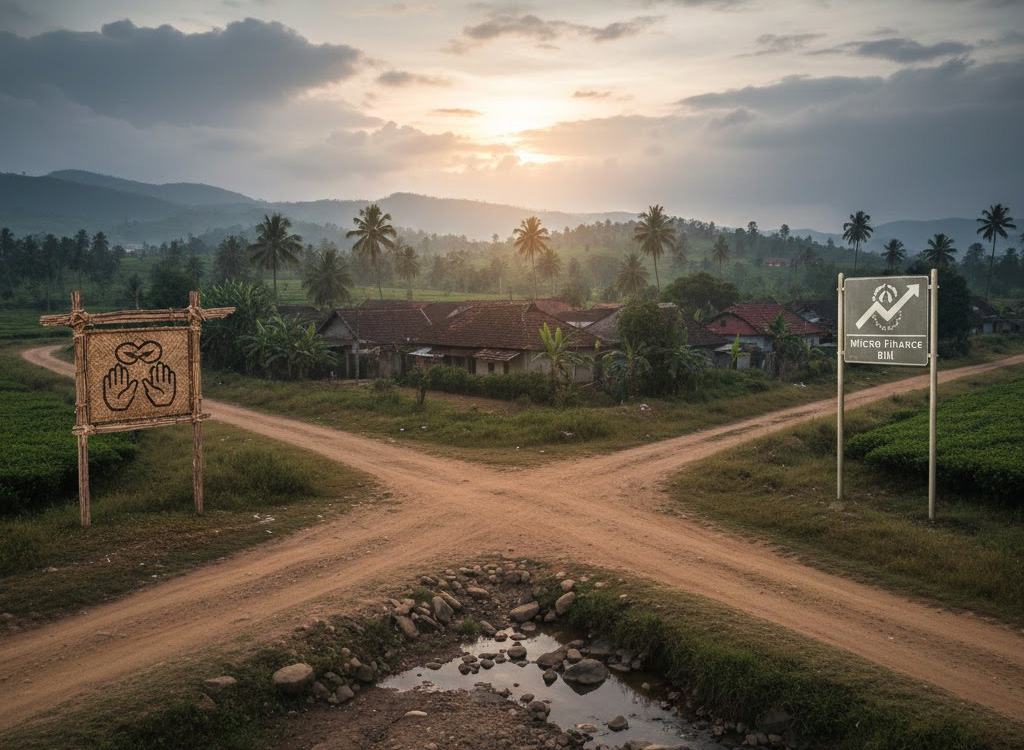
Seventy-seven year old P.G. Ariyadasa lives in Chandanapokuna, Hingurakgoda. He came to the area at the age of twenty-five, when new agricultural settlements were being established, and families were resettled under State-sponsored irrigation schemes. For decades, he successfully farmed paddy. At one point, he owned nearly forty acres of land. He raised four children, all of whom have gone on to become doctors.
Sadly today, Ariyadasa does not own even a square foot of land. He has sold all four properties acquired over a lifetime of farming, yet his debts remain unpaid. One of his sons, who later joined the Army, now takes care of him.
Ariyadasa’s story is no longer an exception in areas such as Hingurakgoda, Minneriya, and Kaudulla. Last year marked ninety years since the establishment of these agricultural settlements. Many families who once owned five or more acres now have no land at all. The children of those farmers have become labourers, migrants, or dependents.
Successive Governments have launched large-scale agricultural programs in these regions, but farmers’ lived experience tells a different story. Many fell into debt during droughts in the 1970s and have never recovered. What began with Government agricultural loans later expanded to private finance companies and microfinance institutions. Each phase deepened the debt trap rather than easing it.
Along with Kaudulla Farmers’ Settlement President M.K. Jayatissa, the Sunday Observer visited villages around Hingurakgoda and spoke to farmers facing chronic indebtedness. Jayatissa pointed out a disturbing continuity. In the 1990s, he said, farmers consumed poison when they could not repay Government agricultural loans. Today, the next generation is facing similar desperation under microfinance debt. He said he personally witnessed such a case in 2020.
The crisis became visible to the country in 2021. On March 8, International Women’s Day, rural women in Hingurakgoda launched a long-term satyagraha against predatory microfinance lending. The protest was led by the Collective of Women Victimised by Microfinance and continued for more than fifty-five days.
The category conundrum
It is against this backdrop that the proposed Microfinance and Credit Regulatory Authority Bill must be examined. One of its most far-reaching provisions is the way it subsumes community-based credit under the same legal categories as moneylending and microfinance.
The Bill recognises only two types of credit providers. Money lenders and microfinance providers. All other forms of lending, including those carried out by societies, voluntary organisations, NGOs, and trusts, are required to obtain a licence under one of these two categories. Clause 22(2)(c) states that Societies registered under the Societies Ordinance must be licenced as money lenders. This legal framing ignores how credit actually functions in villages like Hingurakgoda.
Pushed towards debt
Women’s and farmer activist Vimukthi De Silva and political economist Dr. Amali Wedagedara said that for most farmers in Sri Lanka, whether in long-established agricultural regions or newer settlement schemes, borrowing is not a matter of choice but of survival.
They said that agriculture in these areas is heavily dependent on natural conditions. When crops fail due to drought or flooding, farmers turn to loans to recover losses or prepare for the next season. This, they said, is often where cycles of debt begin.
For decades, particularly from the early years of Dry Zone colonisation to the 1970s, the Cooperatives played a central role as both credit providers and market intermediaries. According to De Silva and Wedagedara, Cooperatives were widely viewed as democratic and locally accountable institutions that offered small agricultural loans at low interest rates. However, their stability weakened over time due to politicisation, corruption, and declining institutional capacity, creating a growing gap between cooperative administrations and farmers.
As agricultural practices changed following economic liberalisation, farmers’ costs increased. Buffalo-driven cultivation gave way to tractors, raising expenses and pushing farmers towards cash dependence. Traditional assets such as cattle were sold off, sometimes to service existing debt. De Silva and Wedagedara said cooperatives were no longer able to meet these expanding financial needs.
They said that private businesses began to consolidate power by providing credit, agricultural inputs, and purchasing paddy, while the People’s Bank increasingly functioned as a commercial lender. As farmers’ debt burdens intensified, microfinance institutions expanded rapidly into rural areas, targeting women previously excluded from formal finance. Interest rates were higher, loans were issued through group mechanisms, and borrowers were often inadequately informed about loan conditions. Monitoring of loan-driven activities was minimal.
They said excessive interest rates, unregulated lending, coercive recovery practices, and threats against defaulters became widespread. Based on data compiled during the 2021 Hingurakgoda protest, De Silva and Wedagedara said Civil Society Groups documented around 200 suicides linked to debt distress across the country, including women and children.
These conditions led communities and Civil Society organisations to demand debt relief, suspension of litigation by Finance Companies, stronger regulation of microfinance, and the development of alternative credit systems.
Response to a crisis
De Silva and Wedagedara said that the proposed Microfinance and Credit Regulatory Authority risks undermining local initiatives that emerged in response to the rural debt crisis.
In several villages, residents formed Welfare and Mutual Aid societies after rejecting microfinance lenders. These organisations were built through small membership fees, savings, and income from collective activities such as renting equipment or trading goods. Over time, they accumulated modest reserves used to meet essential community needs.
They said that these systems rely on social familiarity rather than formal credit scoring. Borrowers are known personally, loans are issued for essential purposes, and amounts are limited by available funds. In Bakamoona, one Welfare Association had accumulated about Rs. 60 million and issues loans of up to Rs. 20,000 at around 1.5 percent interest. In contrast, a Death Donation Society in Chandanapokuna operates with Rs. 6 to 7 million and issues loans of about Rs. 5,000.
Repayment schedules are often aligned with cultivation cycles, reflecting local economic rhythms.
Villagers also said that income generated through these systems remains within the village economy, unlike profits extracted by finance companies or banks.
Most of these organisations are not registered as financial institutions but are registered as societies, conduct community audits, maintain bank accounts, and use interest earnings for welfare activities.
De Silva and Wedagedara said that the proposed law, which requires all lending entities to be regulated under a central authority as either moneylenders or microfinance institutions, could fundamentally alter how community systems function.
They said a regulation designed around formal banking norms would prioritise capital preservation, compliance, and growth. Interest rates would be tied to inflation, costs would rise, and decision-making would shift away from social need towards financial sustainability.
They described this as a form of “predatory regulation,” where community-owned financial practices are pushed towards profit-oriented models. In their assessment, institutions created to protect farmers from exploitative lending could gradually come to resemble the microfinance systems they were meant to replace.
A matter of context
Parliamentarian Lakmali Hemachandra, who serves on the Sectoral Oversight Committee on Economic Development and International Relations, said the current Bill must be understood in the context of earlier attempts to regulate microfinance.
Hemachandra acknowledged that the current Bill raises a different concern. “This is problematic because large institutions and very small community organisations cannot realistically be regulated in the same way,” she said.
As a response, she said the Sectoral Oversight Committee proposed the introduction of a separate category within the law, described as “Community Finance.” Under this proposal, Community Finance institutions would be regulated separately, rather than being classified as either moneylenders or microfinance providers.
She said that granting a complete exemption to Community Finance institutions was not considered viable, as microfinance institutions would then demand similar treatment. Instead, the committee’s position was that community finance should remain within a regulatory framework, but one that recognises its distinct, non-profit-oriented nature.
Hemachandra also said that many Community Finance institutions were originally established through State policy initiatives, with initial capital provided by the Government. While some of these institutions later expanded into lending activities, they are no longer directly linked to current State programs.
She said that if the Government is to provide financial support to such institutions in the future, including funding from international agencies such as the World Bank or the ADB, they would need to fall within a recognised regulatory structure.
“The idea of regulation today is very different from the 1990s,” she said. “Globally, regulation is now widely accepted, and Community Finance institutions themselves are willing to be regulated on some basis.”
According to Hemachandra, the revised draft law acknowledges the non-profit character of community finance institutions and attempts to accommodate them within a differentiated regulatory framework.
Regulation or repetition
Whether the proposed “Community Finance” category will protect village – level credit systems remains an open question.
Sri Lanka has seen this trajectory before. The People’s Bank was founded in 1961 with cooperative seed capital and a clear public mandate to provide affordable credit to farmers, fishers, and low-income communities. Over time, commercial pressures reshaped the institution. What began as a development-oriented bank gradually adopted profit-driven practices, contributing to the very rural debt pressures it was meant to prevent.
Today, community-based Welfare Societies and mutual aid groups in villages like Hingurakgoda have emerged in response to that failure. These systems are small, locally governed, and designed to meet limited, essential needs. Their strength lies in flexibility, social accountability, and restraint.
The concern raised by farmers and community organisers is that a uniform regulatory framework, even one labelled as “Community Finance,” could push these institutions towards formalisation models that prioritise compliance and capital growth over social purpose. If regulation is imposed without careful differentiation and meaningful consultation, it risks weakening the very systems that currently function as alternatives to predatory lending.
The test of the proposed law, therefore, is not its intent, but its impact. If regulation transforms Community Credit into another tier of commercial finance, the outcome will not be reform, but the disappearance of one of the few financial mechanisms still trusted in rural Sri Lanka.
Source: Sunday Observer











Leave a comment