
By The Pulseline News Desk
Sri Lanka is facing one of its most significant dengue outbreaks in recent years, with infections continuing to rise at an alarming pace as the southwest monsoon fuels mosquito breeding across the country.
According to the National Dengue Control Unit (NDCU), the country has recorded 76,044 dengue cases so far this year, including 2,652 new infections reported on July 19 alone. Health authorities have identified 162 Medical Officer of Health (MOH) areas as high-risk dengue zones, underscoring the widespread nature of the outbreak.
The sharp increase in infections has become particularly evident over the past three months. While 8,590 cases were reported in May, the figure more than doubled to 21,537 in June. The upward trend has continued into July, with 20,666 cases recorded during the first 19 days of the month, raising concerns that this could become one of the country’s worst dengue seasons if transmission is not brought under control.
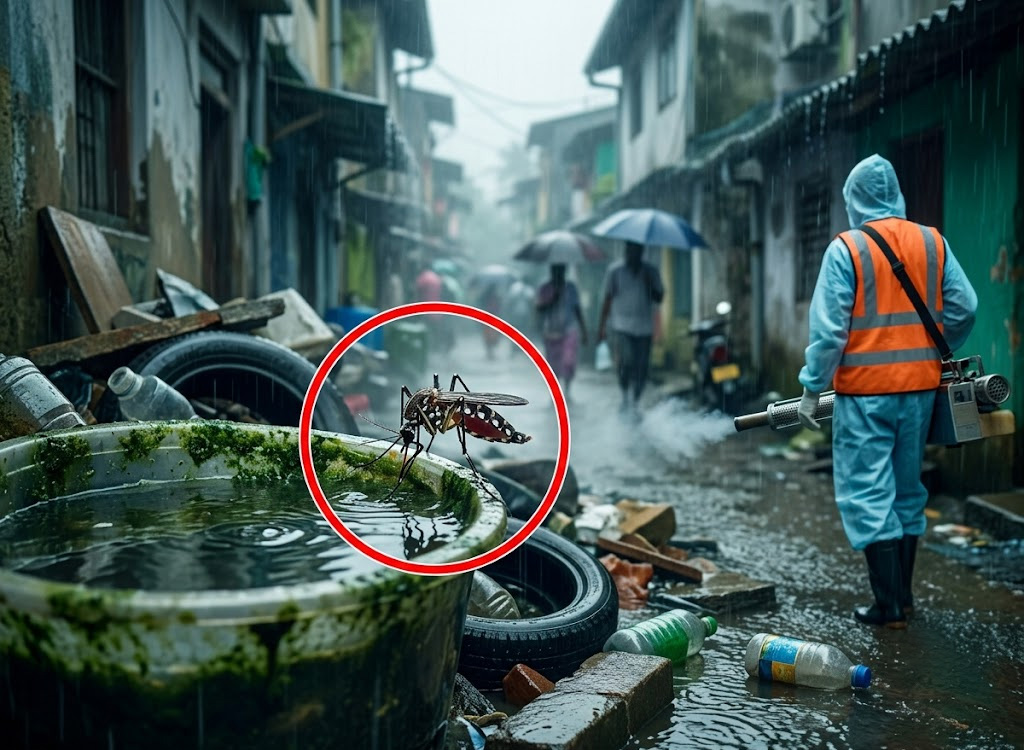
Health experts attribute the surge largely to the onset of the southwest monsoon, which has created ideal breeding conditions for Aedes mosquitoes, the primary carriers of the dengue virus. Water collected in discarded containers, blocked drains, construction sites and household surroundings provides numerous breeding habitats, allowing mosquito populations to multiply rapidly.
The outbreak has also claimed lives. A total of 53 dengue-related deaths have been reported this year, resulting in a case fatality rate of 0.07 percent. Although the fatality rate remains relatively low, health officials warn that severe dengue can develop quickly if patients delay seeking treatment.
The Western Province continues to bear the brunt of the epidemic, accounting for more than half of all reported infections. The province has recorded 40,009 cases, representing 52.61 percent of the national total. The Southern Province follows with 11,707 cases, while the Central Province has reported 6,431 infections.
At district level, Gampaha has emerged as the country’s worst-affected area with 15,910 reported cases, narrowly surpassing Colombo District, which has recorded 15,110 infections. Within Colombo District alone, 3,073 cases have been reported from the Colombo Municipal Council (CMC) area, highlighting the vulnerability of densely populated urban communities.
Several other districts have also experienced high transmission rates, including Matara with 5,330 cases, Kandy with 5,111 and Kalutara with 5,010, indicating that the outbreak is no longer confined to the country’s most populated regions.
Public health officials warn that the coming weeks will be critical in determining the trajectory of the outbreak. Continued rainfall, combined with inadequate elimination of mosquito breeding sites, could sustain high transmission rates unless preventive measures are intensified.
Authorities are urging residents to inspect their homes, workplaces and surrounding environments at least once a week to remove stagnant water where mosquitoes can breed. Regular cleaning of gutters, proper disposal of containers capable of collecting rainwater and maintaining clean surroundings remain among the most effective ways to reduce mosquito populations.
The NDCU has also advised the public not to ignore symptoms such as fever, severe headache, body aches or flu-like illness. Instead of self-medicating, individuals are encouraged to seek prompt medical attention, as early diagnosis and supportive treatment significantly reduce the risk of severe complications.
As Sri Lanka battles the escalating outbreak, health authorities stress that controlling dengue requires a collective effort. While hospitals continue to manage increasing numbers of patients, sustained community participation in mosquito control remains the country’s strongest defence against further spread of the disease.









Leave a comment