
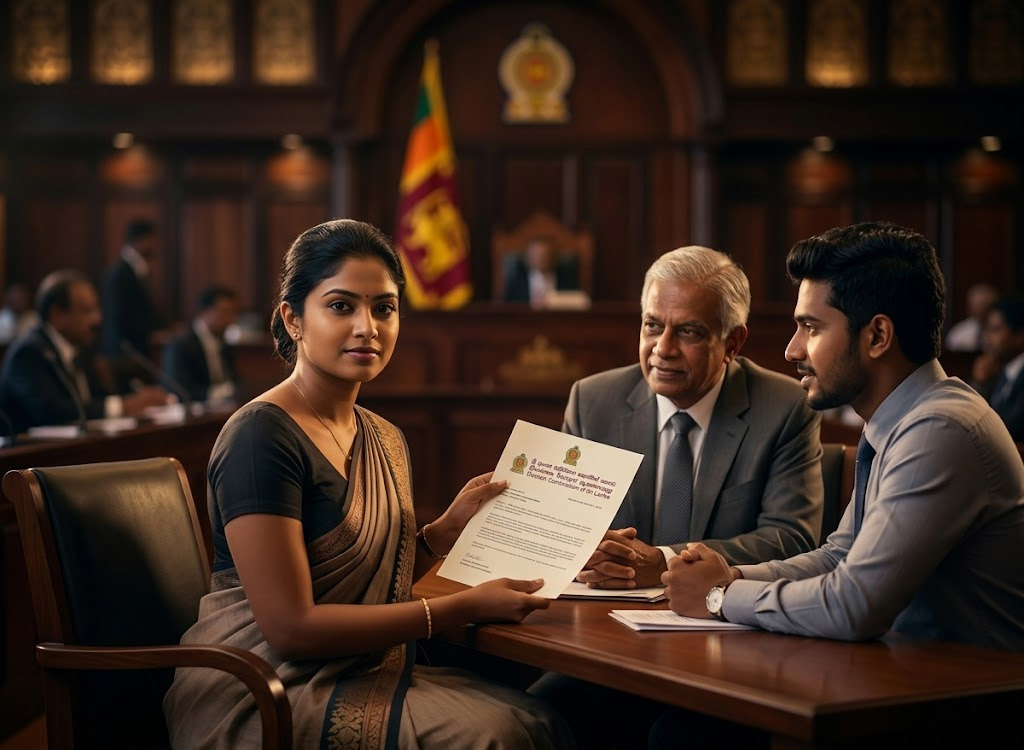
Parliamentary Select Committee reviewing electoral reform receives technical report as Women Parliamentarians’ Caucus pushes for 33% quota
By The Pulseline News Desk
The Election Commission (EC) has presented a technical report to Parliament’s Select Committee on electoral reform, proposing measures to strengthen the representation of women and youth in provincial council elections, as calls grow within Parliament to make gender inclusivity a cornerstone of Sri Lanka’s next electoral framework.
The report was tabled at a recent committee sitting chaired by Minister Vijitha Herath, with Minister Saroja Savithri Paulraj — Chairperson of the Women Parliamentarians’ Caucus — and other Caucus members in attendance. The Select Committee has been tasked with reviewing the country’s electoral system, and the latest session marked a significant step in that process, bringing the Commission’s technical recommendations directly before lawmakers.
Retaining PR, widening access
According to the report, the Commission’s proposed framework would preserve the existing Proportional Representation (PR) system in its current form, including the method used to determine election results. Rather than overhauling the system itself, the Commission has focused on mechanisms that could be layered onto the existing structure to improve representation of women and young people without disrupting how votes translate into seats.
Committee members engaged in extensive discussion on the legal and practical hurdles involved in implementing such measures, including questions of how representation guarantees could be enforced within the current constitutional and legal framework. No final decisions were reached, and the committee agreed to continue examining these issues in future sessions.
Caucus pushes for 33% quota
The discussion took on added weight with the participation of the Women Parliamentarians’ Caucus, whose members were unanimous in their position that women’s representation in both provincial council and local government elections should be raised to at least 33%.
Caucus members told the committee that this threshold should not be treated as a peripheral demand but as a central pillar of whatever new electoral framework eventually emerges from the reform process — a marker, they argued, of genuine political commitment to gender parity rather than symbolic gesture.
A broader push for inclusive reform
The PSC proceedings reflect a wider momentum building around embedding gender and youth inclusivity into Sri Lanka’s political architecture. With the Election Commission now formally providing technical grounding for the discussion, the debate moves from advocacy into the realm of concrete legislative drafting — even as the harder questions of legal design and implementation remain unresolved.
The PSC’s decision to continue deliberations in upcoming sessions suggests that any final proposal is still some way off. But with the Commission’s report now on record and the Women Parliamentarians’ Caucus united behind a specific numerical target, the coming sessions are likely to test how far Parliament is willing to go in translating that momentum into binding electoral law.








Leave a comment