
By The Pulseline News Deak
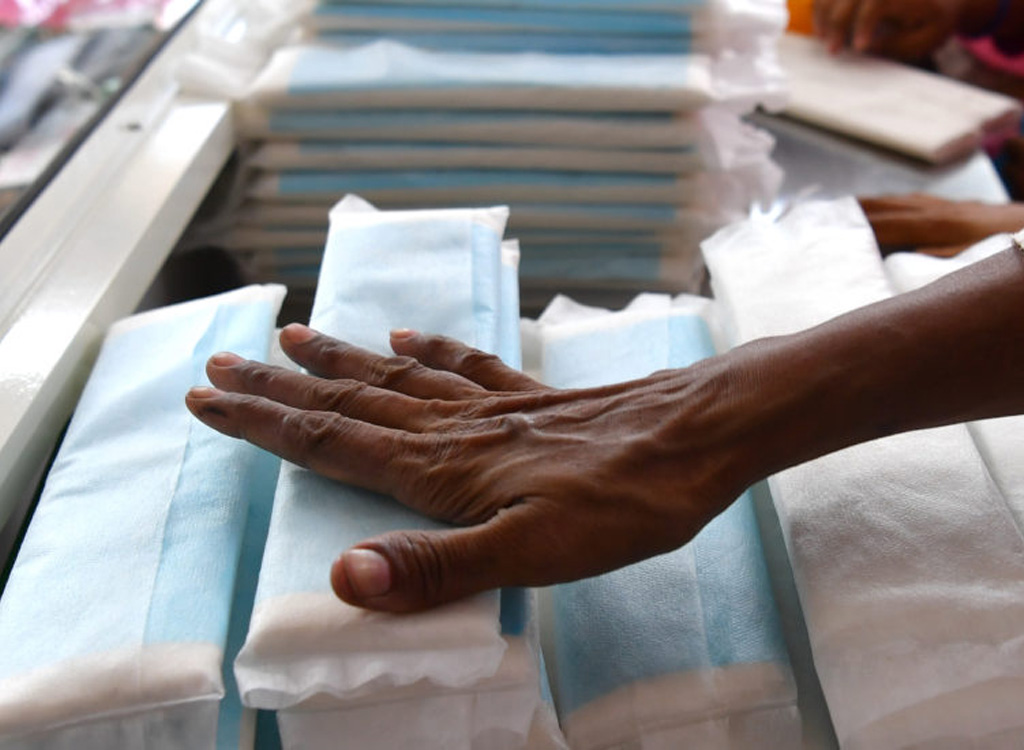
The decision by the Cabinet of Ministers on Monday (23) to continue providing sanitary napkins to schoolgirls in 2026 marks a significant step toward strengthening both public health and educational equity. Targeting approximately 1.05 million adolescent girls in Grades 6 and above across government and government-approved schools, this initiative directly addresses one of the most under-recognised barriers to girls’ education: menstrual hygiene management. While the policy itself is promising, global evidence shows that its long-term success will depend on how effectively it is implemented and integrated into a broader support system.
Influencing school attendance
Research from multiple countries demonstrates that providing menstrual products can positively influence school attendance and participation. In many low- and middle-income settings, girls miss school during menstruation due to lack of access to sanitary products, discomfort, or social stigma. Programmes that combine the distribution of sanitary napkins with education have shown measurable improvements, including increased attendance, reduced dropout rates, and enhanced classroom engagement. Beyond attendance, such initiatives also contribute to improved self-confidence, better hygiene practices, and greater psychological comfort among students.
However, the impact of these programmes is not automatic. One of the most important lessons from global experiences is that access to sanitary products alone is insufficient. A comparison with international models highlights both opportunities and potential pitfalls for Sri Lanka.
International experiences
For instance, Scotland has set a global benchmark by becoming the first country to guarantee free access to menstrual products through legislation. Its approach goes beyond schools, ensuring availability in public spaces and offering a variety of product choices. This rights-based model has helped normalize menstruation and eliminate stigma at a societal level. The key takeaway for Sri Lanka is the importance of making access not only free but also consistent, dignified, and widely available.
In contrast, India illustrates the challenges of large-scale implementation. Despite strong policy frameworks and even legal recognition of menstrual hygiene as a fundamental right, many regions still struggle with inadequate infrastructure, irregular supply chains, and persistent social stigma. As a result, a significant number of girls continue to miss school during menstruation. This underscores a crucial point: policies must be matched with effective execution, including proper sanitation facilities and reliable distribution systems.
Similarly, Kenya was an early adopter of free sanitary pad programs and tax exemptions on menstrual products. While the initiative improved access, its impact has been uneven due to funding constraints and logistical challenges, particularly in rural areas. This highlights the importance of sustained financing and strong monitoring mechanisms to ensure that benefits reach all intended recipients.
Meanwhile, innovative approaches from regions such as Catalonia in Spain demonstrate the value of offering reusable menstrual products alongside disposable ones. By distributing items such as menstrual cups and reusable pads, Catalonia has addressed both cost-effectiveness and environmental sustainability. For Sri Lanka, incorporating such options could enhance the program’s long-term viability while giving students greater choice.
Comprehensive approach
Across all these examples, a consistent pattern emerges: the most successful menstrual health programmes are those that adopt a comprehensive approach. This includes not only the provision of products but also investment in water, sanitation, and hygiene (WASH) facilities, as well as education to reduce stigma and improve awareness. Clean and private toilets, access to water, and proper disposal systems are essential for enabling girls to manage menstruation with dignity. At the same time, educational initiatives targeting both girls and boys help normalize the topic and create a supportive school environment.
For Sri Lanka, the continuation of this programme presents a valuable opportunity to build such an ecosystem. Ensuring uninterrupted supply chains will be critical, particularly given the scale of the initiative. Equally important is the need to upgrade school infrastructure where necessary and to integrate menstrual health education into the curriculum. Monitoring and evaluation systems should also be established to track attendance, identify gaps, and measure outcomes.
In conclusion, Sri Lanka’s initiative to provide sanitary napkins to schoolgirls is a commendable and potentially transformative policy. However, global evidence makes it clear that its success will depend on more than distribution alone. By learning from the experiences of countries like Scotland, India, Kenya, and Spain, Sri Lanka can refine its approach to create a holistic, sustainable, and impactful program. If implemented effectively, this initiative has the potential not only to reduce absenteeism but also to promote gender equality, improve health outcomes, and empower a generation of young women through uninterrupted access to education.
Under the programme introduced in Sri Lanka, each student will receive vouchers worth Rs. 1,440, issued as two vouchers of Rs. 720 each, Cabinet Spokesperson, Minister Nalinda Jayatissa said, adding that the vouchers can be used to purchase sanitary napkin packs during the year, based on individual preference.
Options include 12 packs containing eight napkins priced at Rs. 120 each, or eight packs containing 10 napkins priced at Rs. 180 each.











Leave a comment