
By Methmalie Dissanayake
“Language brings with it an identity and a culture, or at least the perception of it. A shared language says, ‘We’re the same.’ A language barrier says, ‘We’re different.’”
South African comedian, writer, producer, and political commentator Trevor Noah makes this observation in his memoir ‘Born a Crime,’ reflecting on how language can either bind communities together or deepen divisions. In Sri Lanka, that distinction is not abstract or philosophical. It is political, historical, and deeply lived.
For decades, language has remained one of the country’s most sensitive fault lines. The privileging of one language over others through the Sinhala Only policy embedded linguistic hierarchy into the State itself, leaving long-lasting consequences for governance, public administration, and social cohesion.
Yet, despite its centrality to equality, dignity, and access to public services, language policy is often pushed aside in favour of what are framed as more urgent crises, most notably, the economy.
The consequences of that neglect were once again laid bare in the aftermath of Cyclone Ditwah. In the critical first days of the disaster, key institutions such as the Disaster Management Centre (DMC) and the Department of Irrigation issued official warnings and press releases only in Sinhala. It was only after public backlash that communications began appearing in Tamil and English as well. The episode exposed a persistent structural weakness – the acute shortage of Tamil translators and bilingual officials across State institutions.
A judicial rebuke
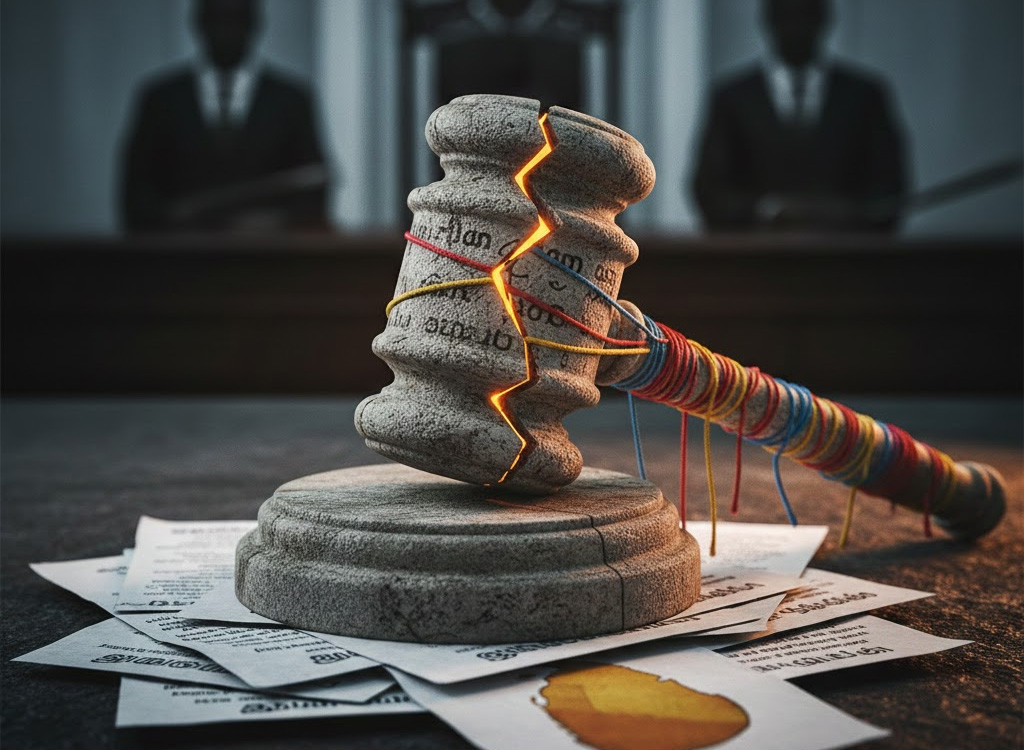
That same structural failure was confronted directly by the Supreme Court of Sri Lanka, which sharply criticised the continued use of Sinhala in Police investigations and court proceedings in Tamil-speaking Mullaitivu. Describing the situation as an “unsatisfactory state of affairs,” the court ordered corrective action to be taken within six months.
The observations were made during the hearing of a Fundamental Rights application (SC/FR No. 326/2024), which examined an investigation conducted by the Mullaitivu Special Crimes Investigations Unit. The court found that Police had recorded complaints and statements in Sinhala even though the complainant, suspects, and witnesses were all Tamil speakers with no working knowledge of the language.
The bench further noted that the initial B report submitted to the Mullaitivu Magistrate’s Court had been prepared and signed in Sinhala, despite the presiding Magistrate, the suspects, and the lawyers appearing in the case being Tamil speakers. Such practices, the court observed, directly undermined constitutionally guaranteed language rights and obstructed access to justice in Tamil-speaking areas.
In a written order, Justice Yasantha Kodagoda stressed that Police procedures must comply with Chapter IV of the Constitution and the State’s official languages policy. The court directed the Inspector General of Police to ensure that Tamil-speaking suspects, victims, and witnesses are interviewed in their own language and that statements are recorded accordingly. In regions where Tamil is the language of administration, primary court documents including B reports must be prepared in Tamil, with Sinhala or English translations allowed only where strictly necessary.
The court also ordered the Police to establish adequate interpretation and translation mechanisms across the Northern and Eastern Provinces and to fully implement these measures within six months.
Policy and implementation gaps
Sri Lanka’s trilingual policy, launched in 2011–2012 as a 10-year national initiative, was intended to address precisely these failures. Designed to promote national reconciliation, social cohesion, and economic opportunity in the post-war context, the policy mandated proficiency in Sinhala and Tamil as official languages, alongside English as a link language for education and employment.
Under the policy, Sinhala and Tamil were to be used in administration, legislation, and education, while English was positioned as a tool for economic mobility and global engagement.
Implementation measures included training teachers in all three languages, strengthening translation and interpretation services, and building multilingual capacity within the public service. Educational initiatives encouraged instruction in the mother tongue while ensuring students learnt the other official language and English, supported by institutions such as the National Institute of Language Education and Training (NILET).
More than a decade on, however, implementation gaps remain stark.
A systemic shortage
The Mullaitivu case is not an isolated failure but part of a broader, structural problem: a chronic shortage of Tamil translators and bilingual public officers across State institutions.
This deficit has been repeatedly flagged by the Official Languages Commission (OLC). According to its 2023 annual report, monitoring activities revealed a severe lack of Sinhala-Tamil translators across the public sector, particularly for complex legal and financial documents such as bank loan agreements, which are often issued only in English or a single official language.
The commission itself has not been immune. As of 31 December 2023, it reported having no officers in its approved Translator (Tamil/English) and Translator (Sinhala/Tamil) positions, leaving these essential roles entirely vacant.
Language audits conducted by the OLC exposed widespread institutional gaps. Many divisional secretariats lack translation capacity, resulting in birth, death, and marriage certificates being issued in only one language. Police stations continue to record complaints from Tamil-speaking citizens in Sinhala due to the absence of Tamil-proficient officers.
In sensitive units, including Children and Women’s Bureaux, reliance on third parties for translation has raised serious concerns about confidentiality. In the healthcare sector, complaints have highlighted instances where services are provided exclusively in Sinhala, creating significant barriers for Tamil-speaking patients.
The commission has observed that even where officers have formally acquired a second language, their proficiency is often insufficient for delivering public services. This is partly rooted in the education system, where many officers learnt only their mother tongue and English, rather than the second official language. Frequent transfers further weaken institutional capacity, making it difficult to retain bilingual officers where they are most needed.
During 2023, the commission received 168 complaints relating to violations of language rights. While a portion including unresolved complaints from previous years was addressed, investigations into the remainder were referred to relevant institutions. Complaints ranged from red notices issued only in Sinhala by the Ceylon Electricity Board to bank loan agreements prepared solely in English. In several cases, steps were taken to issue documents in all three languages.
The commission has also flagged widespread language errors in name boards, instruction boards, notices, forms, and official websites. Recognising limited public awareness of language rights, it has conducted awareness programmes through print, electronic, and social media, alongside online training for divisional and district secretariat officials.
As a short-term measure, the commission has proposed recruiting at least two bilingual officers for every Government institution, while long-term solutions focus on strengthening trilingual proficiency through education reforms.
Parliament not exempt
The language gap extends to the Legislature itself. In 2025, parliamentary sources reported a serious shortage of translators at Parliament’s Language Translation Division, with around 12 vacancies affecting operations. Eight of these were for English and Tamil translators, out of an approved cadre of 40.
Despite interviews being called on three occasions, suitable candidates reportedly failed to present themselves. Parliamentary officials have attributed the shortage largely to low remuneration, warning that it has disrupted both parliamentary sittings and committee work.
Recruitment and political assurances
Against this backdrop, President Anura Kumara Dissanayake, during a visit to Jaffna in January last year, called on Tamil-speaking youth to apply for vacancies in the Sri Lanka Police. Addressing the Jaffna District Coordination Committee, he said Tamil-speaking applicants would be given greater opportunities in Police recruitment and encouraged young people in the north to come forward.
According to the President’s Media Division, a committee has identified some 30,000 vacancies across State institutions to be filled through established recruitment processes, including opportunities for graduates. Recruitment in the Northern Province, he said, would take place without political interference, with the aim of strengthening public service delivery in the region. As of now, however, no tangible progress has been publicly reported.
The Malaiyaha reality
The consequences of linguistic exclusion are felt most acutely by the Malaiyaha Tamil community, among the most marginalised groups in Sri Lanka. Errors in birth registration, employment documentation, and official records often stemming from language barriers have had lifelong repercussions.
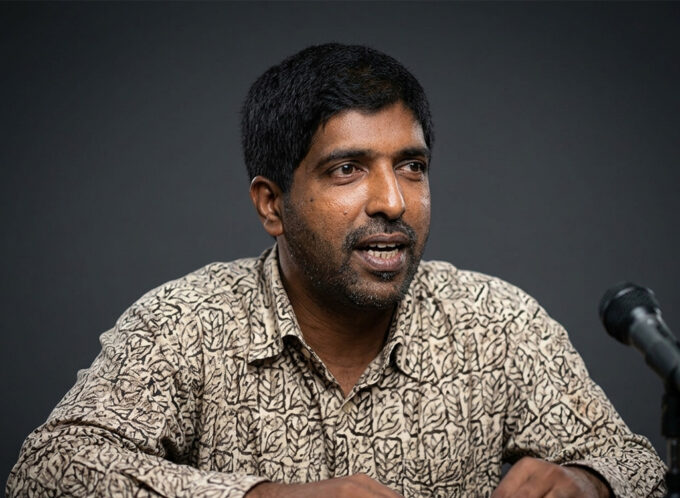
Activist and Centre for Policy Alternatives Researcher Selvaraja Rajasegar recalled a case he encountered in Badulla. A school Principal had informed him of two children whose names had been effectively mistranslated during birth registration. Tamil words spoken by the parents had been mistakenly recorded by Sinhala-speaking officials as the children’s names, one translating roughly to ‘don’t smile’ and the other to ‘male child.’ “This is a classic example of how language barriers translate into administrative violence,” Rajasegar said.
Such errors, he noted, had prevented estate workers from accessing entitlements such as the Employees’ Provident Fund, as personal details in official forms were often incorrectly recorded and never rectified.
Whether political assurances and policy frameworks translate into sustained institutional reform remains to be seen. What is clear, however, is that language is not a peripheral administrative concern. As the Supreme Court’s intervention underscores, it lies at the heart of equality before the law, access to justice, and the credibility of the State itself.








Leave a comment