
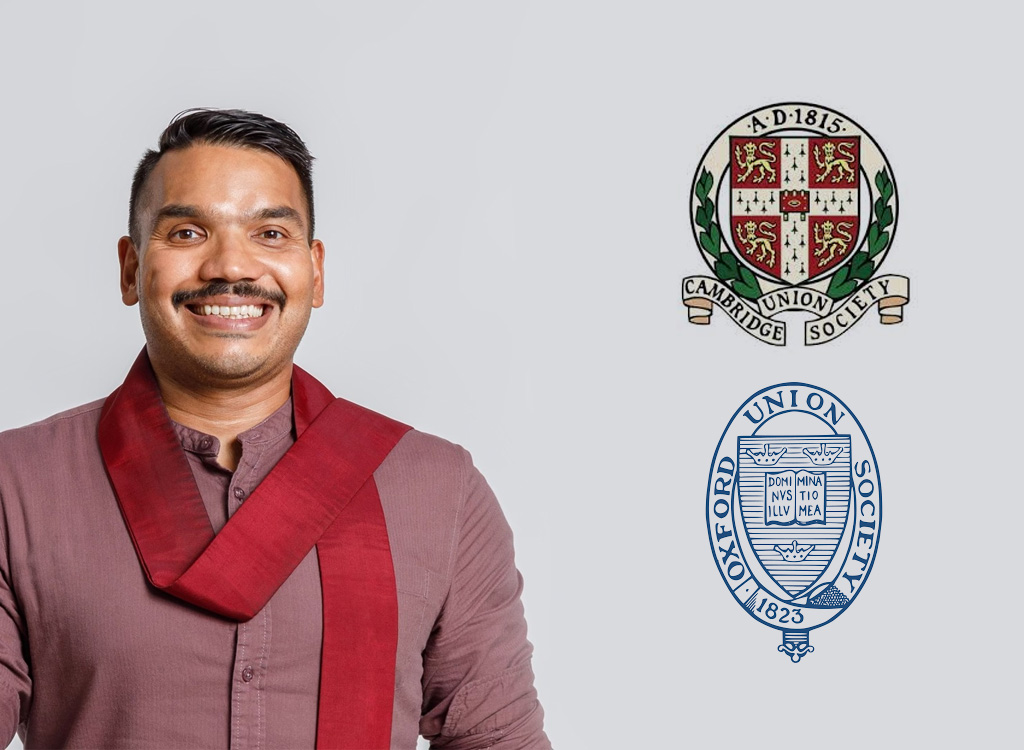
Sri Lanka Podujana Peramuna (SLPP) national organizer Namal Rajapaksa’s ongoing visit to the UK has been mired in controversy resulting the Cambridge Union and the Oxford Union cancelling planned speaking events where Namal was to deliver speeches.
The Cambridge Union canceled the speaking event last week while the Oxford Union cancelled its speaking event today (23) when Namal Rajapaksa was already in the UK.
The two speaking events were cancelled following backlash from Tamil student groups and campaigners.
According to UK student newspaper Cherwell, Oxford Union President Katherine Yang has stated that the decision was taken after concerns were raised about students’ ability to participate freely.
“A core part of the Union’s purpose is enabling direct, open questioning from students. In this case, a significant number of the students most closely connected to the subject matter communicated that they did not feel safe asking questions openly,” Yang was quoted as saying.
She has also noted that while alternative formats were considered, the inability of those most affected to participate directly undermined the substance of the forum.
“An event where key stakeholders cannot engage on equal footing does not produce the kind of robust debate the Union is intended to facilitate,” she has added.
Rajapaksa is currently on a visit to the UK and earlier paid homage at the London Buddhist Vihara, which is marking its 100th anniversary this year.
Diaspora advocacy group Tamil Solidarity had called on both unions to cancel Rajapaksa’s scheduled speaking engagements, arguing that providing him a platform amounted to political rehabilitation. The organisation also warned of protests if the events proceeded.
Tamil Solidarity, established in 2009, campaigns on issues related to alleged war crimes, accountability and the rights of Tamil-speaking people.
Meanwhile, issuing a statement, Rajapaksa noted that the traditions of the Oxford Union and the Cambridge Union have, for generations, represented the highest ideals of free inquiry, rigorous debate, and intellectual courage.
“Speakers invited to these historic forums are expected to face difficult questions, defend their views, and engage with opposing perspectives before an informed and critical audience. It was precisely this spirit of open dialogue that I looked forward to participating in and welcomed without reservation.
“It is therefore deeply unfortunate that circumstances arising from organised pressure prevented these engagements from taking place. Universities and debating societies have long been spaces where disagreement is addressed through discussion rather than disruption, and where ideas are challenged through argument rather than silenced by intimidation.
“I would have welcomed the opportunity to engage directly with critics, including those who strongly oppose my views, because meaningful reconciliation and progress can only emerge when differing perspectives meet in open conversation. Denying such engagement does not strengthen democracy. It weakens it by replacing debate with division,” Rajapaksa noted.
He further stated, “I remain grateful to both Unions for their invitation and understand the difficult position in which they found themselves. I hope that in the future we will have the opportunity to meet in a forum where dialogue prevails and discussion is encouraged.”












Leave a comment