
By The Pulseline News Desk
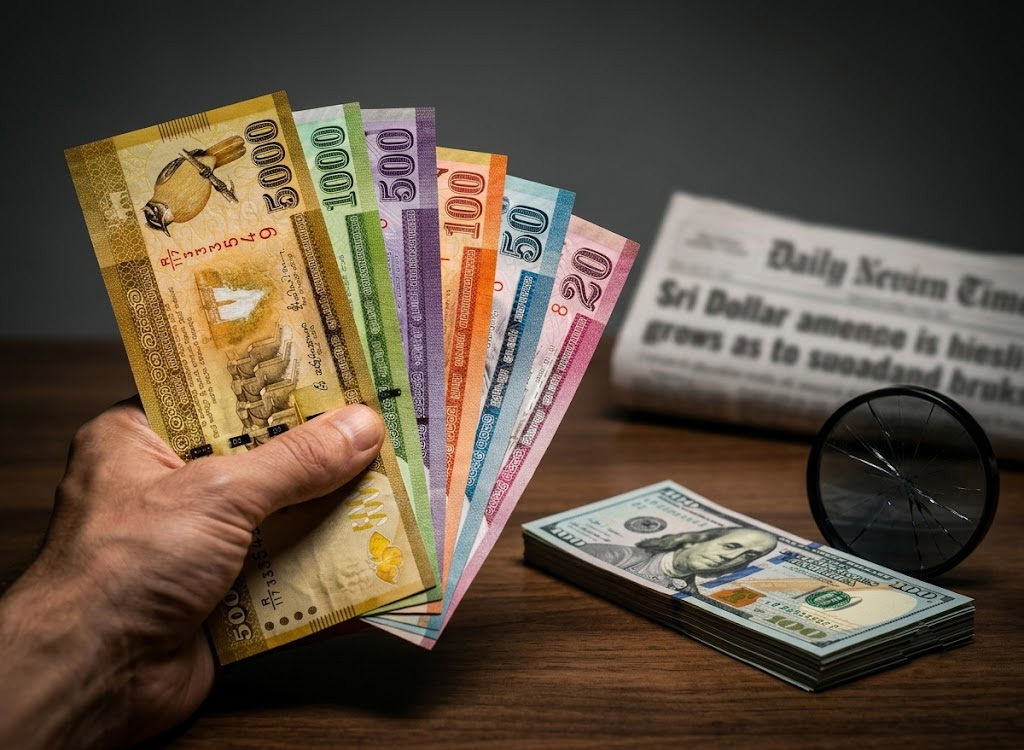
Sri Lanka’s currency has come under renewed pressure, with the rupee depreciating further against the US dollar across several commercial banks, raising concerns about market sentiment and the outlook for exchange rate stability.
On Friday (5), the US dollar’s selling rate crossed the Rs. 340 mark at several banks, reflecting growing demand for foreign currency and increasing uncertainty among market participants. Seylan Bank maintained its selling rate at Rs. 342, while NDB Bank and Sampath Bank raised their selling rates to Rs. 341.50. Commercial Bank also reported an increase in its dollar selling rate to Rs. 340.50.
The weakening of the rupee comes amid growing debate over the factors driving the currency’s decline. Opposition member of parliament (MP) Harsha de Silva has warned that confidence in the government’s economic management is becoming a key issue influencing market behaviour.
According to de Silva, exchange rates are not determined solely by economic fundamentals but also by perceptions and expectations. He argued that confidence in the government’s ability to maintain currency stability has gradually weakened, contributing to increased demand for dollars and downward pressure on the rupee.
“The currency market is largely driven by confidence,” de Silva noted, pointing out that the dollar had climbed to around Rs. 342 through official banking channels while rates in the unofficial market were reportedly exceeding Rs. 345.
Market analysts note that recent measures, including higher interest rates, provided temporary support for the rupee. However, the currency has resumed its depreciation as underlying demand for foreign exchange remains strong.
One major factor is the growing need for dollars among importers who are settling Letters of Credit (LCs) opened before recent import restrictions and policy adjustments. This increased demand for foreign currency has added pressure on the exchange market.
At the same time, expectations of further rupee depreciation may be influencing the behaviour of both remitters and exporters. According to de Silva, some overseas Sri Lankans are delaying remittances in anticipation of a more favourable exchange rate in the future. Similarly, certain exporters may be postponing the conversion of export earnings, expecting the rupee to weaken further.
Such actions can create a self-reinforcing cycle. As fewer dollars enter the market through remittances and export proceeds while demand continues to rise, pressure on the currency intensifies, potentially leading to further depreciation.
The latest developments highlight the delicate balance facing policymakers as Sri Lanka continues its economic recovery. While foreign reserves, tourism earnings, and export performance have shown improvements in recent years, maintaining market confidence remains critical to ensuring exchange rate stability.
Economists note that investor sentiment, policy consistency, and clear communication from authorities will play an important role in shaping expectations and preventing excessive volatility in the currency market.
As businesses, importers, exporters, and consumers closely monitor exchange rate movements, the trajectory of the rupee in the coming weeks is likely to remain a key indicator of confidence in Sri Lanka’s broader economic recovery and financial stability.













Leave a comment