
By Dr. Nadee Dissanayake
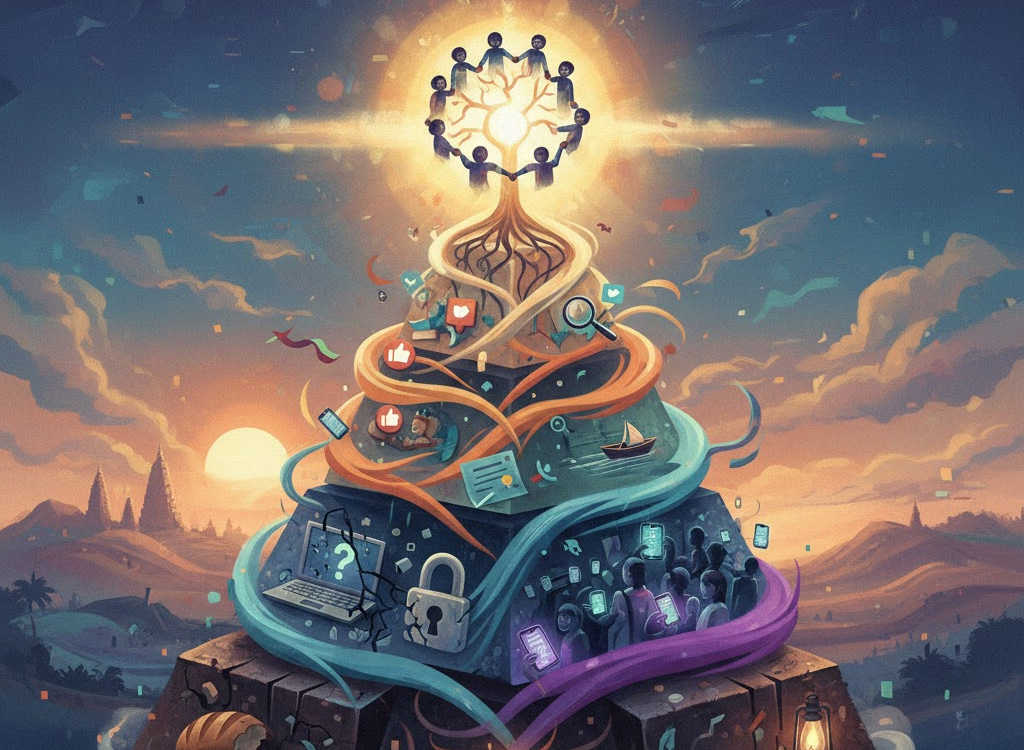
Most of us learnt about Maslow’s hierarchy of needs at some point in school. But the Sri Lanka we live in today, marked by economic stress, digital dependence, and constant uncertainty, looks very different from the world Abraham Maslow was trying to explain. While his theory remains one of the most widely accepted explanations of human motivation, the people it seeks to describe have changed.
Sri Lankans today are not motivated in the same ways as their parents or grandparents. Economic shifts, social change, digital life, and recent national crises have reshaped expectations, fears, and hopes. The challenge, therefore, is not to discard Maslow’s theory, but to adapt it to the realities of contemporary Sri Lanka.
Physiological needs
In traditional thinking, the base of Maslow’s pyramid is made up of physiological needs such as food, water, and shelter. In Sri Lanka, these needs have taken on new meaning in recent years. The economic crisis reminded many households that basic necessities cannot be taken for granted.
Rising food prices, fuel shortages, and disruptions in public services exposed how fragile ‘basic security’ really is. For many families, having three meals a day is no longer enough; they now worry about nutrition, affordability, and continuity. A salaried worker in Colombo may have food today but fears whether income will be enough next month. Survival is no longer about existence alone; it is about stability.
Safety needs
Closely linked to survival is safety, which in modern Sri Lanka goes far beyond physical protection. Job security, predictable income, access to healthcare, and trust in public systems now dominate people’s sense of safety. A young graduate may have a degree, but feel unsafe because employment is uncertain. A small business owner may fear sudden policy changes more than market competition.
In this context, psychological safety has become as important as physical safety. Constant economic stress, news of uncertainty, and social pressure have made mental well-being a fundamental need rather than a secondary concern.
Love and belonging
Maslow placed love and belonging in the middle of his hierarchy, and this need has become increasingly complex in Sri Lanka’s modern society. Traditionally, strong family ties, religious institutions, and close-knit communities fulfilled this need. While these structures still exist, they are under strain.
Urbanisation, migration for employment, and overseas work have separated families physically and emotionally. Many Sri Lankan households depend on remittances from family members working abroad, creating financial stability but emotional distance.
At the same time, social media has created a sense of connection that is often shallow. People appear connected, but feel unseen and unheard. Belonging today means not just being part of a family or community, but feeling emotionally supported and socially valued.
Esteem
Esteem needs have also evolved. In Maslow’s model, esteem comes from respect, recognition, and achievement.
In Sri Lanka, esteem is increasingly shaped by comparison. Educational success, English proficiency, foreign exposure, and professional titles are often used as markers of worth. A young person may feel inadequate despite hard work if they do not match these social benchmarks.
Public recognition has moved from community appreciation to digital validation. Likes, followers, and online visibility now influence confidence, especially among youth. As a result, self-esteem has become fragile, depending heavily on external approval rather than inner confidence.
Education
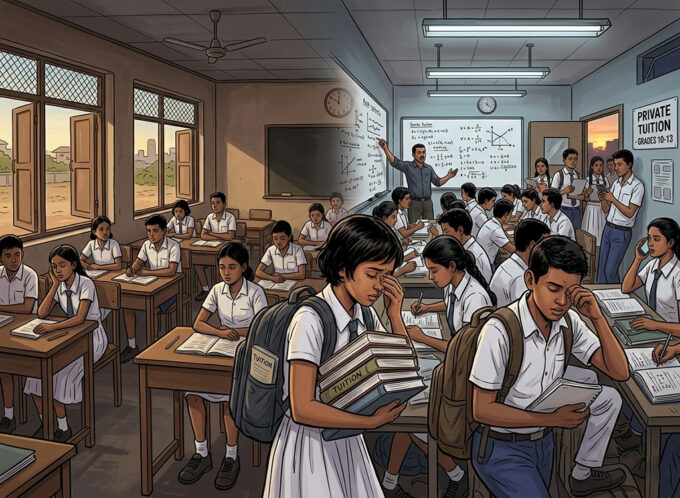
Education, once viewed primarily as a pathway to employment, now plays a different role in motivation.
Sri Lankan students are no longer driven only by the goal of securing a government job or professional qualification. Many now seek relevance, adaptability, and global recognition. They worry not just about passing exams, but about whether their skills will remain useful in a rapidly changing world.
Lifelong learning has quietly entered the hierarchy of needs. People fear becoming obsolete more than failing once. This anxiety reflects a shift from achievement-based motivation to survival through relevance.
Self-actualisation and beyond
At the top of Maslow’s pyramid lies self-actualisation, the realisation of one’s full potential.
In today’s Sri Lanka, this concept has expanded. Many professionals, entrepreneurs, and even public servants find that personal success alone does not bring lasting satisfaction. After achieving education, income, and social recognition, a new question emerges: ‘What is the purpose of all this?’
Increasingly, people seek meaning through contribution. Volunteering, social entrepreneurship, environmental activism, and community service are becoming ways to fulfil higher needs. This suggests that self-actualisation is no longer the final stage; contribution and purpose now sit above it.
Rethinking a hierarchy
The structure of Maslow’s hierarchy also requires rethinking. Life in Sri Lanka is not linear. A person may struggle financially but still seek meaning through religious practice or social service. Another may enjoy material comfort but feel emotionally disconnected and anxious.
Needs do not arise in neat layers; they overlap and shift depending on circumstances. During times of crisis, safety dominates. During times of stability, people seek dignity, fairness, and purpose. The modern Sri Lankan experience shows that human motivation is dynamic, not hierarchical.
This updated understanding of human needs has important implications for policy-making and leadership.
Economic reforms cannot succeed if they ignore psychological stress and public trust. Education reforms must focus not only on academic excellence but also on adaptability and confidence. Tax systems, welfare policies, and public communication must recognise that people value dignity and fairness as much as financial outcomes.
When citizens feel respected and understood, compliance and cooperation naturally improve.
A vital shift
Maslow’s theory remains powerful because it speaks to universal human truths. However, applying it blindly without considering social context limits its usefulness.
In Sri Lanka today, people are motivated by a mix of survival, security, belonging, dignity, relevance, and purpose. These needs interact constantly, shaped by economic uncertainty, social change, and digital life.
The lesson is clear. Maslow’s hierarchy does not need to be replaced; it needs to be translated.
The pyramid still stands, but its foundation has widened, its layers have blurred, and its peak now points towards meaning beyond the self. Understanding this shift is essential for building a society that is not only economically stable, but also emotionally resilient and socially cohesive.
In the end, the most important human need remains unchanged: the desire to live a life that feels secure, valued, and meaningful. What has changed is the path we take to reach it.
(The writer is an independent researcher)
Disclaimer: The views and opinions expressed in this article are those of the writer and do not necessarily reflect the official position of this publication.









Leave a comment