
The true cost of Sri Lanka’s renewable energy pipeline delays
By Prof. Udayanga Hemapala
Sri Lanka’s most significant renewable energy projects are finally breaking ground in 2025–2026. This is welcome, and it must be said clearly. But the welcome cannot be allowed to obscure a harder truth: every one of these projects is years behind where it should be. The diesel Sri Lanka burned while waiting, the foreign exchange it bled, and the tariff burden it imposed on households and industries during those years of delay represent a real, quantifiable, and largely self-inflicted cost. The structural failures that created the backlog have not yet been fully repaired. The Ministry of Energy has published Green Energy Acceleration Targets 2025-2030, but implementation has been constrained by the very institutional and structural weaknesses this article examines. Couldn’t adhere to the targets due to the system itself not helping to accelerated targets.
The good news that comes with a reckoning
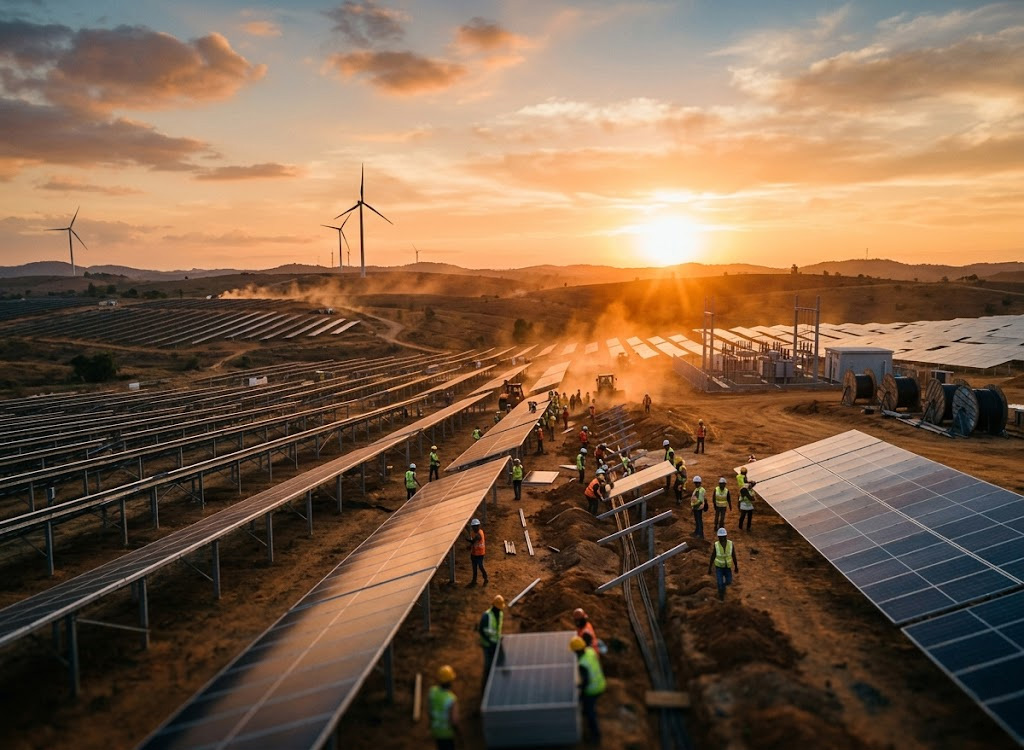
Between September 2025 and February 2026, four of Sri Lanka’s most long-delayed renewable energy projects broke ground. The 100 MW Rividanavi Solar Power Park in Siyabalanduwa, the 150 MW and 50 MW Hambantota Solar Energy Park began construction in February, The Surya Danavi 120 MW Solar Farm in Sampur, the 50 MW HayWind One Mannar Wind Project, and the 100 MW Mannar Phase II wind project have already signed PPAs with CEB.
This momentum, after years of stagnation, deserves genuine acknowledgement. For an energy sector that has largely marked time while demand surged and diesel bills mounted, these are meaningful milestones.
The question that must immediately follow, however, is this: how long did it take to reach this point? And how long will it take to connect to the grid.
An honest accounting of the timeline between initial approvals and physical construction commencement reveals a systemic pattern of multi-year delays that has no defensible technical justification.
Beyond projects now under construction, a significant volume of renewable investment has been lost entirely — casualties of policy discontinuity between successive administrations.
What delay actually costs: The diesel arithmetic
Delays in commissioning renewable energy projects are not administrative inconveniences. They have a direct, calculable financial consequence: Sri Lanka must generate the electricity it needs regardless. In the absence of renewable capacity, that electricity comes disproportionately from thermal oil-fired generation.
The scale of the thermal oil dependency is documented in CEB’s own statistical records. As of 2024, Sri Lanka maintained thermal oil generation capacity under CEB ownership and additional oil-based capacity held by Independent Power Producers. The generation cost differential between thermal oil and renewable energy is severe: based on 2025–2026 Public Utilities Commission of Sri Lanka (PUCSL) data, thermal oil generation costs range between LKR 50 and LKR 120 per kWh — compared to the Cabinet-approved 2025 Feed-in Tariff for battery-backed energy at around LKR 45 per kWh, and daytime solar generation averaging approximately LKR 28 per kwh. A recovering economy burning more diesel to compensate for renewable generation that exists on paper but not on the grid represents a direct and measurable fiscal drain.
Five structural failures behind the backlog
The delays documented above are not random. They are the product of structural failures that repeat across projects, across administrations, and across decades. Naming them with precision is the first requirement of fixing them.
A procurement architecture built for a different century
Sri Lanka’s energy project procurement process was designed for large thermal power plants that take years to build and required extensive international financing arrangements. It is categorically ill-suited to the pace at which renewable energy projects must be deployed. This is not a standard Sri Lanka should accept when comparable systems elsewhere move from tender to commissioning in 18–24 months.
Digitalisation of the procurement process, together with the establishment of properly trained and dedicated Bid Evaluation Committees and Cabinet-appointed procurement entities, is essential to accelerate renewable energy deployment in Sri Lanka. Procurement delays often arise due to capacity constraints, inconsistent evaluation approaches, and lengthy approval procedures. A professional and specialised procurement framework, supported by modern e-procurement systems, can significantly improve transparency, accountability, and efficiency while reducing the time taken to award and implement energy projects.
Policy that exists on paper and nowhere else
One of the less discussed challenges in Sri Lanka’s energy sector is the gap between policy formulation and policy implementation.
In 2025, the Ministry of Energy published the Green Energy Acceleration Targets 2025–2030, providing a clear roadmap for renewable energy development, energy storage deployment, transmission expansion, and long-term energy security. However, achieving these targets requires all stakeholders to align their actions towards the same national objectives.
Unfortunately, different institutions, consultants, policymakers, and industry stakeholders often prioritise projects based on their individual perspectives, immediate priorities, or their own interests. While each initiative may have merit on its own, the absence of a unified implementation framework can result in fragmented efforts, duplication of work, and delays in achieving national targets.
Energy transition requires a common national vision, measurable targets, and coordinated execution across all institutions. Without such alignment, stakeholders may work hard and invest significant resources, yet the collective outcome may still fall short of the country’s strategic goals.
Institutional fragmentation with no single point of accountability
Responsibility for energy sector delivery is divided among the Ministry of Energy, CEB, PUCSL, Sri Lanka Sustainable Energy Authority (SLSEA), and Treasury — with overlapping mandates and no single institution empowered to drive end-to-end project delivery. The Indian conglomerate’s episode illustrated this dysfunction with particular clarity: PUCSL refused to approve an award that Cabinet had sanctioned, citing information that CEB had not provided — a failure of inter-agency coordination that cost Sri Lanka nearly half a gigawatt of wind capacity. The absence of a National Energy Policy Planning Office (NEPPO) — insulated from electoral cycles, staffed by professionals, and empowered to coordinate across agencies — means that each change of government creates a reset of institutional knowledge and a fresh period of strategic uncertainty.
Attracting private capital through bankable PPAs and strategic partnerships
Sri Lanka’s energy transition cannot be financed through public funds alone. To attract private capital, particularly Foreign Direct Investment (FDI), the country must offer bankable, predictable, and transparent commercial frameworks.
Investors and lenders require long-term certainty before committing capital. Projects with uncertain contractual terms or delays in finalising agreements face significant challenges in securing financing and achieving financial closure.
With the restructuring of the electricity sector, Electricity Generation Limited (EGL) has an opportunity to partner with experienced local and international investors through Joint Ventures (JVs), bringing together equity, technical expertise, and access to global financing.
To unlock this potential, Sri Lanka must focus on developing truly bankable Power Purchase Agreements (PPAs), facilitating strategic partnerships, and establishing clear and efficient procurement processes. These reforms will improve investor confidence, reduce financing costs, and accelerate the delivery of much-needed generation capacity to support the country’s energy transition.
Transmission infrastructure that cannot absorb the capacity being built
Traditionally, transmission projects have been financed either through government funding or loans from development partners. While concessional financing provides access to capital, the approval processes, environmental clearances, procurement procedures, and lender concurrence requirements can significantly extend project implementation timelines.
The restructuring of the electricity sector has created new opportunities to accelerate transmission development. Under the new framework, private investors may be able to participate in transmission infrastructure development through appropriate licensing and investment mechanisms. By creating a clear and transparent framework for private sector participation, Sri Lanka can attract both local and foreign investment into transmission infrastructure while reducing implementation delays.
If the country is serious about accelerating renewable energy deployment, transmission infrastructure must be developed at the same pace as generation capacity. Otherwise, renewable energy projects may be built, but the grid will remain unable to fully utilize them.
The BESS gap: What is still genuinely missing
While solar generation projects are finally breaking ground, a critical gap in the energy transition remains almost entirely unaddressed: Battery Energy Storage Systems (BESS). Sri Lanka has over 2,000 MW of installed solar capacity — an achievement of real significance — but all of that generation occurs during daylight hours. Peak electricity demand falls at night, now exceeding 3,100 MW. The mismatch is structural and cannot be resolved by adding more solar panels.
The GREAT 2025–2030 Plan proposes multiple BESS projects and a 600 MW pumped hydro storage facility. Of these, only the 100 MW Kolonnawa BESS has secured financing but is already running behind its original schedule. All other storage projects require land identification, environmental approvals, and multi-year procurement cycles that extend well beyond the plan’s stated horizon. As an example, the 160 MW BESS project had been commissioned six months earlier than planned, and assuming a 4-hour daily discharge replacing diesel generation, the system could have avoided approximately LKR 4-5 billion in generation costs during that period. This shows that procurement and implementation delays in storage projects have a direct and significant cost to consumers and the economy.
A well-structured and motivated feed-in tariff for solar-plus-BESS systems — prioritising projects below 10 MW for rapid, distributed deployment — could mobilise private capital from households, businesses, and independent investors without requiring public financing. The required BESS capacity targets must be formally published with defined procurement timelines. As a practical example: a 300 MW ground-mounted solar-plus-BESS target should have a Feed-in Tariff published within three months, investment applications open within six, and binding financial closure milestones thereafter. This mechanism has been successfully demonstrated at smaller scale in Sri Lanka’s own rooftop solar programme. Extending it to storage-integrated systems is the logical and urgent next step. It does not require new legislation. It requires a published tariff schedule and the institutional will to honour it.
Financing models for renewable energy
The renewable energy projects now breaking ground have each been financed through bespoke arrangements — bilateral state deals, multilateral development bank loans, and private equity structures negotiated project by project, often taking years to close. This patchwork model cannot deliver the volume and velocity of investment that Sri Lanka’s 70% renewable energy target by 2030 demands. Three financing channels require systematic development: multilateral blended finance, domestic green capital markets, and private investment de-risking instruments.
Multilateral blended finance: The foundation being laid
The Asian Development Bank committed over US$330 million across three instruments within a twelve-month window in 2024. The US$200 million Power System Strengthening and Renewable Energy Integration loan, approved November 2024, covers new 220 kV and 132 kV transmission lines, substations, distribution network modernisation, and Sri Lanka’s first grid-scale battery energy storage system at transmission level. A complementary US$30 million Small Expenditure Financing Facility (SEFF) finances feasibility studies for advanced renewable technologies and transmission preparatory work. A further US$100 million policy-based loan, approved July 2024, targets power sector financial sustainability and private investment facilitation. The World Bank Group’s US$150 million “Secure, Affordable and Sustainable Energy” programme includes US$40 million in payment guarantees backstopping CEB’s PPA obligations — the single most persistent deterrent to private capital in Sri Lanka’s energy sector — and is expected to mobilise over US$800 million in private investment and add 1 GW of clean electricity to the national grid.
The Sampur AIIB financing structure — combining a US$20 million sovereign-backed loan with non-sovereign commercial debt co-financed by ADB is the blended finance template Sri Lanka should institutionalise across all major renewable energy projects. This architecture de-risks projects sufficiently for commercial lenders to participate at reasonable cost, reducing sovereign balance sheet burden while accelerating deployment. It must become the contractual standard, not a one-off diplomatic arrangement applied only to high-profile bilateral projects.
Domestic green capital markets
The Central Bank of Sri Lanka’s (CBSL’s) introduction of the GSS+ (Green, Social and Sustainability) Bonds Regulatory Framework in 2025 has provided the formal architecture for sustainable bond issuances aligned with international standards. Recent GSS+ issuances have mobilised approximately LKR 85 billion (EUR 186 million) across renewable energy, energy efficiency and water resilience sectors, with several issuances oversubscribed — reflecting genuine market demand, not regulatory compliance theatre. The Bank of Ceylon issued Sri Lanka’s largest sustainability bond in December 2025 — a Rs. 20 billion Basel III-compliant Tier II instrument, oversubscribed on day one — channelling capital into renewable energy, EV infrastructure, and energy efficiency projects. These instruments reduce Sri Lanka’s dependence on foreign currency sovereign loans and build a self-sustaining capital pool for the transition.
What the green bond market reveals, however, is a structural asymmetry: financing supply is activating faster than the bankable project pipeline that capital can actually flow into. A well-designed Feed-in Tariff, a predictable PPA framework, and payment security instruments for sub-10 MW BESS-integrated projects — the kind already operational in comparable South Asian markets — would close this gap without requiring new legislation. They require only institutional will and a published tariff schedule.
Financing transmission infrastructure
New generation capacity connected to a grid that cannot absorb it is not an energy solution — it is an expensive stranded asset. Yet transmission infrastructure financing has consistently received far less policy attention than generation. This is a sequencing error with measurable consequences. The Sampur Phase I project requires a 37-kilometre 220 kV transmission line from Sampur to Kappalthurai; Phase II adds a further 77 kilometres to New Habarana. The Rividanavi Solar Park required a new 132 kV transmission facility as an integral part of its procurement. ADB’s 2019 assessment estimated that transmission investments of US$320 million were required for 2020–2025 alone to adequately interconnect new generation facilities. That investment did not materialise at pace. The ADB’s November 2024 US$200 million loan directly targets this deficit but it is partial coverage of a gap that has been accumulating for over a decade.
The NTNSP financing decision cannot be deferred
The National Transmission Network Strengthening Project (NTNSP) represents Sri Lanka’s most consequential near-term infrastructure investment decision. Whether to rely on sovereign loans, public utility bonds, private participation, or a structured hybrid has been under extended review without resolution. Transmission lead times are long, land acquisition is slow, and environmental clearance processes cannot be compressed. Every month of delay in resolving the financing architecture is a month of delay in procurement that must precede construction.
Traditionally, transmission projects have been financed through government funds or development partner concessional loans. The restructuring of the electricity sector into Electricity Generation Lanka (EGL) and successor entities has created a structural opportunity: with appropriate licensing and transparent access frameworks, private investors can participate in transmission infrastructure development — reducing the public financing burden while accelerating deployment timelines. A clear framework for private transmission participation, including open-access rules, revenue recovery mechanisms, and defined licensing conditions, should be published without further delay. The principle is straightforward: transmission investment must be procured ahead of generation commissioning, not in parallel with it and certainly not after it. A forward transmission investment model, in which grid reinforcement for identified renewable resource zones is procured on a rolling multi-year basis independent of individual project timelines, is the only architecture that prevents grid constraints from becoming the binding rate-limiter on Sri Lanka’s renewable energy build-out.
Digitalisation
Managing a grid with 70% renewable penetration — which the CEB achieved for the first time in June 2025 is an operationally different challenge from managing the fossil-fuel-dominated system of five years ago. Variable solar and wind generation require real-time balancing, frequency regulation, and dispatch optimisation capabilities that manual or semi-automated grid operations cannot reliably provide. Digitalisation is therefore not a future aspiration for Sri Lanka’s energy sector. It is the operational prerequisite for managing the system that already exists, and that will become materially more complex as renewable penetration increases further. The draft document rightly identifies digitalisation of the procurement process as an urgent requirement. This article argues the need goes further — into the grid’s operational and planning architecture as well.
The forecasting failure and its measurable cost
The most immediate and visible consequence of Sri Lanka’s digital deficit is the demand forecasting failure embedded in the Long-Term Generation Expansion Plan. Night peak demand has crossed 3,100 MW in April 2026 — materially ahead of LTGEP projections — and the planning process’s limited use of real-time data analytics and AI-based load forecasting is a documented contributor to that gap. Research using CEB’s own historical load data has demonstrated that deep learning techniques — including Long Short-Term Memory (LSTM) networks and Convolutional Neural Networks (CNN) — significantly outperform traditional linear regression approaches in capturing Sri Lanka’s non-linear demand patterns, particularly EV adoption effects, urbanisation-driven air conditioning load, and post-crisis economic rebound . These tools exist. Sri Lanka’s engineering community has the technical capability to deploy them. What has been absent is institutional adoption within CEB’s operational planning workflow.
Smart grid investment
ADB’s November 2024 US$200 million loan explicitly includes digitalisation solutions as a core project component — covering grid protection system upgrades, medium voltage distribution network modernisation, and the infrastructure required to support variable renewable integration at scale. This is a necessary but insufficient response. The loan addresses the infrastructure layer of digitalisation. What Sri Lanka also urgently needs is the operational technology and software layer: Advanced Distribution Management Systems (ADMS) for real-time grid control, Energy Management Systems (EMS) for the National System Operator, real-time generation and demand forecasting tools embedded in the dispatch process, and the cybersecurity architecture that a digitally connected grid requires. ADB has separately supported a Digital Grid Research Lab pilot in Sri Lanka that produces important proof-of-concept outputs; these must be translated into system-wide deployment, not remain as pilot studies.
Smart metering and demand-side intelligence
The absence of a smart metering programme in Sri Lanka is simultaneously a demand management failure, a revenue protection failure, and a data infrastructure failure. Time-of-use tariffs — a proven mechanism for shifting discretionary consumption away from peak hours and directly relevant to managing night peak demand — require smart meters to function. Distributed rooftop solar and BESS systems require two-way metering to operate commercially at scale. Real-time demand response programmes require the communication infrastructure that smart meters provide. The ADB November 2024 loan includes distribution network modernisation provisions that can accommodate smart meter rollout; what is needed alongside it is a published deployment schedule, a PUCSL-gazetted time-of-use tariff framework for consumers above 180 units per month, and a consumer education programme that makes the economics of peak shifting tangible to households and businesses. These tools are proven, affordable relative to new generation capacity, and faster to deploy. Sri Lanka is not using them. That is a choice, and it is an increasingly costly one.
What a functioning pipeline actually looks like
The path from project commitment to commissioning does not need to take five years for a 100 MW solar plant. Experience from comparable markets shows that, with the right institutional framework, renewable energy projects can move from tender award to commercial operation within 18–24 months. Achieving this in Sri Lanka requires four key reforms.
Establish a transparent project tracking dashboard
A publicly accessible project tracking dashboard should be established for all projects with signed PPAs, awarded contracts, or secured financing. The dashboard should clearly indicate project milestones, responsible institutions, target commissioning dates, and implementation progress.
Sri Lanka does not need more project announcements. It needs a mechanism that makes delays visible, measurable, and accountable.
Reform procurement and fast-track renewable energy projects
Procurement timelines for renewable energy projects should be legally capped, particularly for projects below a defined capacity threshold. Many potential project sites have already been identified and secured by investors. The National System Operator (NSO) should be empowered to conduct competitive tenders for pre-identified sites with clearly defined Solar + BESS capacities. This would significantly reduce the time required for land acquisition, permitting, and project development.
The most effective approach would be to tender Solar + BESS projects capable of delivering firm energy for up to 16 hours per day. Such projects would directly contribute to system reliability while accelerating renewable energy integration.
The current procurement framework, largely designed for conventional thermal power projects, is often applied without modification to renewable energy projects that require faster implementation. Single-window approvals, pre-screened project sites, parallel processing of environmental clearances and financial due diligence, and legally defined approval timelines are standard practices in countries that are rapidly deploying renewable energy at scale.
Stabilise and respect PPA terms
PPAs must be respected by all parties. A PPA that is renegotiated before construction begins creates uncertainty and weakens investor confidence.
Lenders and investors price this uncertainty into their financing decisions through higher financing costs or, in some cases, by withdrawing altogether. Sri Lanka must establish the principle that a signed PPA is a binding commercial agreement, with any amendments requiring independent regulatory review and full transparency.
Otherwise, developers may submit unrealistically low bids simply to secure projects and delay implementation while waiting for exchange rates, equipment prices, or market conditions to become more favourable.
Treat BESS as essential generation infrastructure
Battery Energy Storage Systems (BESS) should be treated as a core component of generation planning rather than an optional add-on. Both the LTGEP 2025–2044 and the Green Energy Acceleration Targets (GREAT) 2025–2030 recognise the importance of energy storage. What remains missing is a near-term, bankable deployment mechanism.
A dedicated Feed-in Tariff (FiT) for BESS, particularly for projects below 10 MW, would enable rapid private-sector participation and reduce dependence on expensive diesel generation during night peak periods.
At the same time, large-scale competitive tenders for Solar + BESS projects delivering firm energy should be introduced. Such projects can convert intermittent renewable energy into reliable dispatchable capacity and help bridge the growing gap between electricity demand and available generation.
If implemented urgently, these measures can deliver measurable benefits within months rather than years.
Welcome the progress, confront the pattern
The groundbreakings of 2025–2026 represent genuine progress. The pattern behind all of these facts is the same pattern that has shaped Sri Lanka’s energy sector for two decades: genuine ambition, followed by institutional inertia, followed by partial recovery, followed by a policy reversal that prevents the recovery from consolidating. This cycle has a cost — measured not in policy papers but in rupees per kilowatt-hour, in dollars of foreign exchange, and in the industrial competitiveness and household welfare consequences of electricity that is more expensive than it needs to be.
Sri Lanka has the resources, the technical capability, and the investor interest to do this differently. What remains is the institutional discipline to translate approvals into construction on a timeline that the country’s energy security actually demands.
The question is no longer whether Sri Lanka can build renewable energy. It clearly can. The question is whether it can build it at the pace and scale that the gap between its current reality and its stated commitments requires.
(Prof. Udayanga Hemapala is a Professor in the Department of Electrical Engineering, University of Moratuwa, and a former Secretary to the Ministry of Energy, Sri Lanka)
Disclaimer: The views and opinions expressed in this article are those of the writer and do not necessarily reflect the official position of this publication.











Leave a comment