
By Prof. Prasanna Perera
Context:
After the severe macroeconomic crisis of 2022, which led to sovereign default, foreign exchange shortages, and the largest economic contraction in the country’s post-independence economic history.
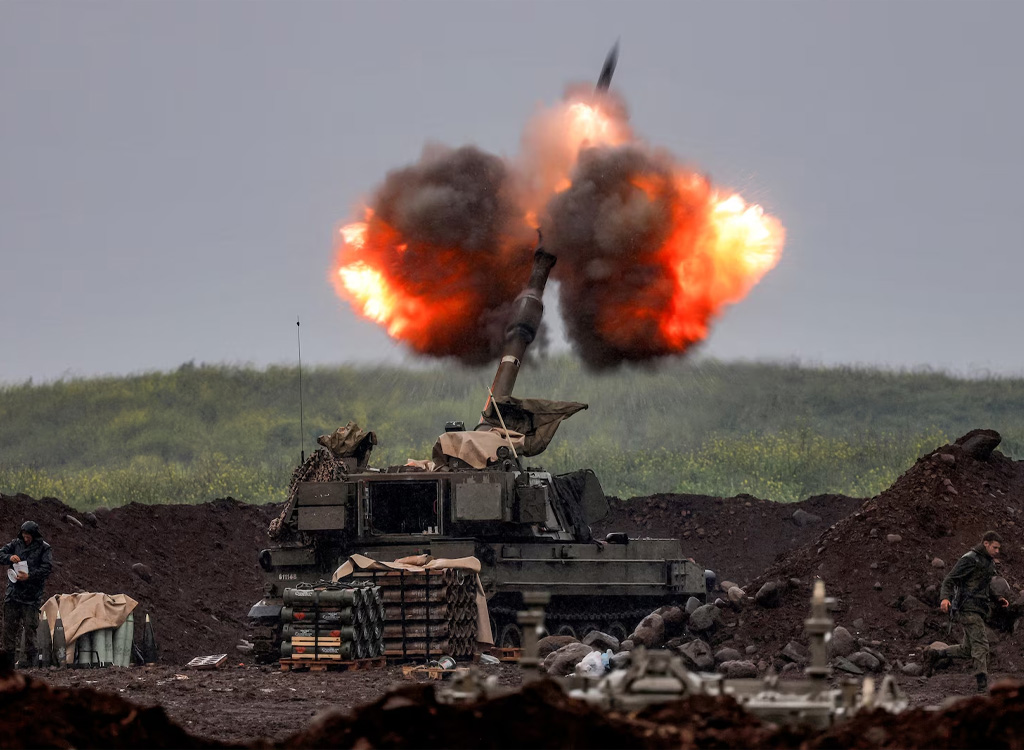
At present, Sri Lanka’s inflation has dropped from 70% to only 2-3%, and GDP growth increased to 4-5% from a negative growth. Stabilization has slowly returned thanks to fiscal consolidation, tighter monetary policy, and an IMF-supported reform program. Nevertheless, unemployment among youth and women, poverty, and income inequality are all on the rise. Sri Lanka’s economic recovery is still fragile. With this status quo in mind, there is no room for error in Sri Lanka’s economic policy-making. This becomes a primary concern as Sri Lanka is sensitive to external shocks, such as the ongoing 2026 Iran War.
The world’s oil supply depends on the Strait of Hormuz and the Suez Canal. When those naval routes are blocked, import-dependent economies like Sri Lanka will be impacted with rising energy costs, depreciating currency, shrinking foreign reserves, and a balance of payment crisis.
Sri Lanka gets most of its oil and relies heavily on Middle Eastern labor markets. Remittances from Sri Lankan workers in Gulf countries are still the country’s largest source of exchange revenues.
This article examines how conflict between the US, Israel, and Iran in the Gulf region will affect Sri Lanka’s economy, via energy price shocks, their impact on the balance of payments, remittances, tourism, and exports, and with a brief section of scenario analysis.
- Energy price shocks and the balance of payments
Sri Lanka is vulnerable in terms of handling energy costs and markets because a large part of its import costs comes from buying oil. Rising energy prices place direct pressure on the balance of payments of oil-importing developing economies. In 2025, fuel (petroleum oils) made up the largest part of imports, accounting for 18.8% of the total bill at USD 4,042.5 million. Sri Lanka’s annual fuel import bill has ranged from about $3.5 billion to $5 billion in recent years, depending on how prices are doing around the world. Even small increments to the price of the global oil supply will be felt disproportionately in Sri Lanka.Hypothetically, if the cost of importing crude oil goes up by 25% because of the conflict in the Middle East, Sri Lanka’s annual import bill could go up by about USD 4 billion X 0.25 = USD 1 billion. The current crisis is unfolding on a greater scale than this humble assumption because there is no clear end in sight to the war, and oil prices will therefore remain uncertain. If the crisis is prolonged, Sri Lanka’s annual fuel import bill could go up by more than USD 2 billion, currently unaffordable.
If energy import costs rise, it could slow the accumulation of foreign reserves and put pressure on the exchange rate. While the government and the Central Bank report gross foreign reserves of approximately USD 7 billion, the usable portion is less, closer to USD 5.5 billion (excluding 1.5 billion in Yuan) only. This amount will be pressurized when the import bill goes up due to the energy crisis. If the war drops foreign reserves, there will be pressure for the domestic currency to depreciate. If the cost of imports rises, it will slow down the buildup of foreign reserves and put more pressure on the exchange rate to further depreciate.
Energy price shocks will also generate inflation, because when fuel prices rise, transportation costs rise. The cost of producing electricity will also rise due to Sri Lanka’s dependence on thermal electricity generation. Rising gas prices are a direct threat to food inflation because they increase the cost of cooking, transportation, and food production.
During the economic crisis in Sri Lanka in 2022, fuel shortages and price adjustments caused inflation. Inflation has reduced since then, but the economy is sensitive to imported inflation coming from global commodity markets. Sri Lanka’s foreign reserves will shrink with the rising import bill, falling export revenues because of higher logistics costs, weakening foreign exchange earnings, and falling tourism receipts. The result is a growing current account deficit and a crisis in the balance of payment, which will lead to depreciation of the rupee.
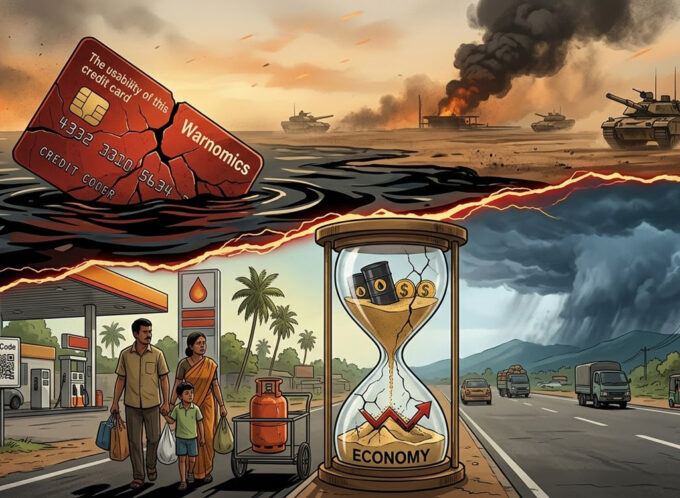
Following the Mundell-Fleming framework for open economy analysis, rising import prices and higher import costs place direct pressure on the balance of payments. As export earnings fall, foreign investment slows, and tourist arrivals decline, the deficit in the goods and services account widens, putting strain on the current account. To bridge the external payments gap, foreign reserves are drawn upon, and as a result, reserve levels begin to fall. Next, the value of the rupee weakens while the dollar strengthens. This depreciation feeds into higher imported inflation, raising the cost of goods across the economy. If the Central Bank steps in to contain it, interest rates are likely to rise as well, increasing the cost of borrowing for businesses and households and dampening economic growth further. It is the very sequence of events that unfolded during the 2022 crisis, and the conditions for it to repeat are forming once again. - Remittances and labour migration risks
Sri Lanka is dependent on labor migration and remittance flows in the Gulf. Remittances remain Sri Lanka’s largest source of foreign exchange earnings, concentrated mainly in the Middle East. Sri Lanka has strong ties to the labor markets of Gulf Cooperation Council countries, especially Saudi Arabia, Qatar, the United Arab Emirates, and Kuwait. In some years, these inflows have exceeded $8 billion, covering a significant share of the nation’s foreign currency revenues. Thus, the current Middle East crisis poses a direct and immediate threat to Sri Lanka’s foreign exchange earnings and economic stability.
Around half of Sri Lanka’s remittances, approximately USD 4 billion, originate from workers based in the Middle East. This concentration places the country in a vulnerable position; any shift in the region’s geopolitical stability can swiftly disrupt foreign exchange earnings and foreign reserves, with direct consequences for the employment of migrant workers and the welfare of the families who depend on them back home.
It is also worth noting here that if geopolitical uncertainty makes it harder for Sri Lankan workers to find employment or keep wages from rising, remittance inflows could fall meaningfully. If Middle East remittances were to decline by 60%, Sri Lanka would lose approximately USD 2.4 billion (USD 4 billion X 0.6) in foreign exchange earnings annually, a blow to the economy.
Just before the conflict escalated, CBSL data showed that remittances had risen sharply, from USD 548.1 million in February 2025 to USD 729 million in February 2026. Total remittances for January and February 2026 reached USD 1.48 billion, representing a 32% increase compared to the same period last year. However, the situation has deteriorated rapidly since then. If instability persists in the Middle East, overseas workers may choose to hold back remittances temporarily as a precautionary measure, which would deplete the foreign reserves.
Remittances help household consumption, keep the balance of payments stable, and finance imports. So, a long-term drop could hurt domestic demand and put more depreciation pressure on the exchange rate.
The government has a clear duty to protect its citizens abroad, particularly given that between 1.2 and 1.5 million Sri Lankan workers are based in the Middle East. That means maintaining close contact with respective governments, monitoring how the conflict develops, and being transparent with the public about the real possibility that instability could be prolonged. Evacuation and repatriation plans cannot be something that gets put together in a hurry when a crisis is already unfolding. These frameworks need to be developed, tested, and institutionalized well before they are ever needed, so that when disruptions do occur, the response mechanisms are already in place and operational. Sri Lanka’s foreign policy must place the well-being of its migrant workers firmly at the center of its priorities, not treat it as an afterthought. - Impact on tourism income
Geopolitical instability creates a climate of uncertainty, leading individuals to be more hesitant about traveling internationally. With the war, tourists will postpone or cancel long-distance travel, particularly if airline routes approach the areas of conflict. Europe to Asia travel will be impacted, and should delays occur, or if insurance and fuel costs rise, airfares may increase, making Sri Lanka a more expensive destination for travelers. Second, the war will lead to oil prices rising globally, resulting in increased operational costs for airlines. This escalation can lead to a reduction in the flight frequencies and tourist arrivals. Third, several Middle Eastern nations are emerging markets for Sri Lanka’s tourism sector. Economic or security challenges in those regions could deter individuals from traveling internationally.
Sri Lanka’s tourism sector began 2026 with momentum carried over from previous years. In 2025, the nation welcomed over 2.36 million international tourists, marking the highest number recorded to date. The tourism sector generated USD 3.2 billion, establishing it as the second-largest contributor to the country’s foreign exchange earnings.
The 2026 Iran War, as of March 2026, has created numerous challenges for tourists wishing to visit Sri Lanka. Between March 1 and March 7, only 41,276 tourists visited the Middle East. This represents a 23% decline compared to the same period in 2025, when 53,113 tourists arrived. The primary reason for these decreases was the cancellation of numerous flights and restrictions on airspace in key Middle Eastern hubs. Nearly 40% of individuals traveling to Sri Lanka typically transit through Gulf airports, exacerbating the disruption. If the annual influx of tourists to Sri Lanka were to decline by 50%, the nation would forfeit nearly $1.6 billion in foreign exchange revenue.
Airlines such as Qatar Airways, Emirates, Flydubai, and Etihad suspended their flights. It is estimated that tourism revenue could decline by $15 million within a single week. Around 10,000 tourists found themselves stranded in Sri Lanka. The government provided emergency 14-day visa extensions to visitors who were affected.
At the time of writing, there are still no clear instructions on the QR-based fuel system that was said to be introduced for the tourism industry. A large number of people depend on the tourism sector for their livelihoods, and the question of what exactly the government’s plan is when it comes to sustaining tourist numbers deserves serious attention. Without a clear and practical strategy, even the tourists who do arrive may not reach their intended destinations and could end up stranded with nothing to do. That kind of experience will leave a lasting mark on the industry and hurt business for a long time to come. Sri Lanka cannot afford to let short-term policy confusion undermine what has been one of the strongest pillars of its economic recovery. - Impact on export income
From 2020 to 2025, the total exports of goods and services increased at an average annual rate of 9.5%, culminating in USD 20.6 billion by 2025. The goods exports remained at 13,6 billion for the period. The primary contributors to merchandise exports were apparel, tea, and coconut-based products. Tea exports alone generated $121.8 million in January 2026, reflecting a 5% increase from the $112.7 million earned in January 2025.
CBSL has emphasized that an escalation of the war directly impacts Sri Lanka’s merchandise trade. This is due to the nation’s significant dependence on trade with that region, such as tea, and tea exports to the Middle East account for approximately 52% of total tea exports, while over 90% of crude oil and around 40% of refined petroleum imports originate from Middle Eastern nations.
The tea industry is currently most vulnerable. In 2025, approximately 125 million kilograms of Ceylon tea, valued at USD 750 million, were exported to the Middle East. Tea exports to the region have nearly ceased as major shipping lines have halted their services due to the threat of conflict in the Strait of Hormuz and the Red Sea. This disruption is resulting in losses for the area amounting to $10 to 15 million each week.
Industry leaders indicate that increasing oil prices, elevated shipping costs, and supply chain issues are exacerbating challenges for various exports, not limited to tea alone. The tea-for-oil barter agreement between Iran and Sri Lanka, which enabled Sri Lanka to settle approximately 95% of its USD 251 million debt to Tehran, is now at risk of collapsing due to US sanctions that complicate trade between the two nations.
Scenario Analysis:
- The combined foreign exchange losses from the three main channels are staggering. If Middle East remittances fall by 60%, Sri Lanka loses around USD 2.4 billion annually. If tourist arrivals drop by 50%, another USD 1.6 billion disappears. If export revenues decline by even 30% due to shipping disruptions, freight cost surges, and the near collapse of tea exports to the Middle East, the country stands to lose approximately USD 4.1 billion.
- Taken together, the combined hit could amount to approximately USD 8.1 billion in lost foreign exchange earnings, more than Sri Lanka’s usable foreign reserves of roughly USD 5.5 billion. Even if only a fraction of these scenarios materialises simultaneously, the pressure on the balance of payments would be severe enough to threaten the fragile stability painstakingly rebuilt since the 2022 collapse.
- Approximately 25% of Sri Lanka’s electricity comes from thermal oil, rising to nearly 40% at peak times. The CEB had already sought a 13.56% tariff hike for April to June 2026, even before the full oil shock was priced in. If global crude remains above USD 100, a further revision of 20 to 30% becomes entirely plausible, placing severe pressure on small industries and low-income households.
- Compounding the electricity crisis, according to a PUCSL investigation report submitted to the Parliamentary Sectoral Oversight Committee on Infrastructure and Strategic Development, nine coal shipments received at the Norochcholai power plant between December 2025 and February 2026 were of inferior quality, causing a total financial loss estimated at Rs. 8.5 billion. The government was forced to approve emergency coal purchases of 300,000 metric tonnes. With the Norochcholai plant supplying 35 to 40% of the national grid, this is a direct threat to energy security at precisely the moment when global fuel markets are in turmoil.
- Brent crude closed at USD 103.14 per barrel on March 13, 2026, its second consecutive close above USD 100, following a 27.9% surge the previous week. If prices approach USD 130 to 150 per barrel, the country could face power cuts and fuel queues reminiscent of the 2022 crisis.
- Domestic fuel prices have already risen by Rs. 22 to 25 per litre since the conflict began. If the conflict de-escalates and crude falls to USD 80 to 90, petrol (Octane 92) could settle between Rs. 300 and Rs. 330. If the conflict persists at the current intensity with oil at USD 95 to 110, petrol may reach Rs. 340 to 370. If the Strait of Hormuz is fully disrupted and crude surges to USD 130 to 150, petrol could exceed Rs. 400.
- Diesel, the backbone of goods transport and the agricultural supply chain, would follow a similar trajectory. Auto Diesel could climb from the current Rs. 303 to Rs. 340 under a prolonged war, and beyond Rs. 370 under a major escalation. Every rupee increase in diesel feeds directly into the cost of moving essential goods from farms and ports to markets, creating a chain reaction affecting food prices, logistics expenses, and the general cost of living.
- Sri Lanka’s annual fuel import bill of approximately USD 4 billion could swell to USD 4.5 to 5 billion, an additional burden of USD 500 million to USD 1 billion that the country simply cannot absorb at this stage of its recovery.
- Inflation, which had fallen to just 1.6% in February 2026, could accelerate sharply. The IMF had already projected 2026 average inflation at 5.4%, and a sustained oil shock would push it considerably higher. The rupee, currently around Rs. 311, could weaken to Rs. 320 to 340 under sustained oil pressure, and beyond Rs. 350 under a severe crisis. A weaker rupee raises import costs, widens the trade deficit, and pushes the currency down further.
- If the Central Bank raises interest rates to defend the currency and control inflation, economic growth slows below the projected 5%, hitting ordinary people and businesses hardest and potentially derailing Sri Lanka’s commitments to the IMF. None of these outcomes is inevitable, but none are far-fetched either. Sri Lanka simply does not have the reserves or the economic buffer to absorb shocks of this scale, and that is precisely what makes the current situation so dangerous.
Policy responses and economic resilience
Sri Lanka’s economy can endure external shocks over the long term if it minimizes its vulnerability to such influences and strengthens its own economic foundations.
The clean energy transition should be considered. Renewable energy sources such as solar and wind power can reduce our dependence on fossil fuels imported from other nations.
Lanka should avoid dependence on suppliers from the Middle East and vulnerable corridors. Instead, it should proactively explore opportunities to establish agreements with alternative suppliers, including traders from Russia, China, India, and Singapore.
Expanding export markets beyond traditional destinations could reduce exposure to regional disruptions. Sri Lanka may stay competitive as a marine center by making its ports more efficient and improving its logistical infrastructure. Sri Lanka should actively seek new export markets and trade partners beyond the Middle East, particularly in India, Southeast Asia, and the broader Asia-Pacific area.
To get more tourists from other parts of the world, the government and tourism authorities should plan and implement promotions in East Asia, South Asia, and Europe. More cooperation between airlines and keeping flight packages competitive will also help sustain tourist arrivals. Sri Lanka’s tourism should improve its digital marketing by focusing on safety, cost, and the country’s unique cultural and natural attractions. Also, improving the country’s infrastructure and service quality for tourists will make it more competitive and better prepared to manage shocks from outside the country.
Finally, expanding employment opportunities for Sri Lankan workers in regions beyond the Middle East would help reduce the country’s dependence on a single source of remittances. By actively promoting labour migration to markets in East Asia, Southeast Asia, and Europe, Sri Lanka can diversify its remittance base and lower the risk of a sudden drop in foreign exchange earnings caused by instability in any one region.
Conclusion
The 2026 Iran War is a significant external risk to Sri Lanka’s fragile economy. Energy price volatility, shipping disruptions, remittance and tourism uncertainties could all place pressure on Sri Lanka’s external accounts and macroeconomic stability.
While the extent of the impact will depend on how the conflict evolves, economic resilience, and steps we take towards it as individuals and as a community, should be praised and encouraged. Diversifying energy sources, strengthening export competitiveness, addressing issues related to tourism sector and managing external vulnerabilities will be critical.
Sri Lanka should talk to the IMF to negotiate flexibility within its existing program parameters.
(The writer is a Senior Professor in Economics and the Head of the Department of Economics and Statistics, University of Peradeniya)
Source: Factum
Disclaimer: The views and opinions expressed in this article are those of the writer and do not necessarily reflect the official position of this publication.









Leave a comment