
By Dr. Akalanka Thilakarathna
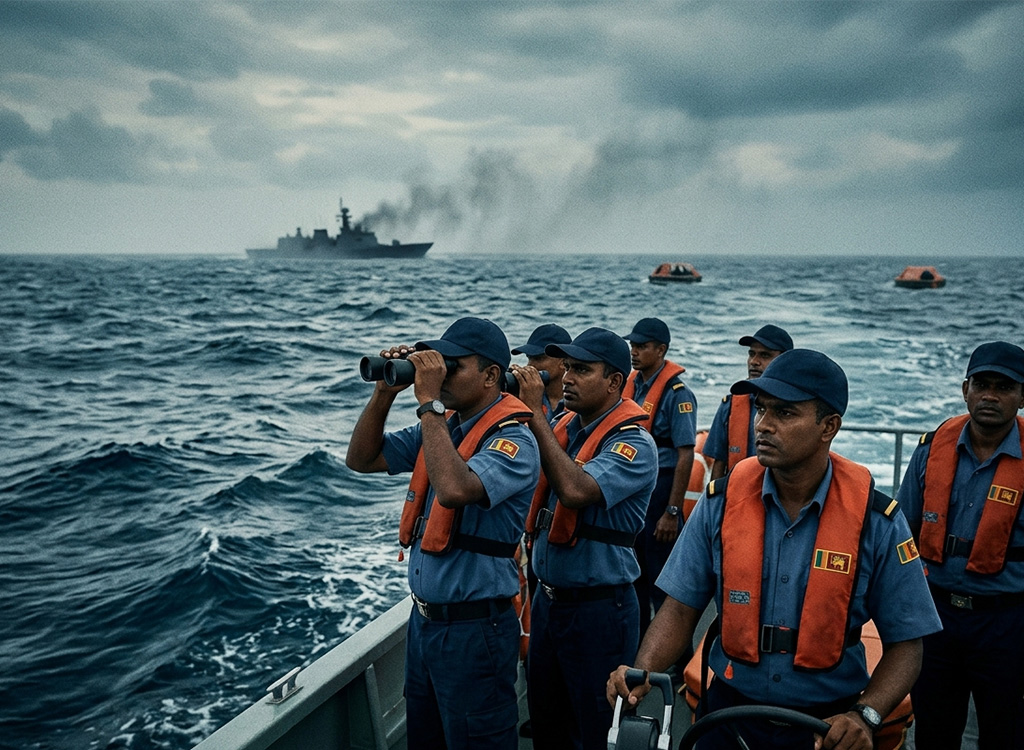
Recent developments in the Indian Ocean have drawn unusual attention to Sri Lanka’s maritime environment. The reported sinking of the Iranian Naval frigate (IRIS) Dena by a US submarine in waters South of Sri Lanka has transformed what might otherwise have been a distant geopolitical confrontation into an event occurring almost at the Island’s doorstep. Although the incident reportedly occurred outside Sri Lanka’s territorial sea, it likely took place within Sri Lanka’s Exclusive Economic Zone (EEZ), a maritime area where the State enjoys certain economic rights under international law.
This geographical proximity has naturally sparked public debate within Sri Lanka about the country’s legal obligations and diplomatic responsibilities. Questions have been raised about whether Sri Lanka must condemn the attack, whether it should investigate the incident, or whether it must assist one side or another. These discussions often invoke the concept of neutrality, but the meaning of neutrality in international relations is frequently misunderstood.
In public discourse, neutrality is sometimes interpreted as silence or unwillingness to take a moral position. In reality, neutrality is neither passivity nor indifference. It is a carefully structured legal status developed through centuries of international practice and codified in various treaties governing the conduct of states during armed conflict. For a country such as Sri Lanka — situated along one of the world’s busiest maritime routes — understanding neutrality is essential for maintaining stability and protecting national interests.
The legal meaning of neutrality in int’l law
In the law of armed conflict, neutrality refers to the legal position of a state that chooses not to participate in a war between other states. A neutral state remains outside the conflict and refrains from providing military support to any of the belligerent parties. At the same time, the neutral state must conduct its relations with all parties in a manner that reflects impartiality.
The legal framework governing neutrality emerged prominently during the 19th and early 20th Centuries, culminating in the Hague Conventions of 1907, particularly Hague Convention V concerning the rights and duties of neutral powers on land and Hague Convention XIII relating to naval warfare. These instruments established many of the principles that continue to guide state behaviour today.
Two fundamental ideas underpin the law of neutrality. The first is non-participation, meaning that a neutral state must not become involved in military operations or contribute to the war effort of any belligerent state. The second is impartiality, which requires the neutral state treat all parties to the conflict equally and avoid discriminatory conduct that could benefit one side over another.
These principles are widely recognised as part of customary international law. Even states that are not formal parties to the Hague Treaties generally follow these rules because they have become embedded in long-standing international practice.
Rights and obligations of neutral states
Neutrality grants a state certain protections but also imposes important responsibilities. One of the most significant rights of a neutral state is the inviolability of its territory. Belligerent states are prohibited from conducting military operations within the land territory, territorial sea, or airspace of a neutral country. Any such action would constitute a violation of international law.
At the same time, neutrality requires the state itself to actively prevent its territory from being used as a platform for military activity. A neutral state cannot allow troops, warships, or aircraft belonging to belligerents to launch attacks from its territory. Nor may it permit the recruitment of combatants or the establishment of military bases by warring parties.
Neutral states must also exercise caution in matters such as arms transfers, intelligence sharing, or logistical support that might indirectly assist one party to the conflict. While normal commercial relations may continue, the state must ensure that such transactions do not undermine its impartiality.
The underlying logic is straightforward. Neutrality protects the state from becoming a battlefield, but that protection exists only if the state maintains strict neutrality in practice.
Neutrality in maritime spaces
The current situation near Sri Lanka highlights the importance of neutrality in the maritime context. Unlike land territory, the oceans are divided into several legal zones under the United Nations Convention on the Law of the Sea (UNCLOS), each with different legal implications.
Sri Lanka exercises full sovereignty over its territorial sea, which extends up to 12 nautical miles from the coastline. Within this zone, the state has authority comparable to its authority on land, although foreign vessels enjoy the right of innocent passage. Military hostilities occurring in this zone would constitute a clear violation of Sri Lanka’s sovereignty and neutrality.
Beyond the territorial sea lies the EEZ, extending up to 200 nautical miles from the coast. In this zone, Sri Lanka has sovereign rights over natural resources and certain regulatory powers, but, it does not possess full territorial sovereignty. As a result, naval operations conducted by foreign states in the EEZ are generally not prohibited under international law.
This distinction explains why an incident occurring 40 or more nautical miles from the Sri Lankan coastline may not legally violate Sri Lanka’s neutrality, even though it raises serious political and security concerns. The UNCLOS therefore creates a nuanced framework within which states must interpret events occurring in nearby waters.
Humanitarian duties and rescue operations
Even when a state remains neutral, international humanitarian law (IHL) imposes certain obligations relating to the treatment of persons affected by the armed conflict. These obligations are reflected in the four Geneva Conventions of 1949, which form the core legal framework governing humanitarian protection during war.
The First Geneva Convention protects wounded and sick members of armed forces on land and requires that they be collected and cared for. The Second Geneva Convention extends similar protections to wounded, sick, and shipwrecked members of armed forces at sea. This Convention is particularly relevant in maritime incidents where sailors from a damaged or sinking vessel must be rescued.
The Third Geneva Convention regulates the treatment of prisoners of war, ensuring that captured combatants are treated humanely and protected from violence, intimidation, or degrading treatment. Meanwhile, the Fourth Geneva Convention provides protection for civilians during armed conflict, including those in occupied territories.
For neutral States such as Sri Lanka, the Geneva Conventions reinforce an important principle: humanitarian assistance does not compromise neutrality. Providing medical aid, rescuing shipwrecked sailors, or assisting survivors in distress at sea is fully consistent with IHL. In fact, maritime traditions and humanitarian law strongly encourage such actions.
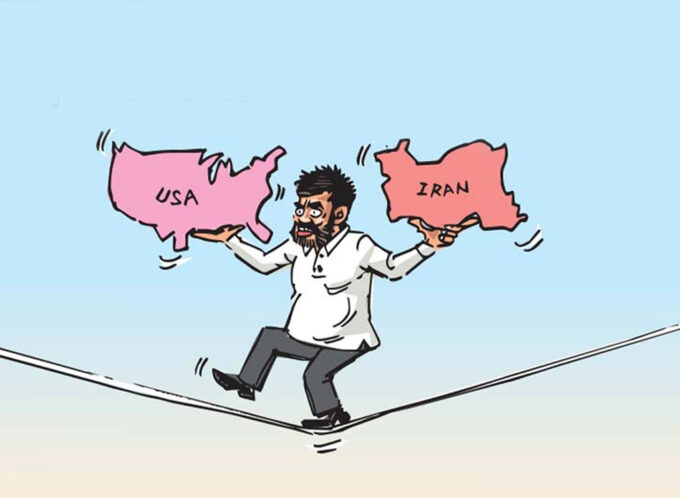
The diplomatic tightrope facing SL
Sri Lanka’s foreign policy has historically emphasised non-alignment and balanced engagement with major powers. In the current geopolitical environment, maintaining such a balance has become increasingly challenging. The Island maintains diplomatic and economic relations with the US, Iran, Israel, China, India, and numerous other states whose interests do not always align.
For a relatively small State situated at the crossroads of the Indian Ocean, taking sides in global power struggles could carry serious economic and political risks. Trade relationships, development partnerships, energy supplies, and security cooperation could all be affected by perceived alignment with one side or another.
Neutrality therefore serves as an essential strategic posture. It allows Sri Lanka to maintain constructive relations with multiple partners while avoiding direct involvement in conflicts that lie beyond its national security priorities.
At the same time, neutrality requires careful diplomatic communication. Public statements, diplomatic gestures, and even symbolic acts can be interpreted as signals of alignment. Governments must therefore calibrate their responses carefully in order to maintain credibility as a neutral state.
Neutrality as a strategy for small states
In an era of increasingly polarised geopolitics, neutrality continues to offer an important strategy for small and medium-sized states. Countries such as Switzerland and Austria have long demonstrated how neutrality can serve as a foundation for stable foreign policy and international credibility.
For Sri Lanka, neutrality also reflects geographical realities. The Island sits along the main shipping route linking East Asia, the Middle East, and Europe. Any military confrontation in these waters would disrupt global trade and directly affect Sri Lanka’s economic stability.
By adhering to the principles of neutrality and international law, Sri Lanka can position itself as a responsible maritime State committed to peace and stability in the Indian Ocean. Such a stance strengthens the country’s reputation as a neutral maritime hub rather than a participant in great-power rivalries.
Ultimately, neutrality is not about avoiding difficult decisions. Rather, it is about ensuring that those decisions are guided by law, prudence, and the long-term interests of the nation.
(The writer is an attorney and a Senior Law Lecturer at the Colombo University)
Source: The Morning
Disclaimer: The views and opinions expressed in this column are those of the author, and do not necessarily reflect those of this publication.









Leave a comment