
By Dinouk Colombage
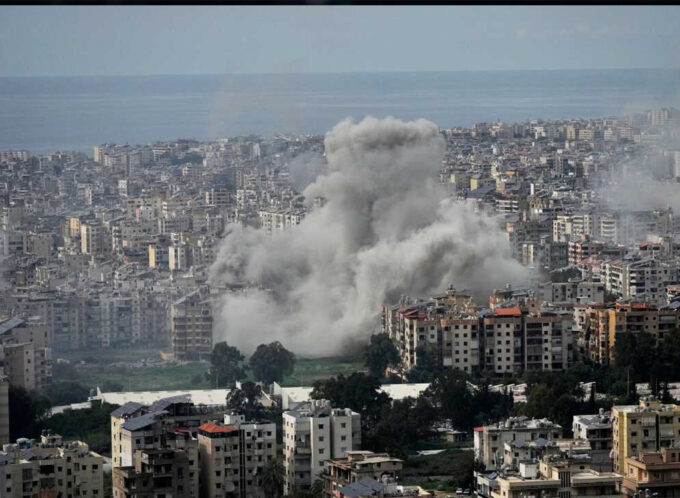
A month into the war in West Asia and it is becoming apparent that President Donald Trump, while continuing to move the goal post around, has no clear exit strategy. A conflict that begun on the back of claims that Iran was close to developing a nuclear weapon and posed an immediate threat to the United States of America, has now evolved into an operation to enforce regime change. While the Pentagon has already distanced themselves from the initial threat assessment of Iran, the idea of a sustainable regime change is, to-date, out of reach for the U.S.
As America explores options in which they can extricate themselves from the conflict of their own making, Iran has found itself on a stronger footing than what they were on at the start of the war. While Ayatollah Khamenei, and many of the top military leadership in Iran, was killed early on in the conflict, there has been no clear signs of destabilisation. In fact, attempts by the U.S. and Israel to orchestrate regime change through airstrikes on civilian targets, including a school which saw over 150 people including schoolgirls killed, has weakened internal opposition to the Iranian regime. Foreign powers launching military strikes on your home country, which has indiscreetly targeted civilians, is certainly recipe to stir up nationalism and bolster support for even authoritarian regimes. Financially, Iran has found themselves excluded from the global economy through U.S. sponsored sanctions for the past several decades. However, in a surprise move by the U.S. those sanctions on Iranian oil exports were temporarily suspended, allowing countries to legally purchase from Iran. This was a decision taken by the U.S. government in the face of rising oil prices and declining supply. The volatility of the global oil markets had been exploited by the Iranians through the enforced closure of the Strait of Hormuz.
For decades American war-planners have suggested that an assault on Iran could lead to the closure of the Strait of Hormuz, prophetically that has come true. As the global oil and gas supplies are dwindling and prices rising, Iran has announced that they would be levying a toll on ships which would be using the Strait. While this has not been fully enforced, several ships have been forced to pay the toll. The U.S. has claimed that they will ensure that the Strait remains open for all ships, however, it is unclear what measures they will take to ensure this.
Intense pressure
Uncertainty continues to linger over the ongoing war in West Asia and countries such as Sri Lanka have found themselves under intense pressure on several fronts.
Early in the conflict, the country found the theatre of war had been brought to its doorstep. The sinking of the Iranian naval vessel, IRIS Dena, by a U.S. nuclear submarine in Sri Lanka’s Exclusive Economic Zone was a rude awakening for the Defence and Foreign Affairs officials who believed this was yet another distant conflict. The immediate spotlight was thrown on the country’s maritime surveillance capabilities. According to the public statements by President Anura Kumara Dissanayake, the Sri Lankan authorities had only been made aware of the proximity of the Iranian vessel following their request for a Port-of-Call. With the vessel a reported 12 nautical miles from the country’s territorial waters, it raises the question as to the extent of the country’s maritime surveillance capabilities.
As per the country’s Naval Strategy Review 2030, which formed the Defence Review 2030 that was presented in 2023 by former President Ranil Wickremesinghe, it was recommended that the country engages in a comprehensive upgrade and development of its surveillance capabilities. Alongside the technical recommendations, which included increased priority for the country’s maritime surveillance, it was also advocated that a civilian Coast Guard be established that would enforce maritime law within the country’s waters as well as assisting in surveillance. The absence of a dedicate maritime surveillance and law enforcement body has resulted in gaps that emerged during the IRIS Dena incident. Traditionally, Sri Lanka’s defence focus has been on the army and its relevant branches, with the navy and air-force often left behind. As the threat of regional conflicts encroaching into the Indian Ocean grows, the ability to safeguard the country’s waters is under scrutiny.
Diplomatic initiatives
Alongside the national security apparatus, questions have also been cast on Sri Lanka’s diplomatic initiatives and its foreign policy. As a founding member of the Colombo Security Conclave (CSC), the apparent lack of utilisation of the body, which includes the Indian Ocean net security provider in India, is now under a spotlight. The demonstration by a U.S. nuclear submarine to carry out a military strike within Sri Lanka’s EEZ not only is a cause of concern for Sri Lanka but also India. Whether India was aware of the presence of a U.S. submarine in the Indian Ocean, and in such close vicinity to India, remains to be seen. However, the question that does warrant answering is whether India shared any relevant intelligence regarding this attack with Sri Lanka as per the agreement under the CSC, and if they did whether it reached the correct authorities.
The failure on the part of Sri Lanka to convene the Conclave following this attack is certainly surprising, and highlights yet another shortcoming in the country’s national security apparatus. Under former President Ranil Wickremesinghe, the office of the National Security Advisor was operationalised, with steps being taken to legislate it through an Act of Parliament. As recent as 2024 it was the former National Security Advisor, Sagala Ratnayaka, who served as Sri Lanka’s primary representative at the CSC. The office of the National Security Advisor allowed for an overarching view of the country’s national security apparatus, as well as providing for cross-border communications with their counterparts. Currently the office is no longer operational and leaves the question as to whether Sri Lanka is on a firm footing to deal with the growing threat of conflicts emerging in the Indian Ocean.
Sri Lanka has professed itself to be a neutral party in the ongoing war in West Asia. However, the absence of any questions or condemnation of the violation of the Indian Ocean Zone of Peace (IOZP) by the U.S. demonstrates the lethargy within the country’s foreign policy. As the original proponent of the IOZP in 1971 Sri Lanka carries a responsibility in ensuring that the principles of this U.N. Declaration are adhered to in the face of rising global tensions. Neutrality does not entail turning a blind eye to violations but rather taking no side in a conflict while ensuring that the principles and laws of the globally accepted Rules Based Order are adhered to. The apparent disinterest on the part of the country’s foreign policy makers to exert a stance by Sri Lanka in the face of military activity within striking distance of the country’s territory is certainly a cause of concern.
Economic implications
While the country has found itself wrong-footed in the face of military peril at our doorstep, domestically Sri Lanka’s economy has been left floundering. As Iran threatens to permanently enforce tolls on shipments passing through the Strait of Hormuz, Asian states can expect to see significant increases in imports, including energy resources. Sri Lanka is already facing fuel shortages, which have emerged as a result of both the global shortages caused by the war and the failure to expand on the country’s storage capabilities. While this writer has previously written on the causation for the growing energy crisis[1], focus is now turning to what avenues are available for the government to pursue.
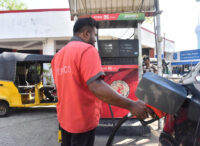
Sri Lanka’s fuel shortage, that has resulted in the government implementing fuel rations for motorists, would be alleviated to an extent with the development of the Trincomalee Oil Storage Tankers. The World War 2 era oil tankers have a total capacity of an estimated 1 million metric tonnes (MT), spread across 99 oil storage tankers. Sri Lanka currently consumes up to 360,000 MT a month, which will mean at full operation the storage tankers are capable of storing nearly three months’ worth of fuel. As global oil prices continue to fluctuate, and with analysts predicting that even with a swift conclusion to the war there would not be any noticeable reductions in prices for several months, excess stocks in storage only serve to benefit the citizens of Sri Lanka. India has already signed previous agreements, under former governments, to embark on a joint-venture development of the oil tankers, it will bode well for the swift implementation of this project.
However, Sri Lanka’s over-reliance on fossil fuels not only exerts pressure on the country’s foreign reserves but has also left it vulnerable to regional and international instability. While motorists have been left inconvenienced by the fuel rationing, power generation in the country is also facing the threat of enforced blackouts due to limited fuel stocks for the power plants. As the country faces its dry season, the power sector’s reliance on coal and diesel stocks increases as hydropower generation reduces.
The conversation amongst both the public and policy makers must immediately switch to energy independence. Currently Sri Lanka consumes between 15,000 – 16,000 Gigawatt-hours (GWh) annually, while it is estimated over 50% of this is produced by renewable energy, the majority of that is hydropower. This means that along with disruptions in the supply of fossil fuels, the country’s energy sector is also hampered by climate change which is resulting in prolonged droughts.
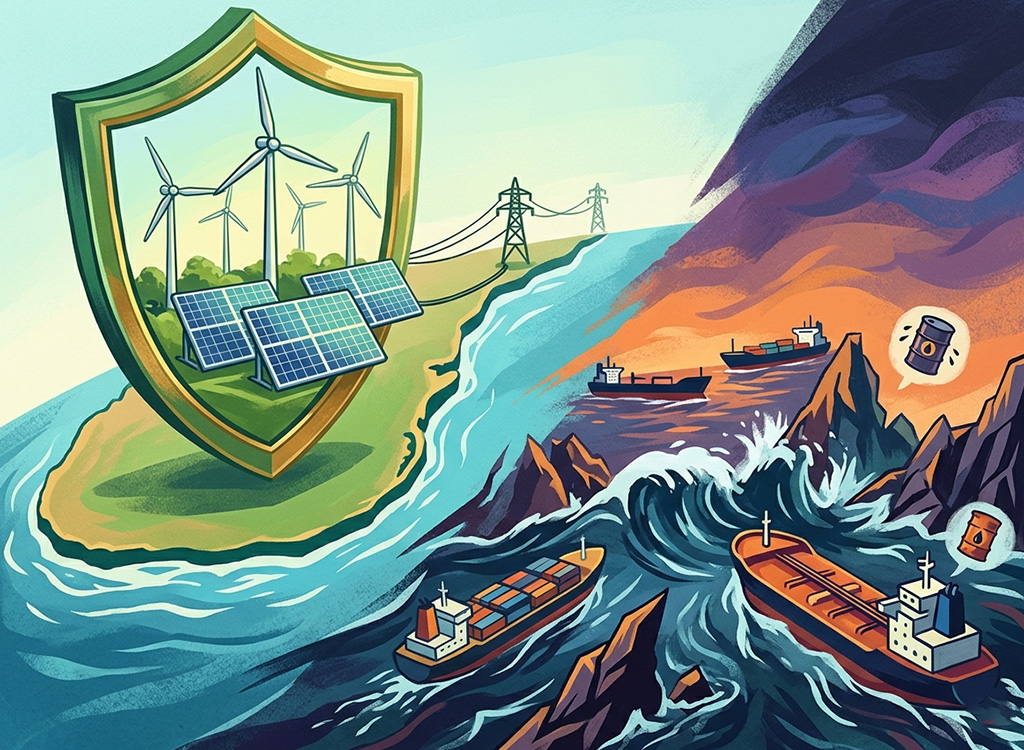
Environmentally friendly alternatives are readily available to the country, if they are proactively pursued. As per World Bank and Asian Development Bank studies, it is estimated that Sri Lanka possess an estimated 20 – 25 Gigawatts (GW) worth of onshore wind energy, 56 GW of off-shore wind energy and a further 6 GW of solar energy. Alongside the pre-existing hydropower generation, the country’s renewable energy potential significantly exceeds the current requirements. Unfortunately, since the assumption of office by the National People’s Power (NPP) government there has been increased apathy towards pursuing energy independence via clean energy sources. Renewable energy providers have complained over the continued halt of licenses for their projects, while allegations have been levelled against the government claiming that the Ceylon Electricity Board has lost more than Rs. 2bn due to the curtailment of solar power generation.
Renewable energy alternative
Financially, the country will find itself on a stronger footing if private investments into renewable energy were pursued. In 2025 Sri Lanka imported US $4bn worth of fuel, while a further US $150mn has been spent on the 2025-26 coal tender (further indirect costs have incurred due to delays and substandard shipments). Increased exploitation of the country’s renewable energy resources will certainly assist in reducing the country’s fuel bill. Not only will power generation become cheaper and more readily available, but it will encourage motorists to switch to electric vehicles.
Going beyond the domestic market, the expansion of renewable energy, which will see excess energy produced in the country, will provide opportunities for Sri Lanka to pursue energy integration within the region. Most notably India, where it has been reported that the country is facing growing energy shortages due to rising demand, has expressed a desire to link Sri Lanka’s national grid with South India. If the country were to successfully utilise its renewable energy potential, the avenue of exporting energy to India will open up. Not only will Sri Lanka position itself as a vital player in India’s development, but it will also allow the country to increase its foreign earnings.
The war in West Asia has certainly impacted Sri Lanka’s fragile economy and tested its role on the international stage. As the U.S. continues to drive forward the conflict with Iran, against the advice of its allies, it is becoming clearer that the post-Cold War order is being upturned. Sri Lanka has now reached a fork in the road, either continue down the same path and allow itself to be continually battered by growing global tensions or look upon the lessons learnt and adjust its trajectory.
(The writer previously served as the Director of International Affairs to President Ranil Wickremesinghe, and is the current Chief Research Officer for the Geopolitical Cartographer)
Disclaimer: The views and opinions expressed in this article are those of the writer and do not necessarily reflect the official position of this publication.
[1] See Dinouk Colombage Substack – “Sri Lanka’s Energy Crisis; A Culmination of Past Actions”





Leave a comment