
By Dr. Jehan Perera
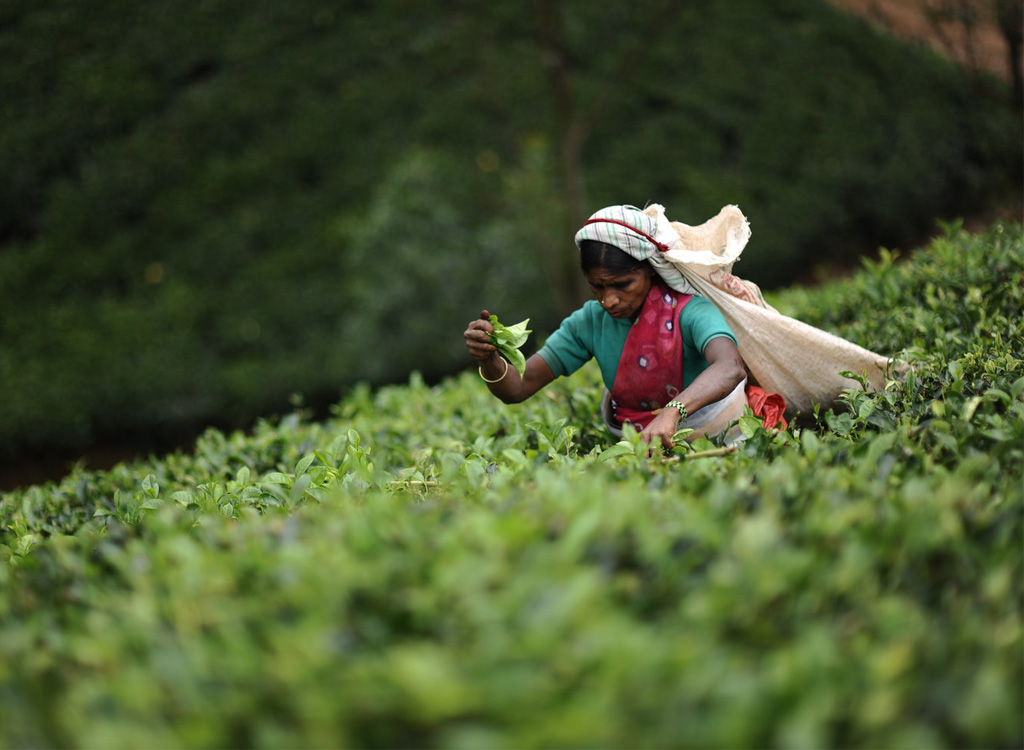
The impact of cyclone Ditwah was asymmetric. The rains and floods affected the Central Hills more severely than the other parts of the country. The rebuilding process is now proceeding likewise in an asymmetric manner in which the Malaiyaha Tamil community is being disadvantaged. Disasters may be triggered by nature, but their effects are shaped by politics, history and long-standing exclusions. The Malaiyaha Tamils who live and work on plantations entered this crisis already disadvantaged. Ditwah has exposed the central problem that has been with this community for generations.
A fundamental principle of justice and fair play is to recognise those who are situated differently need to be treated differently. Equal treatment may yield inequitable outcomes to those who are unequal. This is not a radical idea. It is a core principle of good governance, reflected in Constitutional guarantees of equality and in international standards on non-discrimination and social justice. The Government itself made this point very powerfully when it provided a subsidy of Rs. 200 a day to plantation workers out of the Government Budget to do justice to workers who had been unable to get the increase they demanded from plantation companies for nearly 10 years. The same logic applies with even greater force in the aftermath of Ditwah.
A discussion last week hosted by the Centre for Policy Alternatives (CPA) on relief and rebuilding after Ditwah brought into sharp focus the major deprivation continually suffered by the Malaiyaha Tamils who are plantation workers. As descendants of indentured labourers brought from India by British colonial rulers over two centuries ago, the plantation workers have been tied to plantations under dreadful conditions. Independence changed flags and Constitutions, but, it did not fundamentally change this relationship. The housing of plantation workers has not been significantly upgraded by either the Government or the plantation companies. Many families live in line rooms that were not designed for permanent habitation, let alone to withstand extreme weather events.
Unimplementable promise
In the aftermath of the cyclone disaster, the Government pledged to provide every family with relief measures, starting with Rs. 25,000 to clean their houses and going up to Rs. 5 million to rebuild them. Unfortunately, a large number of the affected Malaiyaha Tamil people have not received even the initial Rs. 25,000. Malaiyaha Tamil plantation workers do not own the land on which they live or the houses that they occupy. As a result, they are not eligible to receive the relief offered by the Government to which other victims of the cyclone disaster are entitled. This is where a historical injustice turns into a present-day policy failure. What is presented as non-partisan governance can end up reproducing discrimination.
The problem extends beyond housing. Equal rules applied to unequal conditions yield unequal outcomes. Plantation workers cannot register their small businesses because the land on which they conduct their businesses is owned by the plantation companies. As their businesses are not registered, they are not eligible for Government compensation for the loss of business. In addition, Government communication largely takes place in the Sinhala language. Many families have no clear idea of the processes to be followed, the documents required or the timelines involved. Information asymmetry deepens powerlessness. It is in this context that Malaiyaha Tamil politicians express their feeling that what is happening is racism. The fact is that a community that contributes enormously to the national economy remains excluded from the benefits of citizenship.
What makes this exclusion particularly unjust is that it is entirely unnecessary. There is anything between 200,000-240,000 hectares (ha) available to the plantation companies. If each Malaiyaha Tamil family is given 10 perches, this would amount to approximately one and a half million perches for an estimated 150,000 families. This works out to about 4,000 ha only, or roughly two per cent of the available plantation land. By way of contrast, Sinhala villages that need to be relocated are promised 20 perches per family. So far, the Malaiyaha Tamils have been promised nothing.
Adequate land
At the CPA discussion, it was pointed out there is adequate land on plantations that can be allocated to the Malaiyaha Tamil community. In the recent past, plantation land has been allocated for different economic purposes, including tourism, renewable energy and other commercial ventures. Official assessments presented to the Parliament have acknowledged that substantial areas of plantation land remain under-utilised or unproductive, particularly in the tea sector where ageing bushes, labour shortages and declining profitability have constrained effective land use. The argument that there is no land is therefore unconvincing. The real issue is not availability but political will and policy clarity.
Granting land rights to plantation communities needs to also be done in a systematic manner, with proper planning and consultation, and with care taken to ensure that the economic viability of the plantation economy is not undermined. There is also a need to explain to the larger Sri Lankan community the special circumstances under which the Malaiyaha Tamils became one of the country’s poorest communities. But, these are matters of design, not excuses for inaction. The plantation sector has already adapted to major changes in ownership, labour patterns and land use. A carefully structured programme of land allocation for housing would strengthen rather than weaken long term stability.
Out of the one million Malaiyaha Tamils, it is estimated that only 100,000 to 150,000 of them currently work on plantations. This alone should challenge outdated assumptions that land rights for plantation communities would undermine the plantation economy. What has not changed is the legal and social framework that keeps workers landless and dependent. The destruction of housing is now so great that plantation companies are unlikely to rebuild. They claim to be losing money. In the past, they have largely sought to extract value from estates rather than invest in long term community development. This leaves the Government with a clear responsibility. Disaster recovery cannot be outsourced to entities that disclaim responsibility when it becomes inconvenient in dealing with citizens of the country with the vote.
The National People’s Power Government was elected on a promise of system change. The principle of equal treatment demands that Malaiyaha Tamil plantation workers be vested with the ownership of land for housing. Justice demands that this be done soon. In a context where many Government programmes provide land to landless citizens across the country, providing land ownership to Malaiyaha Tamil families is good governance. Land ownership would allow plantation workers to register homes, businesses and cooperatives and would enable them to access credit, insurance and compensation which are the rights of citizens. Most importantly, it would give them a stake that is not dependent on the goodwill of companies or the discretion of officials. The question now is whether the Government will use this moment to rebuild houses and also a common citizenship that does not rupture again.
(The writer is the Executive Director of the National Peace Council organization)
Disclaimer: The views and opinions expressed in this column are those of the author, and do not necessarily reflect those of this publication.











Leave a comment