
By Vox Civis
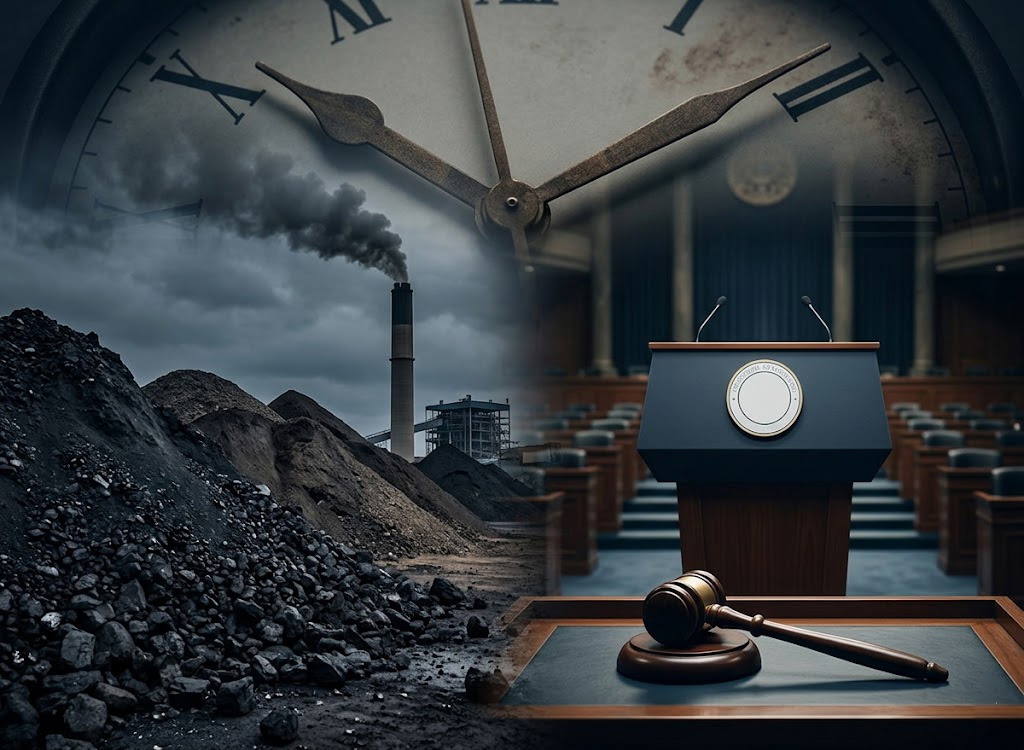
Parliament last Friday (10) witnessed yet another familiar spectacle of a no-confidence motion debated, defended, defeated, and, in the process, something far more important quietly eroded. The motion against Energy Minister Kumara Jayakody may have failed on paper, but the broader implications of that debate reach far beyond the arithmetic of 153 votes. The vote was not merely a contest of numbers, but a revealing test of principle, accountability, and the very idea of governance that this administration steadfastly promised to redefine.
At its surface, the motion focused on the now widely discussed issue of substandard coal procurement – irregular tender procedures, questionable quality assessments, and the inevitable financial burden that will ultimately fall on the public. Yet, as troubling as these facts are, they are only the visible symptoms of a deeper malaise. The real crisis lies not in the coal itself, but in how the National People’s Power (NPP) government has chosen to respond to credible allegations of wrongdoing within its own ranks, this early in its tenure.
The Auditor General’s report has already laid out a damning narrative of irregularities. It is not an opposition pamphlet or a politically motivated document; it is the government’s own institutional watchdog raising red flags. And yet, the official response has followed the now well-worn script of appointing a Presidential Commission. In theory, such a move signals seriousness but in practice, however, it risks becoming little more than a procedural smokescreen, particularly when the central figure under scrutiny continues to occupy the very office that is supposed to be investigated.
Discarding a fundamental principle
There is a fundamental principle at stake here, one that transcends political allegiance, that no individual accused of wrongdoing should preside over their own investigation. It is a concept so basic that it forms the bedrock of natural justice. Yet, in this instance, that principle appears to have been casually discarded. The Minister remains in charge of his Ministry, the officials involved continue to function under his authority, and the documents required for any meaningful inquiry remain within his administrative reach. Under such circumstances, can any reasonable observer genuinely expect an independent or impartial investigation from whatever the commission – presidential or otherwise?
The question is not whether a commission can be appointed, but whether it can function with integrity. Can it obtain the necessary documentation without interference when the accused remains the boss and in charge of evidence? Can it question officials without fear or influence? Or will it, like so many before it, eventually fade into irrelevance becoming yet another exercise in delay, deflection, damage control and waste of state resources? The risk is not merely institutional failure, but the transformation of accountability itself into a performative ritual devoid of substance.
What makes this episode particularly consequential is that it represents a squandered opportunity. The NPP government came into office on the strength of a powerful anti-corruption mandate. It positioned itself as a clean break from the past; a movement that would dismantle the entrenched culture of impunity that had defined Sri Lankan politics for decades. Faced with the current crisis, it had a simple, effective option available to capitalize on the opportunity by requesting the Minister’s resignation pending investigation, initiate a genuinely independent inquiry, and demonstrate that its commitment to accountability was not merely rhetorical.
Lost opportunity
Such a course of action would not have been an admission of guilt, but a statement of principle. It would have reassured a skeptical public, silenced critics, and reinforced the credibility of the government’s reformist narrative. Instead, the administration chose the same path chosen by its predecessors – one of defence, denial, and deflection. In doing so, it has not only weakened its own moral standing and reinforced the perception that it has something to hide, but also shown that the NPP is no different to the rest.
The Minister at the center of this controversy is no stranger to corruption allegations either. Past accusations, now resurfacing in the form of bribery indictments before the Colombo High Court relating to his tenure at the Lanka Fertilizer Company in 2015, add an additional layer of concern. While the principle of innocence until proven guilty must always be upheld, the persistence of such allegations inevitably raises questions about propriety and political responsibility.
Sri Lanka is not without precedent in this regard. In recent years, several high-profile figures have stepped down in the face of controversy. Keheliya Rambukwella resigned in 2024 amid the scandal over substandard medical imports. Lohan Ratwatte stepped down in 2021 following allegations of misconduct involving prisoners. Ravi Karunanayake resigned in 2017 over the bond-related apartment controversy.
Even Mahinda Rajapaksa relinquished the premiership in 2022 under immense public pressure following violent unrest. Thilak Marapana and Nimal Siripala de Silva, too, vacated office amid allegations linked to their portfolios, while Wijedasa Rajapaksha resigned over a matter of principle – all within the last decade. Therefore, if someone were to allege the absence of precedence in similar circumstances, that is certainly not the case.
These resignations were not admissions of guilt, but acknowledgment of political accountability. They reflected an understanding, however imperfect, that public office carries with it a responsibility that extends beyond legal thresholds. Even during the current administration, the resignation of the first Speaker over allegations of submitting a fake academic qualification demonstrated that such standards are neither alien nor unattainable.
Flawed thinking
It is therefore perplexing that the same government – now a little older in office, appears unwilling to apply those standards to one of its own despite the mountain of incriminating evidence. The argument advanced by its defenders that past governments acted similarly, and therefore this is acceptable, misses the point entirely. It was precisely that culture of impunity that voters rejected. To invoke it now as justification is not only logically flawed but politically self-destructive. If the promise of “system change” merely results in the replication of old practices under new management, then the change itself becomes meaningless and redundant.
The government’s official position on the coal controversy has further complicated matters. Despite acknowledging that the coal in question was of poor quality, it continues to deny any wrongdoing in the procurement process. At the same time, it has assured the public that the additional costs of power generation will not be passed on to consumers. Yet, this assurance rings hollow given the realities of Sri Lanka’s frail economic framework.
The International Monetary Fund (IMF) has been explicit in its insistence on cost-reflective pricing as a condition for continued financial support. Increased generation costs – whether due to substandard coal or supplementary diesel usage – must ultimately be accounted for. In practical terms, this means that the burden will inevitably fall on the public. The notion that such costs can simply be absorbed without consequence is not grounded in economic reality.
This disconnect between political messaging and fiscal constraints is not merely a matter of policy inconsistency but also amounts to a credibility issue. When the government’s own Auditor General identifies irregularities, when engineers at the Norochcholai power plant confirm the use of substandard coal, when Ministry officials acknowledge flaws before parliamentary oversight committees, and when international financial institutions highlight the cost implications, the space for denial is increasingly narrow. But yet, that is exactly what the regime has chosen to do.
The Keheliya precedence
Thereby, the government prevailed in Parliament by securing 153 votes, demonstrating its numerical strength. But political legitimacy is not sustained by numbers alone. As history has shown, parliamentary victories can coexist with public disillusionment. Keheliya Rambukwella himself survived a no-confidence motion before ultimately facing legal consequences. Winning a vote in the House did not restore public trust; it merely postponed its collapse.
This is the paradox that the current administration must confront. In defending the Minister, it may have preserved short-term stability within its ranks, but at the cost of long-term credibility. The real audience of last Friday’s debate was not confined to the chamber, it included millions of citizens, independent observers, and members of the international community – all watching not for the outcome, but for the conduct of those who promised change.
For many of those who placed their faith in the NPP, the expectation was never perfection, but integrity. There was an implicit understanding that while the government might lack experience or administrative depth, it would compensate with honesty and a genuine commitment to accountability. That belief has now been shaken if not outright destroyed.
The opposition, for its part, was under no illusion about the likely outcome of the vote. The no-confidence motion was as much a political strategy as it was a procedural tool. By forcing the government to publicly defend its position, it sought to expose what it perceives as a growing gap between rhetoric and reality. In that sense, as far as the opposition is concerned, the motion achieved its objective. It transformed a parliamentary defeat not only into a broader narrative victory but also succeeded in showing up the regime as being no different to the rest when a push comes to a shove.
The aftermath of the debate has also seen the emergence of critical voices from within the government’s own intellectual support base. Professor Nirmal Ranjith Devasiri, long regarded as a sympathetic observer, has openly acknowledged that the findings of the audit report make it increasingly difficult to defend the administration’s actions. His candid assessment that the irregularities suggest not mere administrative lapses but potential deliberate manipulation, underscores the seriousness of the issue.
Consequences of selective accountability
Crucially, he locates responsibility not only at the level of the subject Minister, but within the broader structure of governance, including the Cabinet and the President. His call for either the resignation or removal of the Minister reflects a growing recognition that accountability cannot be selectively applied without eroding its meaning.
Ultimately, the victims of this controversy are not political actors, but ordinary citizens. The financial losses associated with substandard coal, the inefficiencies in power generation, and the prospect of rising electricity tariffs all converge on a single point: the people. It is they who will bear the cost, both economically and institutionally, notwithstanding the presidential assurances to the contrary.
The decision to appoint a Presidential Commission to investigate coal-related issues dating back to 2009 may yet yield valuable insights. But if it is perceived as an attempt to dilute immediate accountability by expanding the scope of inquiry, it risks being dismissed as a diversionary tactic. Accountability delayed is often accountability denied. Sri Lanka has been there and done that, and the people are only wiser for it.
The question that lingers, therefore, is not whether the government won the vote, but whether it understood what it was all about. Did it recognise the significance of the test it was facing? Did it appreciate the expectations of the electorate that elevated it to power? Or did it, in that critical moment, choose expediency over principle? While the answer is now clear, the opposition can walk away with a point to its credit.
For a movement that built its identity on the promise of transformation, the stakes could not be higher for the NPP. The credibility it loses now will not be easily regained. Political capital, once squandered, is difficult to rebuild. And in a country where public trust has already been stretched to its limits, the margin for error is exceedingly thin.
In the final analysis, last Friday’s proceedings will not be remembered for the vote count recorded in the Hansard or the speeches for and against. They will be remembered as a defining moment – a point at which a government that promised to break from the past was confronted with the choice to either uphold or abandon that promise.
It chose, for now, to hold the line. Whether the country will continue to stand with it given its choice, is a question that only time, and the people, can answer.
Disclaimer: The views and opinions expressed in this article are those of the writer and do not necessarily reflect the official position of this publication.









Leave a comment