
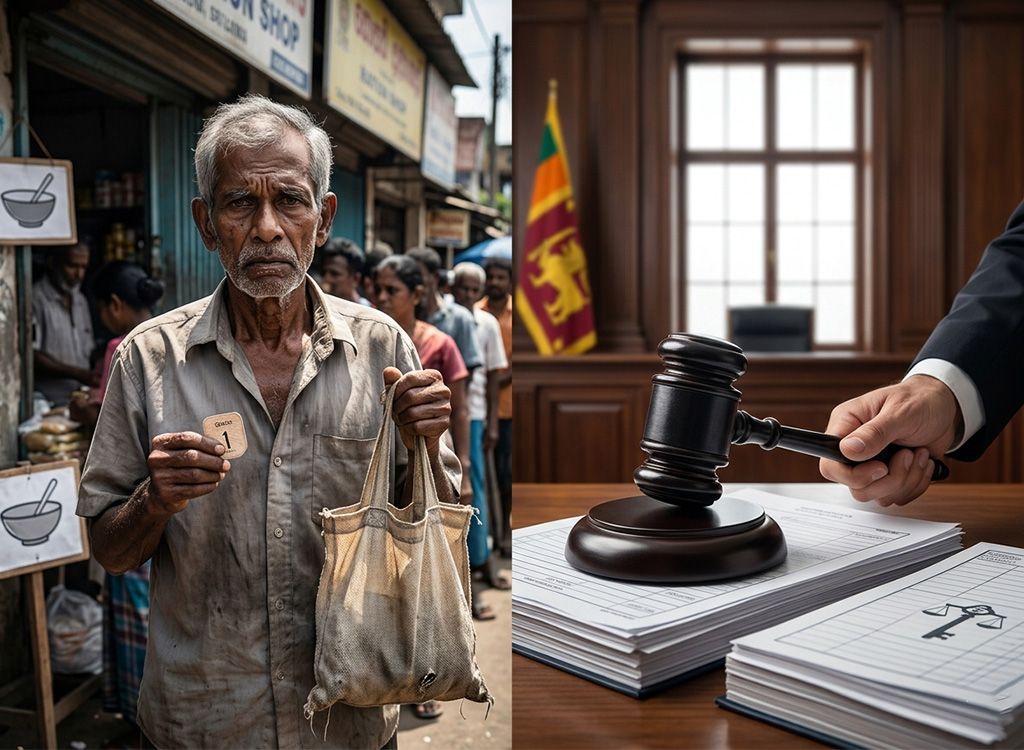
By Vox Civis
There is a telling contrast unfolding in South Asia, one that Sri Lanka would do well to examine closely, not as a model to be copied wholesale, but as a mirror for its own political and economic well-being. On Friday, April 3, Pakistan witnessed a dramatic policy reversal. Just a day after an unprecedented surge in petroleum prices triggered public outrage, Prime Minister Shehbaz Sharif moved swiftly to contain the fallout. His government slashed the petroleum levy by Rs.80 per liter, bringing the price of petrol down to Rs.378. Then, in a brief but carefully calibrated late-night address to the nation, he went a step further and announced that the entire federal cabinet would forgo their salaries for the next six months as part of a broader austerity drive.
Even though the economics of such a decision are debatable, Pakistan, like Sri Lanka, is grappling with deep fiscal constraints, and sudden price interventions often carry long-term costs. Yet, the politics of the move are unmistakable: it was not merely about fuel prices, but more about signaling. During a period of public anger and economic strain, the Pakistani leadership chose to demonstrate that the burden would not fall solely on ordinary citizens.
In Sri Lanka, no such signal has emerged. Despite the lingering pain of adjustment – higher taxes, reduced subsidies, and a still-rising cost of living – there has been no meaningful discussion about austerity beginning at the top. Ministers have not volunteered to forgo salaries and perks that include lavish fuel allowances, which remain intact. In isolation, these may appear as marginal issues in the broader economic picture, but in a country where public trust was shattered as recently as 2022, such optics matter far more than they might in more stable environments.
Worrying disconnect
This disconnect becomes more troubling when viewed against the latest economic indicators. Sri Lanka today stands at a delicate juncture; no longer in freefall, but far from secure. The headline indicators suggest improvement: foreign reserves have strengthened, inflation is under control, and the country continues to operate within a reform framework backed by the International Monetary Fund (IMF). That programme has unlocked critical support from institutions such as the World Bank and the Asian Development Bank, helping to stabilize public finances and restore a measure of investor confidence.
Yet beneath these improvements, familiar vulnerabilities are beginning to reappear. The most immediate of these is tourism. Long regarded as one of Sri Lanka’s most reliable sources of foreign exchange, the sector has shown worrying signs of volatility. In March, typically the climax of the peak season, tourist arrivals dropped sharply by around 20 percent. This is not a marginal fluctuation but a significant contraction in a sector the government is heavily relying on to generate forex inflows.
The timing could hardly be worse. April marks the beginning of the so-called off-season, suggesting that arrivals are likely to decline further in the coming months. For an economy that depends on tourism to bridge its external financing gap, this trend raises immediate concerns. If inflows weaken while external payments – particularly for essential imports – continue to rise, the pressure on foreign exchange reserves will intensify.
This is the essence of Sri Lanka’s current predicament: a narrowing margin between inflows and outflows. On one side of the ledger, tourism earnings are weakening. On the other, the cost of critical imports like fuel, gas, food, and medicine has risen significantly compared to the beginning of the year, driven in part by global commodity price movements and geopolitical instability.
Early warning signs
The combination is uncomfortably reminiscent of the early warning signs that preceded Sri Lanka’s economic crisis of 2022. At that time, the erosion of foreign exchange buffers went largely unaddressed until it was too late. Today, the warning signs are visible earlier, but whether they translate into timely policy action remains an open question.
The government’s immediate priority must therefore be to safeguard foreign exchange liquidity. There are several avenues available. Strengthening remittance inflows through formal banking channels is one. Encouraging exporters to repatriate earnings promptly is another. There is also the option of tightening controls on non-essential imports. Yet each of these measures comes with trade-offs.
Sri Lanka’s past reliance on import restrictions offers a cautionary tale. While such measures can conserve foreign exchange in the short term, they also distort markets, create shortages, and encourage the growth of black markets. The experience of 2022 demonstrated how quickly such distortions can spiral into broader economic dysfunction. Policymakers are therefore understandably wary of overcorrecting.
Currency management presents another layer of complexity. As import costs rise and forex inflows weaken, pressure on the rupee is likely to build. The temptation to defend the currency artificially through market interventions that draw down reserves, remains ever-present. Yet this is precisely the strategy that contributed to the rapid depletion of reserves in the lead-up to the last crisis. Economists now argue that a gradual, market-aligned depreciation, while politically uncomfortable, is far less damaging than an unsustainable defence of the currency.
On the domestic front, the government faces a different but equally pressing challenge on how to cushion households from rising living costs without undermining fiscal stability. Here, the policy debate is increasingly centered on the balance between targeted welfare and universal subsidies. The latter, particularly in the form of broad-based fuel and electricity subsidies, were a major driver of fiscal imbalances in the past. Targeted cash transfer programmes, though less politically visible, are widely seen as a more sustainable alternative.
Economic vulnerability
Beyond these immediate concerns lies a deeper structural issue that the current situation has once again brought into focus. Sri Lanka’s economic vulnerability is rooted in its overdependence on a narrow set of foreign exchange earners. Tourism, while important, is inherently volatile and susceptible to global shocks, geopolitical tensions, and seasonal fluctuations. Building resilience requires diversification. Expanding higher-value exports, particularly in sectors such as IT services and processed agricultural goods, is no longer optional; it is essential.
Efforts to rebuild foreign reserves appear to be continuing through a combination of bilateral financing arrangements, foreign investment initiatives, and the ongoing process of debt restructuring. These measures are expected to ease repayment pressures over time, but they do not eliminate the underlying fragility. Sri Lanka’s recovery remains conditional; dependent on continued reform, external support, and the absence of major shocks. It is against this already complex economic backdrop that a new and potentially destabilizing factor has emerged: governance.
Corruption allegations involving senior members of the government are beginning to cast a shadow over the recovery narrative. The latest, the controversy surrounding Agriculture Minister K. D. Lalkantha has become an early test of the administration’s commitment to transparency. Having long claimed that he did not own a house in Colombo and therefore occupied official quarters in Madiwela for nearly two decades, he is now reportedly linked to a luxury three-story residence with modern amenities.
At one level, the issue is factual and verifiable: the Minister’s asset and liability declaration should provide a baseline of his total assets. With the introduction of tax identification numbers, it is now possible to examine income streams across his immediate family – whether from himself, his spouse, or his children. Since he is on record claiming he does not draw a parliamentary salary, that component can be excluded. The question then, is straightforward: does the valuation of the property align with the declared income and assets?
If it does, the controversy can be resolved through a transparent process. If it does not, and there is no credible explanation for the apparent discrepancy, then the legal framework is clear. Under the new asset declaration laws, unexplained wealth is grounds for arrest. Indeed, arrests have already been made under these provisions. The real test, therefore, is not the existence of the law, but its application. And the nation is watching.
Corruption and political risk
There is no escaping the broader implication that corruption allegations introduce political risk into an already fragile recovery. Sri Lanka’s economic stabilization is not merely a function of fiscal and monetary policy; it is deeply tied to credibility, both domestic and international. At the political level, such allegations strike at the core of the government’s legitimacy having obtained an overwhelming mandate on the assurance of transparency, accountability and discipline. Any perception that corruption persists, or worse, is being tolerated, undermines that narrative.
Public reaction, therefore, will be critical. Sri Lanka’s recent history demonstrates how quickly economic hardship, when combined with governance failures, can translate into political unrest. While there is no immediate sign of large-scale protests, the conditions for discontent are gradually re-emerging. Rising living costs, coupled with perceptions of unequal burden-sharing, can erode trust over time.
The implications extend beyond domestic politics. Sri Lanka’s engagement with the IMF is anchored not only in fiscal targets but also in governance reforms. Anti-corruption measures, improved public financial management, and stronger institutional oversight are central pillars of the programme. Any perception of backsliding could therefore potentially complicate future programme reviews, further delay disbursements, and weaken support from multilateral partners such as the World Bank and Asian Development Bank.
Investor sentiment is equally sensitive. Foreign investors, already cautious, often view corruption risk as a proxy for policy unpredictability. Allegations involving unexplained wealth among the senior leadership can reinforce concerns about transparency, potentially slowing foreign direct investment and complicating efforts to rebuild reserves.
What makes the emerging situation particularly precarious is the convergence of pressures. On their own, a decline in tourism or a corruption allegation may be manageable. Together, they begin to create a feedback loop of eroding confidence. Reduced inflows and rising costs tempered with political controversy is a toxic mix that reinforces the other.
Managing perception
This is why the comparison with Pakistan, however imperfect, retains its relevance. Economic management is not solely about technical policy decisions; it is also about perception and political signalling. When leaders visibly share in the sacrifices demanded of the public, it strengthens the social contract. When they do not, it weakens it.
Sri Lanka’s challenge, therefore, is not merely to navigate external economic pressures, but to reinforce the credibility of its internal governance. Transparency in procurement processes, particularly in sensitive sectors such as energy has become critical. Allegations related to coal imports, for instance, are especially sensitive given their direct link to electricity costs and past controversies. Failure to address such issues credibly risks deepening public suspicion of unaddressed systemic weaknesses.
Even though the situation is not at a tipping point at this stage, and Sri Lanka is not on the brink of another crisis, the margin for error is thin. The difference between stability and renewed instability may lie not in a single policy decision, but in the cumulative effect of many; notably economic, political, and institutional.
Ultimately, the path forward is clear, even if it is not easy. The government must act decisively on multiple fronts: safeguarding foreign exchange liquidity, maintaining alignment with the IMF programme, managing the currency prudently, and providing targeted relief to vulnerable households. At the same time, it must demonstrate an unequivocal commitment to transparency and accountability by keeping its own house in order.
Swift and credible investigations into corruption allegations, consistent enforcement of asset declaration laws, and visible institutional independence could not only contain political fallout but also strengthen the government’s reform credentials. Conversely, perceived inaction or selective accountability would carry greater risks extending beyond reputational damage to tangible economic consequences.
For now, Sri Lanka’s economic stability remains intact, but conditional. The warning signs are visible early. Whether they are heeded will determine the trajectory of the recovery.
In the end, the lesson is a simple but profound one. Economic recovery is not sustained by numbers alone – it is sustained by trust; trust in policy, trust in institutions, and above all, trust in leadership. For the NPP, this should have been a cakewalk, having preached such virtues no end while in opposition, but it, like others before, is learning the hard way that preaching and practicing what is preached, are two very different things.
Disclaimer: The views and opinions expressed in this article are those of the writer and do not necessarily reflect the official position of this publication.






Leave a comment