
By Vox Civis
Iranian Foreign Minister Abbas Araghchi declared something that would have sounded profound in the pre-Trump era, but not these days. He said, ‘international law is dead.’ While it can be construed as a statement designed to provoke, it is also one that captures the growing, uncomfortable sentiment in today’s fractured global order. Across continents, among policymakers and ordinary citizens alike, there is an increasing belief that what is presented as a rules-based international system functions less as a framework of justice and more as an instrument of power. The irrelevance of the United Nations and its “resolutions” even in the gravest of situations, is the clearest example of this new and dangerous world order.
The issue, critics argue, is not that international law has suddenly collapsed as a result of the recent conflicts, but that it has never been applied equally. It bends, stretches, and, when necessary, disappears, depending on who is acting and who is being acted upon.
The evidence cited by critics is neither obscure nor hypothetical. When powerful nations or their allies undertake military operations, they are often framed as acts of necessity, security, or even moral obligation. Yet when the same logic is invoked by others, it is swiftly condemned as aggression or illegality. Identical actions invite radically different reactions.
Often, when certain players are involved, expressions such as “self-defence” become elastic and the definition of “terrorism” becomes selective. Same goes for “human rights.” In such a world, the distinction between legality and illegality begins to blur, replaced instead by the harsher, more cynical doctrine of ‘might is right.’ What emerges is not a system anchored in universal principles, but one shaped by geopolitical convenience.
Hypocrisy of the powerful
This growing perception of hypocrisy is eroding faith not only in institutions but in the very idea of fairness in global affairs. Concepts such as justice, sovereignty, and human rights routinely presented as universal and non-negotiable suddenly appear contingent, applied rigorously in some contexts and conspicuously ignored in others. From long-standing embargoes to selective outrage over blockades and military interventions, the message many take away is that rules are not the same for everyone. As Richard Nixon once infamously remarked, “If the American President does it, it’s not illegal.” Decades later, that sentiment seems less like an aberration and more like the standard operating principle.
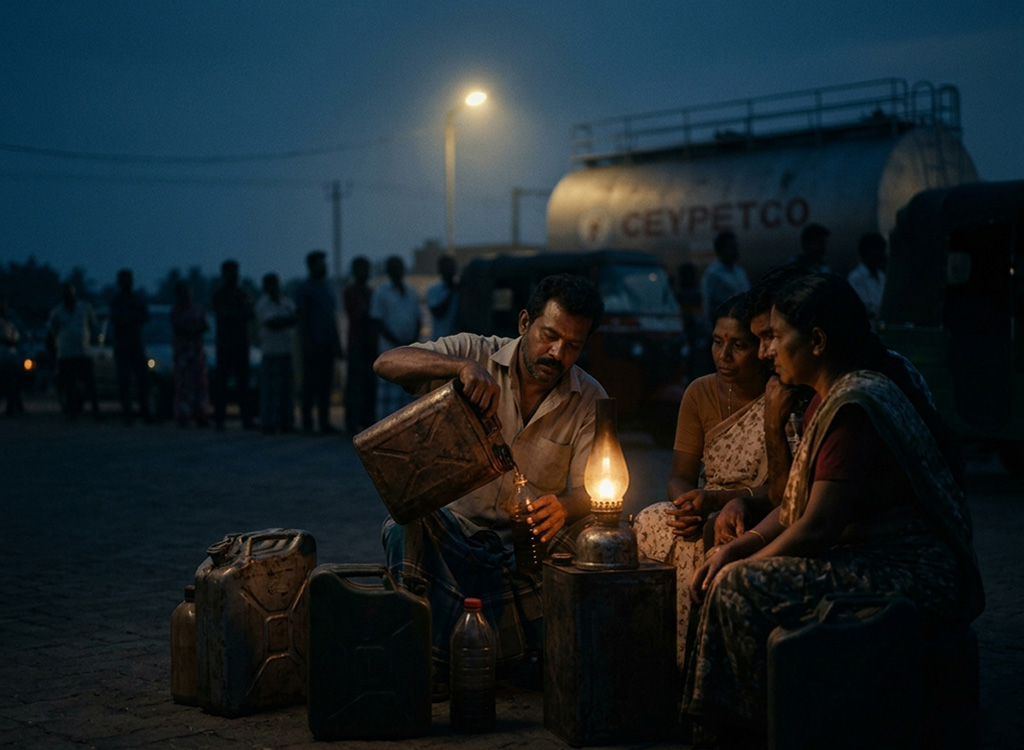
It is within this atmosphere of deepening distrust and geopolitical double standards that the current global crisis has unfolded, causing smaller nations like Sri Lanka that have had nothing to do with the conflict, to haemorrhage. Therefore, what began as a series of confrontations and retaliations has now hardened into something far more systemic and dangerous: a cascading disruption that analysts are increasingly describing as a “Global Energy Lockdown.”
With key oil-producing regions engulfed in conflict, critical shipping lanes under threat, and supply chains fraying at multiple points, the global economy is confronting its most severe energy shock in half a century. For advanced economies, this translates into inflation, tighter monetary conditions, and uncomfortable trade-offs. For a country like Sri Lanka that is still fragile, still recovering, still structurally exposed, the implications are far more existential.
The danger is not abstract; it is immediate, arithmetic, and unforgiving. A sustained surge in global oil prices will inevitably inflate Sri Lanka’s import bill, widen the current account deficit, and place renewed downward pressure on the rupee. The pass-through effects are predictable: higher transport costs, rising food prices, and an overall escalation in the cost of living that will disproportionately hurt the most vulnerable. It is not a crisis Sri Lanka can outrun by hoping for de-escalation in distant theatres of war, nor can it be managed through reactive, piecemeal adjustments. The only viable strategy is insulation, and that begins with reducing exposure, managing demand, and ensuring supply continuity under constrained conditions.
Immediate policy challenge
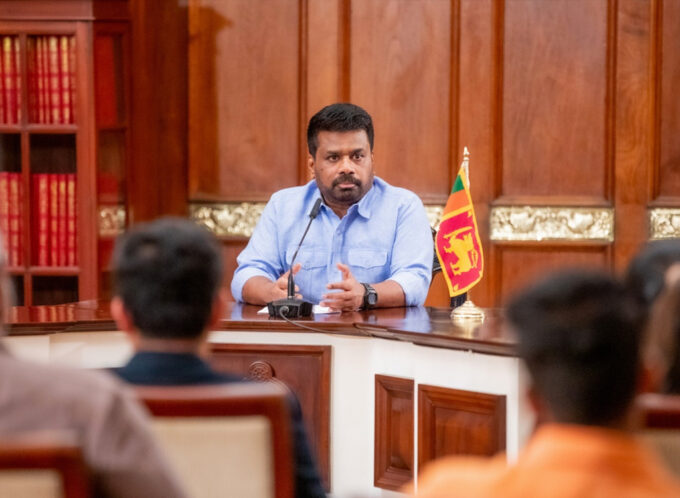
Yet herein lies the fundamental issue. For a population already strained by successive waves of inflation and economic adjustment, the call for structural reform offers little immediate comfort. Households and businesses do not experience policy frameworks; they experience power cuts, fuel queues, and unaffordable essentials. What they require is uninterrupted access to energy at a cost that does not erode their already diminished purchasing power. Bridging this gap between macroeconomic necessity and household reality is the central policy challenge currently facing the NPP government.
In this context, the contrast with India is both instructive and politically uncomfortable. Faced with the same global shock triggered by escalating tensions involving the United States, Israel, and Iran – and the resulting spike in crude prices beyond $100 per barrel, India has chosen a markedly different path. Rather than passing the full burden of higher global prices onto consumers, New Delhi has opted to absorb almost the entirety of the shock. Thereby, fuel taxes and duties have been sharply reduced, with petrol taxes cut from INR 13 per liter to INR.3, and diesel duties effectively eliminated. Petroleum Minister Hardeep Singh Puri framed the decision in simple terms: the government had to choose between significantly increasing fuel prices or taking a hit on its own finances to protect consumers, it chose the latter.
The fiscal implications are substantial. Economists estimate the annualised cost of these tax reductions at over INR 1.5 trillion. Yet India’s approach is not simply one of fiscal sacrifice, it is part of a broader strategy that combines consumer protection with revenue rebalancing. Export taxes on refined products such as diesel and aviation fuel have been reimposed, partially offsetting the loss in domestic fuel tax revenue. At the same time, Indian authorities have moved decisively to reassure the public; claims of impending shortages or lockdowns have been firmly dismissed, with officials emphasising the country’s resilience and the adequacy of its reserves, reportedly sufficient to cover over 75 days of consumption.
Sri Lanka’s response, by contrast, has been far more constrained and far more visible in its impact on ordinary citizens. Fuel prices have been increased by over one-third (36%) since the onset of the crisis a month ago, a reflection of both rising global costs and limited fiscal space. Even so, the government claims it continues to absorb a portion of the price increase, reportedly incurring monthly losses of around $63 million.
Concerns over unsustainability
Cabinet Spokesman, Minister Nalinda Jayatissa has acknowledged, the price hikes imposed domestically do not fully reflect the increase in international markets. In effect, Sri Lanka is attempting to strike a delicate balance between fiscal sustainability and social stability, subsidising consumption while lacking the financial depth to sustain such subsidies beyond next month.
Compounding the problem is the broader inflationary spillover from the energy shock. Fertiliser markets, heavily dependent on supply routes through the Strait of Hormuz, are under pressure, raising the prospect of significant increases in agricultural costs. Estimates suggest that Sri Lanka could face a double-digit rise in food prices in the coming months. The implications are clear: Sri Lanka has been here and done this before – even as recently as 2022; where what begins as an energy crisis quickly evolves into a cost-of-living crisis, amplifying existing vulnerabilities.
Though slow off the blocks, the government has explored alternative supply arrangements, including negotiations with Russia following the partial relaxation of sanctions. Discussions involving Russian officials, including Deputy Energy Minister Roman Marshavin, signal an attempt to secure fuel at concessionary rates. There has also been an offer from Iran to supply fuel directly, though logistical constraints – most notably the lack of shipping capacity – have prevented its acceptance. These efforts reflect a pragmatic recognition of Sri Lanka’s limited options, but they also underscore the deeper structural weakness of the absence of flexibility in procurement and logistics.
If supply-side constraints were the only challenge, the situation could be somewhat manageable. But recent developments suggest deeper issues in governance and crisis management. Remarks by Transport Minister Bimal Rathnayake regarding the importation of substandard coal have raised serious concerns. His assertion that the coal is indeed inferior and there is little to be done after the fact, and that imposing excessive penalties on the supplier could jeopardise future procurement – intriguingly from the same supplier – reveals the extent to which Sri Lanka is operating without meaningful buffers. When a country is compelled to accept suboptimal inputs because it lacks the capacity to wait for better alternatives, it is not merely managing a crisis, but also being managed by it.
Contrasting comparison
This absence of buffer capacity – whether in fuel, coal, or foreign exchange – lies at the heart of Sri Lanka’s vulnerability. It is also what distinguishes its situation most starkly from that of India. The comparison, often framed in terms of competence versus incompetence, is both politically potent and analytically incomplete. India’s relative stability in the face of the same global shock is not simply the result of better decision-making in the current context, but the outcome of structural advantages built over decades.
Scale is the first of these advantages. As the world’s third-largest importer of crude oil, India has cultivated a diversified supplier base spanning the Middle East, Russia, the United States, and Africa. This allows it to shift procurement in response to geopolitical disruptions. Sri Lanka, by contrast, remains heavily dependent on a narrower set of suppliers and is often forced into spot market purchases due to limited creditworthiness. In times of crisis, this lack of diversification translates directly into vulnerability.
Strategic reserves are another critical differentiator. India’s investment in petroleum storage infrastructure provides a cushion against short-term supply disruptions. By releasing reserves when global markets tighten, it can stabilise domestic supply and prevent panic. Sri Lanka, with minimal storage capacity and no meaningful strategic reserve, lacks this option, which means that any delay in shipments or financing immediately manifests as shortages at the pump.
Besides, India’s size and creditworthiness enable it to secure imports even under volatile conditions. Its state-owned enterprises have access to international financing, allowing them to maintain supply chains despite price fluctuations. Sri Lanka, still navigating the aftermath of sovereign default and operating under tight IMF-linked constraints, faces chronic forex shortages. In such an environment, the constraint is often not availability but affordability.
Cushioning stress points
Procurement strategy also matters. India relies extensively on long-term contracts that provide price stability and supply assurance. Sri Lanka’s reliance on spot tenders exposes it to both price volatility and logistical uncertainty. During periods of global stress, when competition for cargo intensifies, this approach becomes particularly risky, and its consequences are already visible in the rocketing fuel prices at the pump.
Then there is the question of the domestic energy mix. India’s energy system is diversified, with significant contributions from coal, renewables, nuclear, and hydroelectric power. Sri Lanka’s reliance on imported fuel for thermal generation, especially during dry periods, creates a direct link between global fuel markets and domestic electricity supply. To make matters worse, this link is now under additional strain from climatic risks.
The current heatwave sweeping the nation and the looming threat of El Niño has added a further layer of complexity. Characterised by the warming of surface waters in the eastern Pacific, El Niño often brings hotter and drier conditions to parts of South and Southeast Asia. For Sri Lanka, this could mean a weakened southwest monsoon and reduced hydroelectric generation at a time when energy demand is peaking. Meteorological assessments already point to a prolonged dry spell, with limited prospects for heavy rainfall in the coming months. In such a scenario, the country’s dependence on imported fuel for power generation will intensify, exacerbating both fiscal and supply pressures.
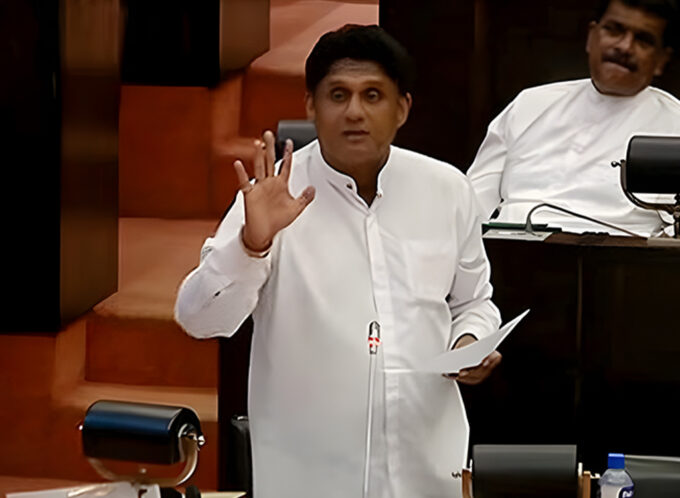
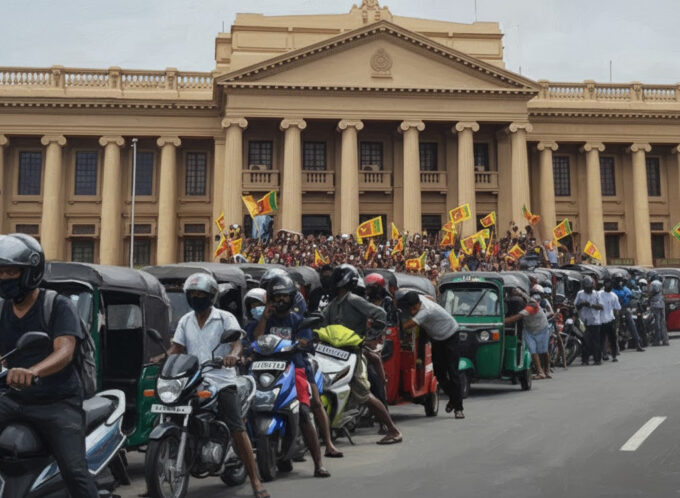
Meanwhile, a historical perspective offers a sobering reminder of how energy shocks often intersect with domestic politics. When Brent crude oil prices reached record highs in 2008 reaching USD 147 a barrel, Sri Lanka was simultaneously engaged in a costly military campaign in the north. In 2022, as oil prices surged again following the outbreak of the Russia-Ukraine conflict, the country was already reeling from the economic fallout of the pandemic. In both instances, opposition forces – most notably the Janatha Vimukthi Peramuna (JVP) – mobilised public discontent through strikes and protests. Today, in a reversal of roles, the same political formation finds itself in government, confronting the same structural constraints it never hesitated to criticise, while pleading with the current opposition to not follow in its footsteps.
Rhetoric alone will not deliver
This shift highlights the uncomfortable reality that energy crises are not easily resolved through political rhetoric. They expose underlying structural weaknesses that transcend party lines. The question, therefore, is not whether one administration is more competent than another, but whether the system as a whole has developed the resilience required to withstand external shocks. It is clear, therefore, that the current JVP/NPP government has its work cut out in this regard.
The path forward does not require grand, long-term transformations, even though these remain necessary. What it demands, above all, is predictability. Ensuring a stable pipeline of foreign exchange for essential imports is the first priority. Fuel, liquefied petroleum gas, and coal must be treated as non-negotiable expenditures, with a forex allocation ring-fenced accordingly. Even a modest but reliable flow of foreign exchange can stabilise supply chains and prevent the emergence of shortages.
Procurement practices must also evolve. While long-term contracts may not be immediately feasible, medium-term arrangements with trusted suppliers can reduce exposure to market volatility. Inventory management, often overlooked, offers another avenue for improvement. Maintaining even a small but consistent buffer stock can significantly reduce the likelihood of disruptions. Towards this end, it is crucial that the regime walks the talk and refurbish as many of the dormant storage tanks spread across the island as possible, notably in Trincomalee and Sapugaskanda.
Demand-side measures, if carefully designed, can provide quick relief. Encouraging off-peak electricity use, limiting non-essential consumption, and refining pricing mechanisms to discourage waste without triggering backlash can ease pressure on the system. Expanding the role of the private sector in fuel distribution under appropriate regulation could improve efficiency and access to financing.
Geopolitical realities
Diplomacy, too, has a role to play. In an era where energy security is increasingly geopolitical, government-to-government agreements can provide critical support. Whether through deferred payment arrangements, guaranteed cargo allocations, or regional cooperation, such initiatives can enhance resilience in the short term. Underlying all these measures is the need for institutional coordination. The fragmentation of decision-making across energy, finance, and regulatory bodies has long been a source of inefficiency. A crisis of this magnitude demands a unified response, with clear lines of authority and accountability.
Ultimately, the challenge facing Sri Lanka is not one of transformation but of discipline. The technical solutions are neither complex nor unknown. What has been lacking is the consistency to implement them and the foresight to act before crises escalate. In the absence of such discipline, the country will remain trapped in a cycle of reactive policymaking, perpetually vulnerable to external shocks.
The global energy crisis may eventually subside, as all such crises do, but the lessons it offers are immediate and unforgiving. Countries that have invested in resilience – through diversification, reserves, and institutional strength – are able to absorb the shock. Those that have not are forced to endure it in full. Sri Lanka now stands at that intersection. The question is whether it will use this crisis to build the buffers it lacks or continue to navigate from one crisis to the next, hoping each time that the next shock will be less severe than the last.
Disclaimer: The views and opinions expressed in this article are those of the writer and do not necessarily reflect the official position of this publication.









Leave a comment