
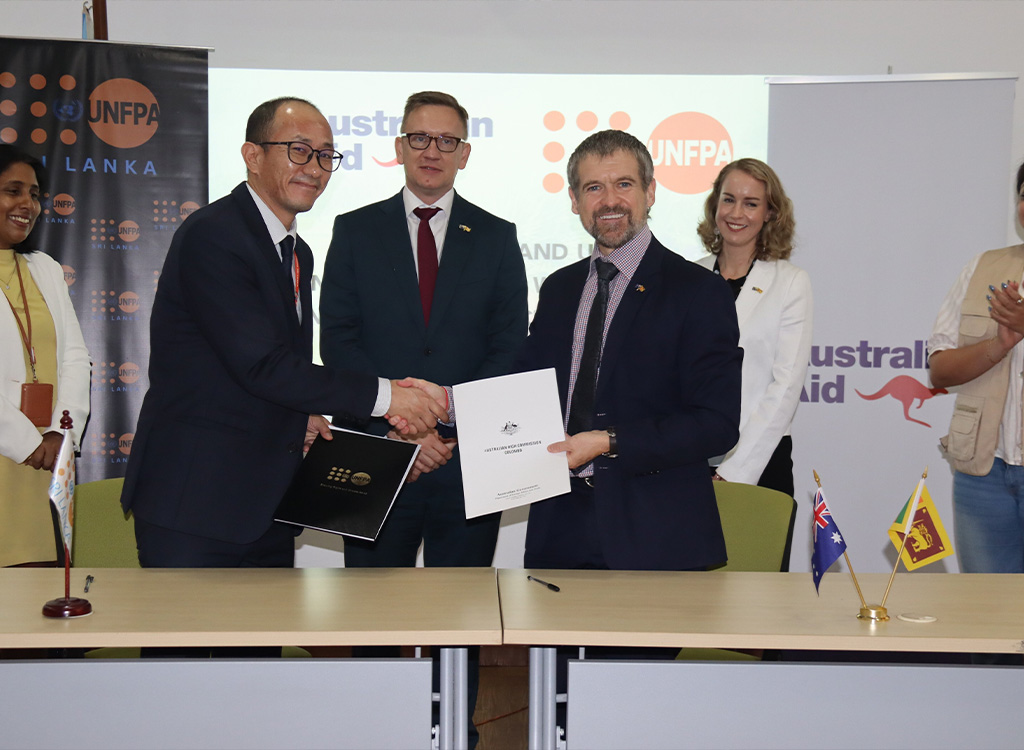
Australia has partnered with the United Nations Population Fund (UNFPA) to deliver emergency assistance to women and girls affected by the floods and landslides caused by Cyclone Ditwah.
The Government of Australia has pledged AUD 500,000 to strengthen sexual and reproductive health services, gender-based violence referral systems and psychosocial support across 10 heavily affected districts.
The funding contributes to UNFPA’s USD 8.3 million emergency appeal and one-year response plan.
UNFPA said its acute-phase response has focused on supporting pregnant women, newborns, older women, women with disabilities and adolescent girls.
Through Australia’s Regional Prepositioning Initiative, the agency has distributed 700 dignity kits, 200 maternity kits and cash assistance to 20 pregnant women from vulnerable households.
Ongoing and planned interventions include mobile health clinics, restoration of damaged health facilities, expanded cash and voucher assistance and strengthened mental health and psychosocial support services.
The agency is coordinating with the Ministry of Health, local disaster units and partners such as the Sri Lanka Red Cross Society.
Australian Assistant Minister for Citizenship, Customs, Multicultural Affairs and International Education Julian Hill said the support aims to ensure vulnerable women and girls can access essential services as communities begin to recover.
“Safeguarding dignity and ensuring safety is a priority as communities rebuild from this disaster,” he said.
Phuntsho Wangyel, UNFPA’s officer in charge for Sri Lanka and the Maldives, said the cyclone disrupted access to reproductive health care and increased the risk of gender-based violence.
“With the continuous support of the Government of Australia, we are scaling up life-saving services and providing critical psychosocial support,” he said.
Australian High Commissioner Matthew Duckworth added that the assistance underscores the strength of the partnership between the two countries. “In times of crisis, that partnership matters most,” he said.









Leave a comment