
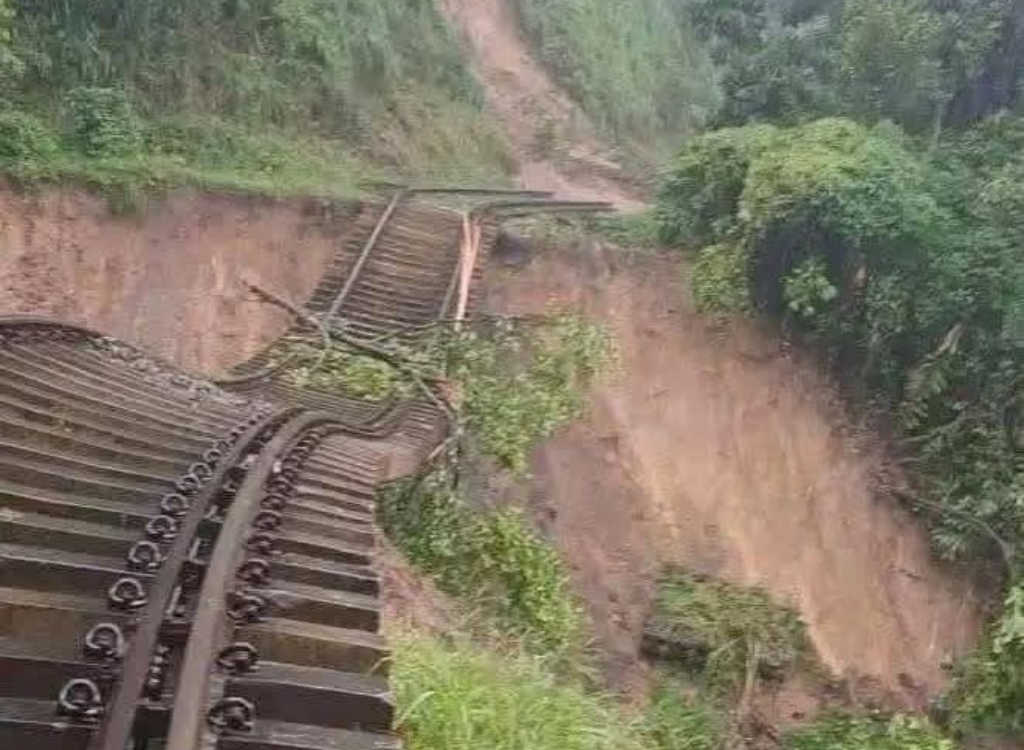
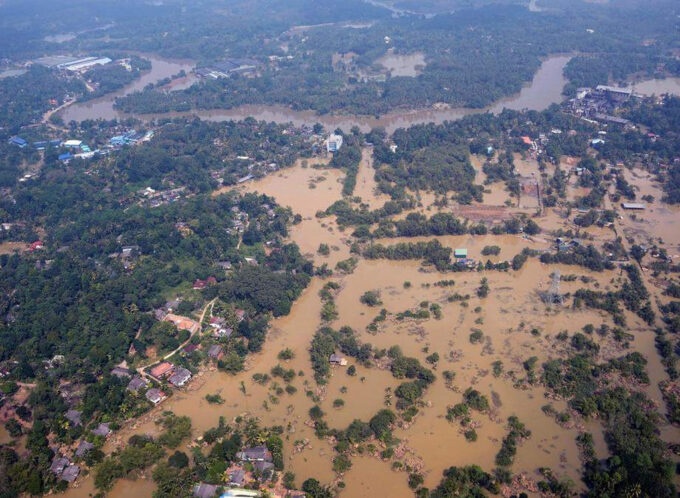
Only about 30% of Sri Lanka’s railway system remains operational after the recent cyclone that battered the island, leaving widespread destruction across transport, agriculture, power, and telecommunications sectors, officials said.
Commissioner General of Essential Services Prabath Chandrakeerthi said just 478 kilometers of the 1,593-kilometer railway network are currently usable as repair teams work to assess and restore service.
Damage reports from multiple agencies show extensive losses across the country’s irrigation and agricultural infrastructure.
Authorities said 1,777 tanks, 483 dams, 1,936 canals and 328 agricultural roads were damaged in the storm. About 137,265 acres of farmland and 305 minor irrigation canals were also destroyed.
Road transport infrastructure suffered major setbacks as well.
The Road Development Authority (RDA) has reopened 246 previously blocked roads, but 22 bridges were completely destroyed.
Officials reported six destroyed bridges in the Uva Province; four each in the North and North Western provinces; three in the Western Province; two each in the Central and Eastern provinces; and one in the North Central Province.
Electricity supply has reached partial restoration.
Power connections are 91% restored nationwide, with repair work still underway in the Nuwara Eliya District.
Of the 16,178 substations disrupted during the cyclone, 11,315 have been reactivated, resuming supply for 2,526,264 customers, about 72% of the 3.53 million affected connections.
The Ministry of Health has directed hospitals to adjust schedules to prioritize patients from heavily affected areas who missed medical appointments, treatments, or examinations during the disaster.
In isolated Aranayaka, where access roads remain cut off, authorities are airlifting dry food supplies and providing support to medical teams operating in the area.
Meanwhile, technical experts from several agencies, including the Water Supply and Drainage Board, Water Resources Board, Geological Survey and Mines Bureau, Department of Irrigation, Central Engineering Consultancy Bureau, and the University of Peradeniya, are working with the National Building Research Institute (NBRI) to evaluate the structural stability of damaged homes and buildings.
Chandrakeerthi said the Director General of the National Planning Department has been instructed to prepare a rapid “Climate-Responsive Recovery and Reconstruction Investment Plan” to mobilize assistance from development partners as the country begins long-term recovery efforts.









Leave a comment