

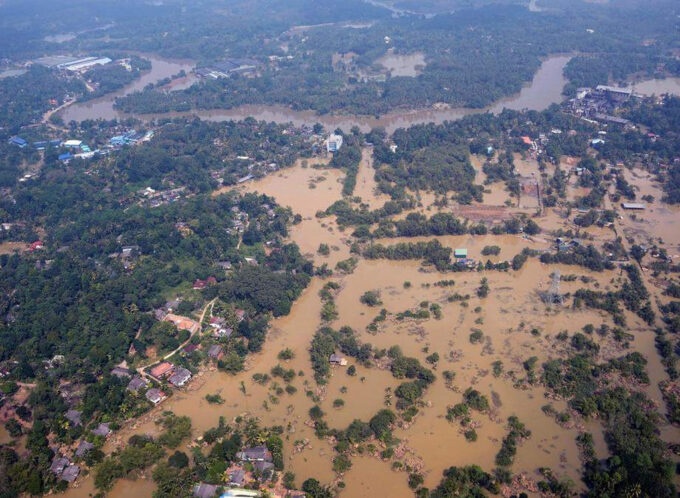
Cyclone Ditwah has caused widespread destruction in Sri Lanka, with more than 15,000 homes reported destroyed and nearly 1 million people affected, the United Nations Office for the Coordination of Humanitarian Affairs (OCHA) said Monday.
Initial assessments show severe damage to infrastructure, including over 200 impassable roads, at least 10 damaged bridges, sections of the national rail network disrupted, and power outages affecting large areas.
The disaster has claimed over 300 lives, with hundreds of people still missing.
More than 180,000 individuals from over 51,000 families are currently sheltering in 1,094 government-run safety centers as search and rescue operations continue.
Cyclone Ditwah made landfall on 28 November before returning over the Bay of Bengal, triggering some of the worst flooding Sri Lanka has seen since the early 2000s.
The hardest-hit districts include Gampaha, Colombo, Puttalam, Mannar, Trincomalee, and Batticaloa, while landslides in the central hill country have devastated Kandy, Badulla, and Matale.
Severe disruptions to electricity, communications, and transport networks have left entire villages isolated, particularly in northern districts such as Jaffna.
Access to clean water is limited in several areas, raising concerns over potential disease outbreaks.
The World Health Organization (WHO) warned that the floods significantly increase the risk of vector-borne, food-borne, and water-borne diseases, urging communities to prevent mosquito bites, ensure food safety, and use safe drinking water.
Sri Lanka’s health system, already under strain, faces additional pressure, with several district hospitals flooded and critically ill patients being airlifted to functional facilities.
The United Nations in Sri Lanka has activated its emergency coordination system to scale up a unified response with government agencies and humanitarian organizations.
Sector coordination has been established across food security, health, water and sanitation, education, protection, shelter, and early recovery.
A multi-sector needs assessment is underway to identify the most urgent gaps in relief efforts.









Leave a comment