
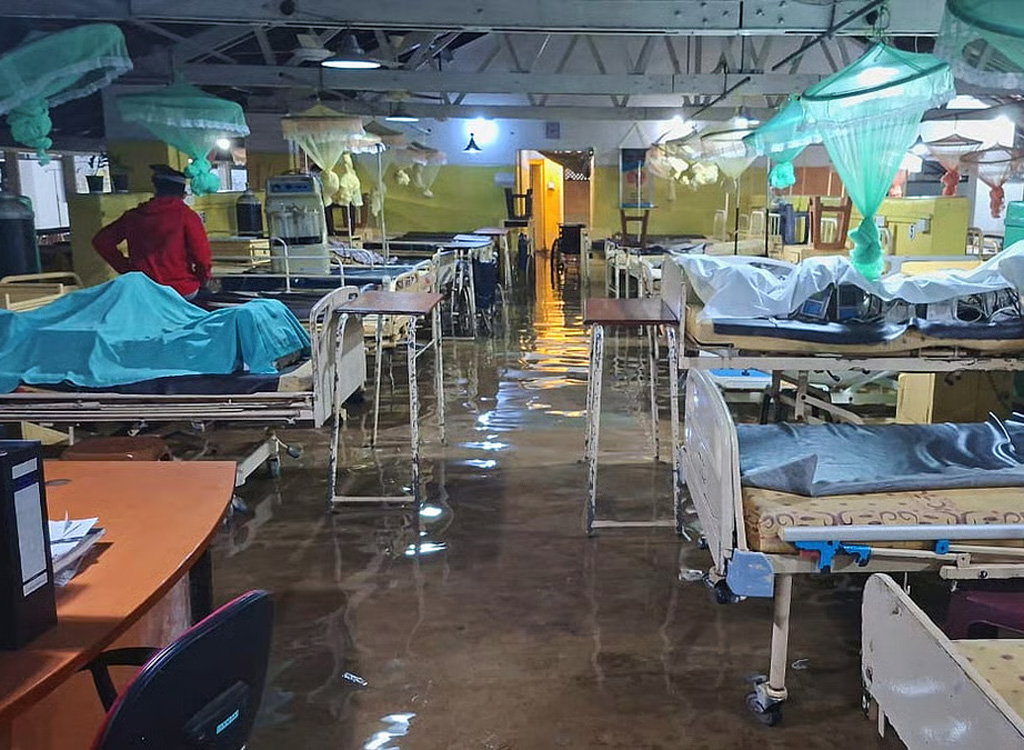
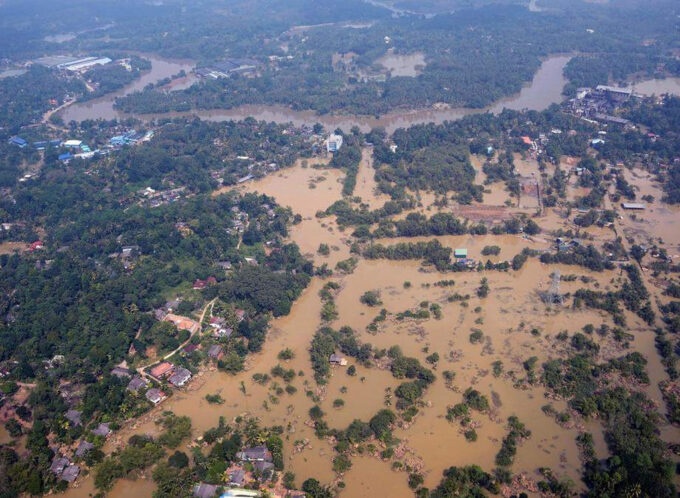
Hospitals across several flood-hit districts are struggling to support stranded staff and patients as food supplies dwindle and access routes remain cut off, the Disaster Preparedness and Response Division said Saturday.
National Coordinator Dr. Samiddhi Samarakoon said that while internally displaced persons’ camps had received medicines and essential medical supplies through Regional Directors of Health Services, many hospitals and surrounding communities remained isolated. Staff, patients and residents seeking shelter have been unable to reach safer areas.
At the Chilaw District General Hospital, she said, medical teams and patients remained trapped alongside local residents who fled rising floodwaters.
The facility has appealed for nearby residents to help provide food, while religious organisations have stepped in to prepare meals.
Conditions were also deteriorating at the Karawanella Base Hospital, where about 70 people were stranded in two hospital buses with no available drivers to move them to safety.
Dr. Samarakoon said that although Rs. 500,000 had been allocated to RDHS offices in affected districts, banking disruptions and weakened money transfer systems were delaying the release of funds.
Many hospital staff, she noted, have been on duty for nearly three days without a change of clothes.
Attempts to reach isolated facilities have been hindered by difficult terrain.
Naval boats cannot enter partially flooded areas, while the Air Force faces resource limitations for helicopter evacuations.
Authorities have instructed divisional coordinators to secure fuel for generators and oxygen cylinders, which are essential for operating theatres.
She also cautioned that conditions in parts of Colombo were becoming an emerging concern.
Severe flooding has forced the Mahiyangana Base Hospital to discharge patients who could safely return home, while others were transferred to hospitals in Bibila and Monaragala.
The facility is battling shortages of electricity and water, and both its operating theatres and Intensive Care Unit are flooded.
A temporary emergency receiving area has been established, but the hospital can now only handle outpatients, who must be referred to other institutions.
Health sector officials also voiced alarm over the situation at the Chilaw hospital, where four premature infants aged between 24 and 26 weeks are dependent on incubators powered by generators.
Any disruption in generator power, they warned, would put the infants at immediate risk.
Authorities are considering transfer options that maintain uninterrupted incubator support.
Health Ministry Secretary Dr. Anil Jasinghe urged the public, healthcare workers and institutions to coordinate with the Disaster Preparedness and Response Division for essential health services.
He said the ministry has activated a 24-hour emergency hotline, 1926, to provide health-related assistance during the crisis.










Leave a comment