
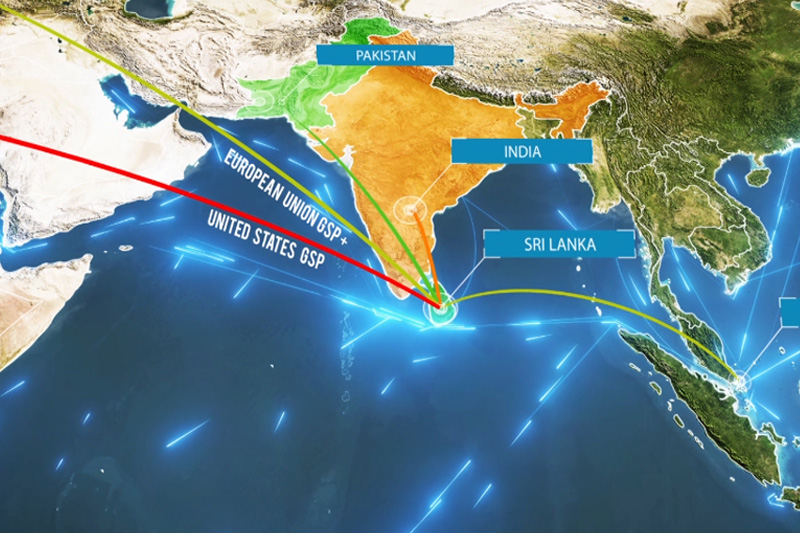
Sri Lanka’s financial system faces renewed uncertainty, as confidence in its medium-term stability declined slightly, driven by heightened global macroeconomic risks and geopolitical tensions, according to the Central Bank of Sri Lanka’s latest Systemic Risk Survey (SRS).
The survey, conducted between June 27 and July 20, found that while short-term confidence had improved compared to the previous period, respondents expressed growing unease about the medium-term outlook. The key concern: escalating global trade tensions and unpredictable shifts in US trade policy.
Between April and July 2025, Sri Lanka’s $2.9 billion export market to the United States—comprising nearly a quarter of its merchandise exports—faced severe volatility. Although an initial 44% blanket tariff threatened to cripple Sri Lankan exports to the US, the measure was rolled back before implementation. However, a revised 20% reciprocal tariff took effect on August 7, raising costs for Sri Lankan goods such as apparel, tea, rubber, and spices.
The tariff shift came amid a broader overhaul of US trade policy. On July 10, President Donald Trump announced a baseline tariff hike to 15–20%, followed by the suspension of de minimis exemptions on July 31—sparking panic across Asian export markets. The changes are expected to squeeze margins for SMEs across South and Southeast Asia, with ripple effects on global supply chains.
“In the short term, the perceived probability of a high-impact negative event declined,” the SRS report noted. “But in the medium term, concerns are growing.”
The Central Bank’s SRS gathers insights from risk officers across licensed banks, finance companies, insurance firms, investment managers, and rating agencies. It serves as a barometer of systemic threats and institutional confidence in the Sri Lankan financial system.
International institutions have echoed similar concerns. The UN Conference on Trade and Development (UNCTAD) warned in its September Global Trade Update that recent US policy changes demonstrate how even modest shifts by major economies can reshape global trade flows.
“For decades, global agreements provided predictability,” the UNCTAD report stated. “But in 2025, with fractured rules and intense competition for critical resources, trade uncertainty has reached unprecedented levels.”
Despite the turbulence, Fitch Ratings modestly raised its global growth outlook for 2025, citing stronger-than-expected second-quarter data in the OECD’s latest outlook. Still, signs of a slowdown in the US economy—particularly in job and retail figures—have added another layer of unease for export-dependent countries like Sri Lanka.
As global markets adjust to a more protectionist US stance, Sri Lanka’s policymakers may face difficult choices in balancing trade exposure with macroeconomic stability.











Leave a comment