

This year is “virtually certain” to end as the second- or third-hottest year on record, EU scientists have found, as climate breakdown continues to push the planet away from the stable conditions in which humanity evolved.
Global temperatures from January to November were on average 1.48C higher than preindustrial levels, according to the Copernicus, the EU’s earth observation programme. It found the anomalies were so far identical to those recorded in 2023, which is the second-hottest year on record after 2024.
World leaders have promised to keep the planet from heating by 1.5C (2.7F) above preindustrial levels by the end of the century. Scientists interpret the temperature target as a 30-year average, leaving a sliver of hope for meeting the goal after a period of overshoot even as individual months and years begin to cross the threshold.
“For November, global temperatures were 1.54C above preindustrial levels,” said Dr Samantha Burgess, the deputy director of Copernicus Climate Change Service. “The three-year average for 2023-2025 is on track to exceed 1.5C for the first time.”
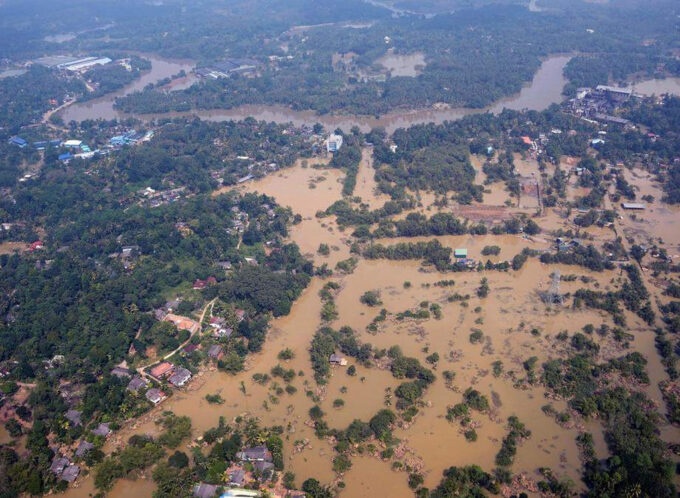
The agency’s monthly bulletin found that last month was the third-warmest November globally, with “notably” warmer temperatures recorded across northern Canada and the Arctic Ocean. The month was marked by a series of dangerous weather events including cyclones and catastrophic floods that swept away lives and homes across south and south-east Asia.
Average temperatures have risen sharply as a result of the blanket of carbon pollution smothering the Earth, which has strengthened weather extremes from heatwaves to heavy rains, but continue to vary from year to year based on natural factors. Warming El Niño conditions boosted global temperatures during 2023 and 2024 but gave way to weakly cooling La Niña conditions in 2025.
Copernicus found 2025 was tied with 2023 as the second-hottest year on record. “These milestones are not abstract,” said Burgess. “They reflect the accelerating pace of climate change, and the only way to mitigate future rising temperatures is to rapidly reduce greenhouse gas emissions.”
Since the Paris climate agreement in 2015, planet-heating emissions have continued to climb – although the expansion of renewable energy has helped to curb the rise – along with average temperatures and the intensity of weather extremes.
The Copernicus findings echoed analysis from the World Meteorological Organization before the Cop30 summit in Brazil last month. The WMO found 2015 to 2025 would have been the 11 warmest years in an observational record that stretches back to 1850.
“We are not on track to meet the goals of the Paris agreement,” the WMO secretary general, Prof Celeste Saulo, said. “Other climate indicators continue to sound alarm bells [in 2025], and more extreme weather had major global impacts on economies and all aspects of sustainable development.”












Leave a comment