
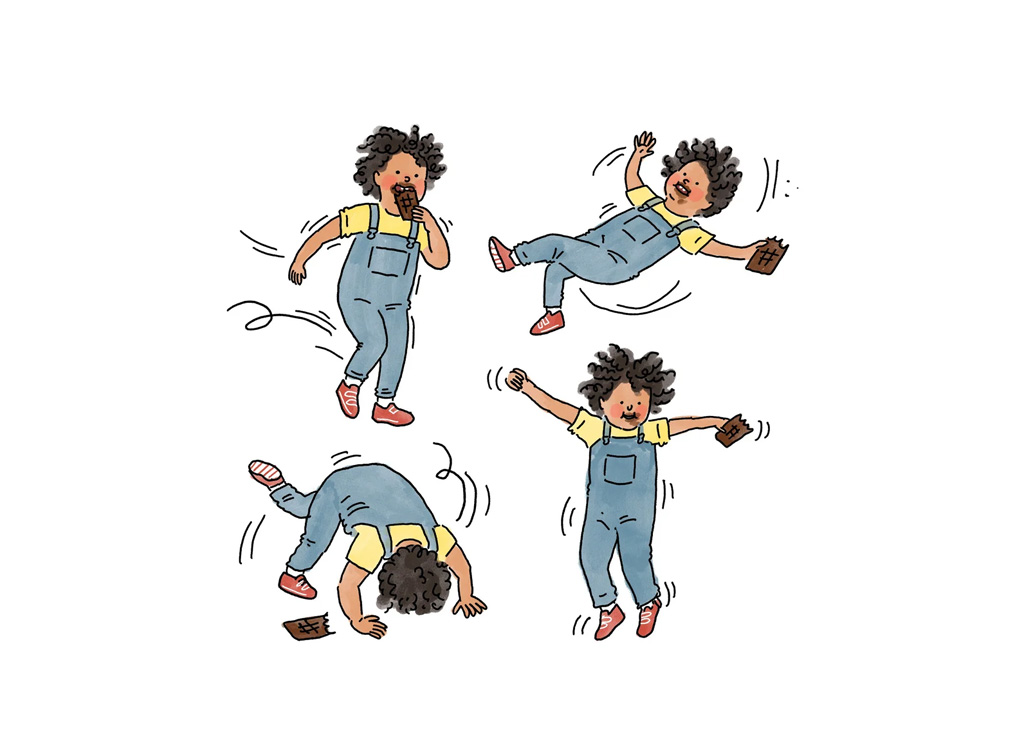
It’s a warning passed down the generations: give a child too many sweets and they’ll be bouncing off the walls. But is there any scientific proof that sugar sends us into overdrive? Not yet, says Amanda Avery, an associate professor in nutrition and dietetics at the University of Nottingham.
She says there are theories linking sugar to behavioural changes. One stems from how sugar activates the body’s reward system, triggering a burst of dopamine – the “feelgood” neurotransmitter. “Increases in dopamine levels can be linked to behavioural changes, which can include periods of hyperactivity,” says Avery.
Another theory focuses on how eating lots of sugar can cause blood glucose levels to spike and then drop quickly, which is known as reactive hypoglycaemia. This can cause behavioural changes, some of which could be interpreted as hyperactivity.’
Hyperactivity is subjective: what one parent might call hyperactive, another might just see as energetic
There’s little evidence to prove these theories though. Not least because hyperactivity – outside its clinical context as a symptom of attention deficit hyperactivity disorder (ADHD) – is subjective: “What one parent might call hyperactive, another might just see as energetic.”
Research has so far found only limited links between sugar intake and hyperactive behaviour, mostly among children already diagnosed with ADHD. The strongest links appear with sweetened drinks containing seven or eight teaspoons of sugar in one serving, which also contain additives and caffeine, making it hard to isolate sugar as the culprit. Some studies on animals – but not humans – have shown that those fed high-sugar diets early in life were more likely to show hyperactivity later on.
So, does sugar make us hyper? So far, it hasn’t been proved to. Still, Avery says, most of us eat more sugar than is healthy and we should try to cut back.













Leave a comment