
By The Pulseline News Desk
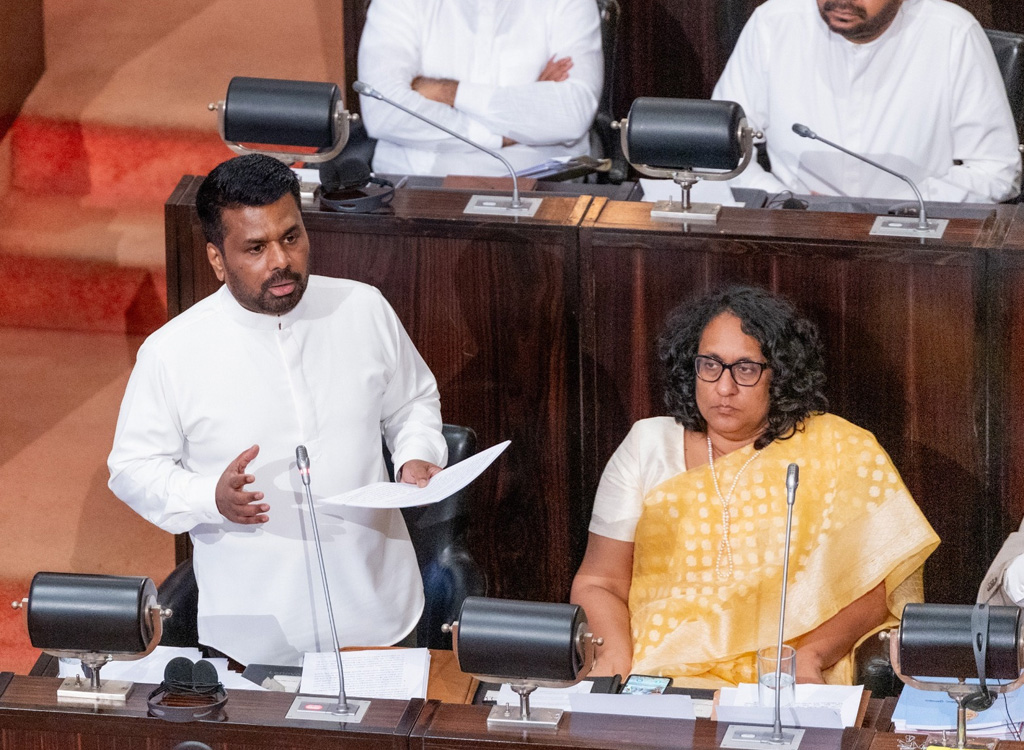
President Anura Kumara Dissanayake (AKD) has presented an ambitious 2027 Budget, allocating Rs. 2 trillion for public investment while setting a medium-term target of achieving sustainable economic growth of 7% or higher.
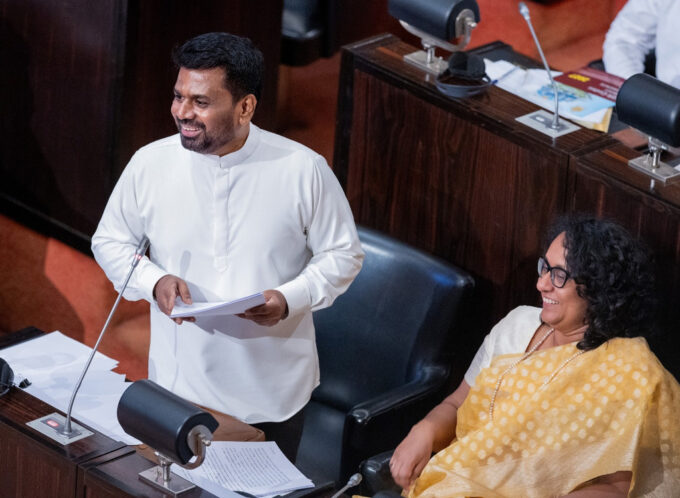
The Budget, presented in Parliament yesterday (12), outlines a broad programme of investments and reforms aimed at moving Sri Lanka beyond economic stabilisation towards a more productive, export-oriented economy.
With major allocations for infrastructure, education, healthcare, agriculture, digital technology and social protection, the Government has sought to balance economic development with measures to improve living standards and support vulnerable communities.
Public investment is projected at 5.12% of Gross Domestic Product (GDP) in 2027, with the capital expenditure programme also incorporating reconstruction requirements following Cyclone Ditwah.
The Government expects public revenue to remain at 15.8% of GDP, while total expenditure is projected at 20.3%. The budget deficit is estimated at 4.5% of GDP, with the primary surplus expected to remain at 2.3%.
The Government has also indicated that it will continue to strengthen public finances, manage debt and improve the efficiency of State institutions.
The current International Monetary Fund (IMF) programme is expected to conclude in March 2027. A committee has been appointed to examine the possibility of entering another programme following the completion of the existing arrangement.
Infrastructure and transport take centre stage
Infrastructure development accounts for a substantial portion of the Budget, with Rs. 251 billion allocated for highways, expressways and railway development. Including additional proposals and reconstruction funding, expenditure on these sectors is expected to reach Rs. 487 billion.
Among the major projects are the Central Expressway, Ruwanpura Expressway and improvements to existing road networks.
An allocation of Rs. 30 billion has been made for the Kurunegala-Galewela section of the Central Expressway, while Rs. 27 billion has been allocated for the first phase of the Ruwanpura Expressway, from Kahathuduwa to Ingiriya.
Another Rs. 53.45 billion has been earmarked to complete the Kadawatha-Mirigama section of the Central Expressway by September 2028.
Railway modernisation is another priority, with Rs. 80 billion allocated for electrification. The initial programme will cover the Kelani Valley line from Maradana to Homagama, the Main Line from Maradana to Ragama and the Coastal Line from Maradana to Panadura.
The Government also plans to purchase five new trains and renovate railway stations.
Meanwhile, Rs. 95 billion has been allocated to modernise railway and passenger bus services. The Metro Bus service, currently operating around Colombo, is expected to be extended to Kandy, Galle and Jaffna.
The Government also plans to introduce 100 electric buses received from China, alongside 250 small buses intended to improve public transport services in rural and upcountry areas.
Education and healthcare receive major allocations
Education reforms and skills development feature prominently in the Budget, with allocations directed towards digital learning, teacher training, vocational education and improvements to university facilities.
The Government has allocated Rs. 3 billion for the digital transformation of provincial schools through a five-year programme that will provide computers, smart boards, internet facilities and other digital learning equipment.
It also expects to extend reliable internet connectivity to the remaining 750 secondary schools that have yet to receive the facility.
A further Rs. 35 billion has been allocated for digitalisation, teacher training and infrastructure improvements, including the development of teachers’ colleges, National Colleges of Education, school buildings and laboratories.
The monthly allowance for trainee teachers at Colleges of Education will increase from Rs. 10,500 to Rs. 20,000 from April 2027.
University lecturers will receive an increase of Rs. 25,000 in their academic allowance, implemented in two stages beginning in July 2027. Payments to visiting lecturers will also increase threefold, from Rs. 1,500 to Rs. 4,500 per hour.
The Government has allocated Rs. 11 billion for vocational education and training, including the modernisation of 25 selected Technical Colleges.
Healthcare development has received a capital allocation of Rs. 131 billion.
The proposals include purchasing MRI and CT scanners and other specialised medical equipment, with an additional Rs. 5 billion allocated for medical equipment and Rs. 3 billion for ambulances.
One of the major healthcare initiatives is the establishment of 1,000 Arogya Wellness Centres between 2027 and 2029, at an estimated cost of Rs. 17.44 billion. An allocation of Rs. 3.6 billion has been made for the programme in 2027.
The centres are intended to bring basic healthcare services closer to communities, particularly in areas where access to hospitals remains limited.
Social protection and pension relief
The Government has allocated Rs. 230 billion for social protection programmes, including the continuation of Aswesuma benefits for poor and extremely poor households.
Monthly allowances for kidney patients and persons with disabilities will increase from Rs. 10,000 to Rs. 12,500.
Another Rs. 25 billion has been allocated for rural development under the Praja Shakthi National Movement, with poverty reduction identified as a key priority.
The Budget also proposes a monthly interim allowance of Rs. 2,500 for public sector pensioners who retired between 2020 and 2024. The payment is scheduled to commence on July 1, 2027, and continue until the planned pension revision under the new basic salary structure is implemented.
The final phase of the pension revision programme for public servants who retired before 2020 will also be implemented next year.
Several allowances for public sector employees, including health workers, field officers, Grama Niladharis, armed forces personnel, police officers and judicial staff, are also due for revision.
Agriculture and industry targeted for expansion
Strengthening domestic production and improving food security are among the central economic objectives outlined in the Budget.
A total of Rs. 77 billion has been allocated for irrigation development, including the rehabilitation of damaged irrigation systems and the implementation of new projects.
Of this, Rs. 21 billion has been earmarked for rehabilitating tank systems, minor irrigation infrastructure and agricultural roads damaged by Cyclone Ditwah.
The Mahaweli Water Security and Investment Programme, including the North Central Province Greater Canal Project, will receive Rs. 19.5 billion.
The fisheries sector will receive allocations for developing fisheries anchorages, upgrading the Pesalai Fisheries Harbour and improving the Peliyagoda Fish Market.
The Government has also allocated Rs. 5 billion for fertiliser for tea cultivation and Rs. 1 billion for rubber cultivation.
On the industrial front, Rs. 4 billion has been allocated for developing industrial estates, including Valachchenai, Ingiriya, Dambulla, Raigama-Millaniya and Katunayake.
Small and medium-sized enterprises are also expected to benefit from Rs. 67.687 billion allocated for interest subsidies and refinancing facilities.
Through these programmes, the Government expects to provide approximately Rs. 174 billion in concessionary loans to entrepreneurs through State and private banks.
Meanwhile, a Sri Lanka-European Union Sustainable Trade and Economic Integration Project will be implemented between 2027 and 2030 with a grant of Rs. 3.43 billion to improve export competitiveness and diversify export markets.
Digital economy and renewable energy
The Budget also places considerable emphasis on digital transformation as a means of improving productivity, attracting investment and creating new employment opportunities.
An allocation of Rs. 10 billion has been proposed for digital economy development programmes, including the establishment of a National Artificial Intelligence Centre of Excellence, improvements to digital government services, expansion of the Lanka Government Cloud and strengthening of digital payment systems.
The Government also plans to provide broadband vouchers to 750,000 selected school students.
A further Rs. 9 billion has been allocated through the Telecommunications Regulatory Commission to expand broadband coverage under the Gamata Sannivedanaya programme, which aims to complete 573 new telecommunications towers by 2028.
Research and development activities will receive Rs. 23.8 billion in 2027.
In the energy sector, the Government expects renewable energy to account for 69% of installed electricity generation capacity by 2029, compared with approximately 62% at present.
A subsidy of Rs. 25,000 per kilowatt of battery storage capacity will be provided to domestic consumers installing new rooftop solar systems, subject to a maximum payment of Rs. 250,000.
The Government also plans to expand wind power generation by 370 MW by 2029 and introduce floating solar panels in 10 reservoirs, with the potential to generate approximately 500 MW.
Ports, airports and tourism
Strengthening Sri Lanka’s position as a regional shipping and logistics hub is another priority.
The Government expects Colombo Port’s shipping capacity to exceed 30 million twenty-foot equivalent units by 2040.
Plans include developing West Terminal II, studying the proposed Colombo North Port and establishing a logistics centre through a public-private partnership.
The Budget also proposes increasing bunkering capacity at Colombo Port by 50,000 metric tonnes with private sector participation and developing Trincomalee Port as a fuel storage and energy hub.
In the tourism sector, the Government has proposed abolishing the Tourism Development Levy imposed on the turnover of tourism establishments from April 1, 2027, in a move intended to reduce the tax burden on the industry.
Tax concessions and disaster recovery
Several tax changes have been proposed to reduce costs for businesses, encourage investment and improve competitiveness.
The Special Commodity Levy on imported sprats will be reduced from Rs. 100 to Rs. 10 per kilogram, while the levy on Maldive fish will fall from Rs. 302 to Rs. 10 per kilogram.
The Government has also proposed a 25% reduction in existing CESS rates on 800 selected import categories from April 2027.
The Ports and Airports Development Levy on specified imported newsprint categories will be removed from January 1, 2027.
However, the Special Commodity Levy on imported sugar will increase by Rs. 10 per kilogram to protect domestic sugar producers.
The Government expects the proposed tax changes to reduce revenue by Rs. 21.15 billion during 2027.
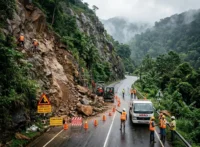
Meanwhile, disaster recovery has emerged as a significant component of the spending programme following Cyclone Ditwah.
A supplementary allocation of Rs. 260 billion has been proposed for reconstruction activities in 2027, in addition to allocations for rebuilding damaged infrastructure and strengthening disaster preparedness.
Another Rs. 2.9 billion has been allocated for 13 new disaster management projects, including improving safe centres, purchasing emergency response equipment, establishing an island-wide digital radio communication system and upgrading early warning facilities.
A modern Doppler Radar System is also expected to be installed next year with Japanese assistance.
An additional Rs. 5 billion has been allocated as advance preparedness for possible El Niño-related risks.
President AKD said the Budget proposals would be implemented through clearly identified institutions, measurable targets and greater transparency.
The challenge for the Government will now be to translate its extensive spending programme into tangible economic gains, particularly in terms of higher productivity, increased exports, employment creation and improved household incomes.
While the proposed Rs. 2 trillion capital expenditure programme signals a shift towards greater public investment, its effectiveness will ultimately depend on implementation, fiscal discipline and the ability to attract sustained private sector investment.









Leave a comment