
By The Pulseline News Desk
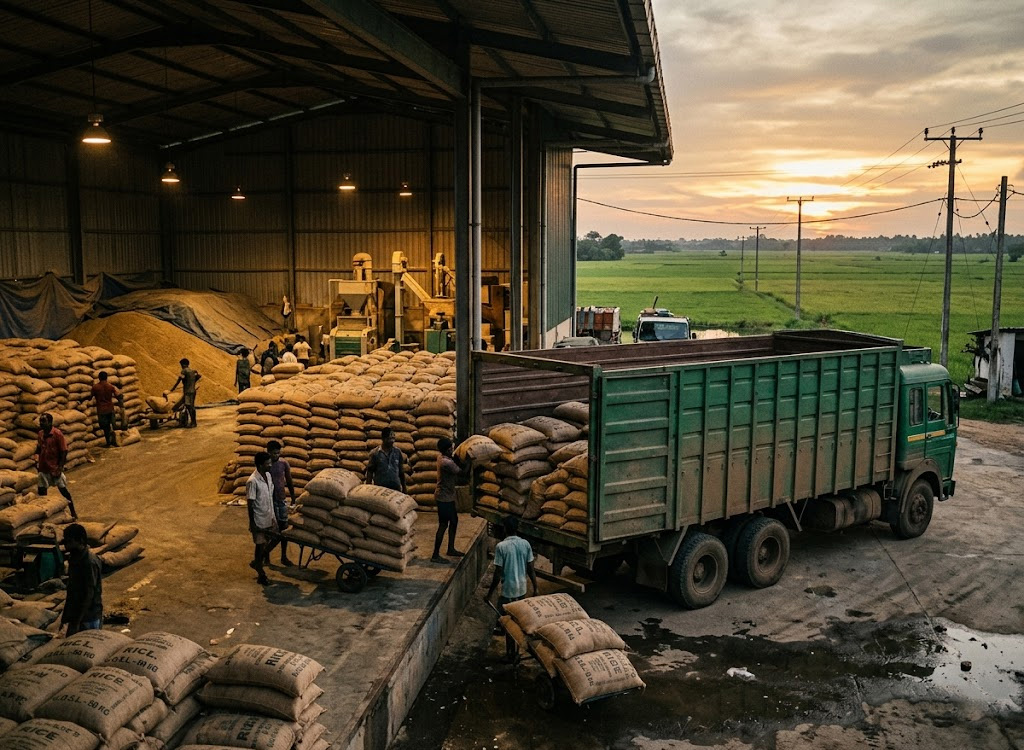
The Government has approved a plan to convert 30,000 metric tonnes of paddy held by the Paddy Marketing Board (PMB) into rice and release it to the market, in a move aimed at strengthening rice supplies and supporting the State’s paddy procurement programme.
The Cabinet decision follows a recommendation made at the 34th meeting of the Food Policy and Security Committee on July 22, 2026, as the Government seeks to ensure an adequate supply of rice to consumers.
Under the programme, the Cooperative Wholesale Establishment (CWE) will arrange for the PMB-held paddy to be milled, processed and packed before being distributed through retail channels.
The initiative effectively turns Government-held paddy stocks into a buffer for the rice market, allowing the authorities to inject additional supplies when required while also supporting farmers through the State procurement mechanism.
Registered mills invited to process stocks
The CWE will call for Expressions of Interest (EOIs) from rice mill owners registered with the PMB to undertake the milling and supply of the rice.
The rice will be prepared in 5 kg, 10 kg, 25 kg and 50 kg packs, providing the Government with several options for distributing the stocks through different retail channels.
The move also brings registered private-sector millers into the Government’s supply mechanism, rather than relying exclusively on State-owned milling capacity.
Price mechanism already determined
A key component of the programme will be the pricing of the rice produced from the Government-held paddy.
A Price Committee appointed under a Cabinet decision of December 15, 2025, has already determined the applicable paddy-to-rice conversion rate and the appropriate selling price.
The committee comprises representatives from the PMB, CWE, Lanka Sathosa, the National Post-Harvest Management Institute and the Hector Kobbekaduwa Agricultural Research and Training Institute.
The involvement of several agencies is intended to establish the conversion and selling prices based on the actual quantities of rice that can be obtained from the paddy and the costs involved in processing and distribution.
Rice to reach consumers
Once processed, the rice will be distributed to consumers through Lanka Sathosa outlets, cooperative stores and private-sector retailers.
The Government is therefore seeking to use its existing distribution network alongside private-sector channels to ensure that the additional stocks reach markets across the country.
The decision comes as rice remains a politically and economically sensitive commodity, with the availability and price of staple rice directly affecting household food costs.
By converting part of its paddy stocks into finished rice, the Government will have greater control over the release of publicly held stocks and can potentially respond more quickly to market shortages.
Beyond a one-off release
The move is also significant because it links the Government’s paddy procurement programme with its efforts to maintain food security.
The State routinely purchases paddy from farmers with the dual objective of supporting producer prices and building stocks that can be used to stabilize the market.
However, storing large quantities of paddy also creates challenges, including storage capacity, post-harvest losses and maintaining grain quality.
Processing the 30,000 metric tonnes into rice allows the Government to move those stocks further along the supply chain and place them directly within the consumer market.
The effectiveness of the programme will ultimately depend on how quickly the milling process is completed, the quality of the rice produced and whether the agreed selling prices translate into affordable supplies for consumers.
With the Cabinet now giving the green light, the CWE is expected to proceed with the process of selecting registered rice millers and arranging the conversion and distribution of the 30,000 metric tonnes of Government-held paddy.
The Government’s immediate objective is clear: use existing national food stocks to strengthen rice availability while supporting the broader paddy procurement and food-security strategy.













Leave a comment