
By The Pulseline News Desk
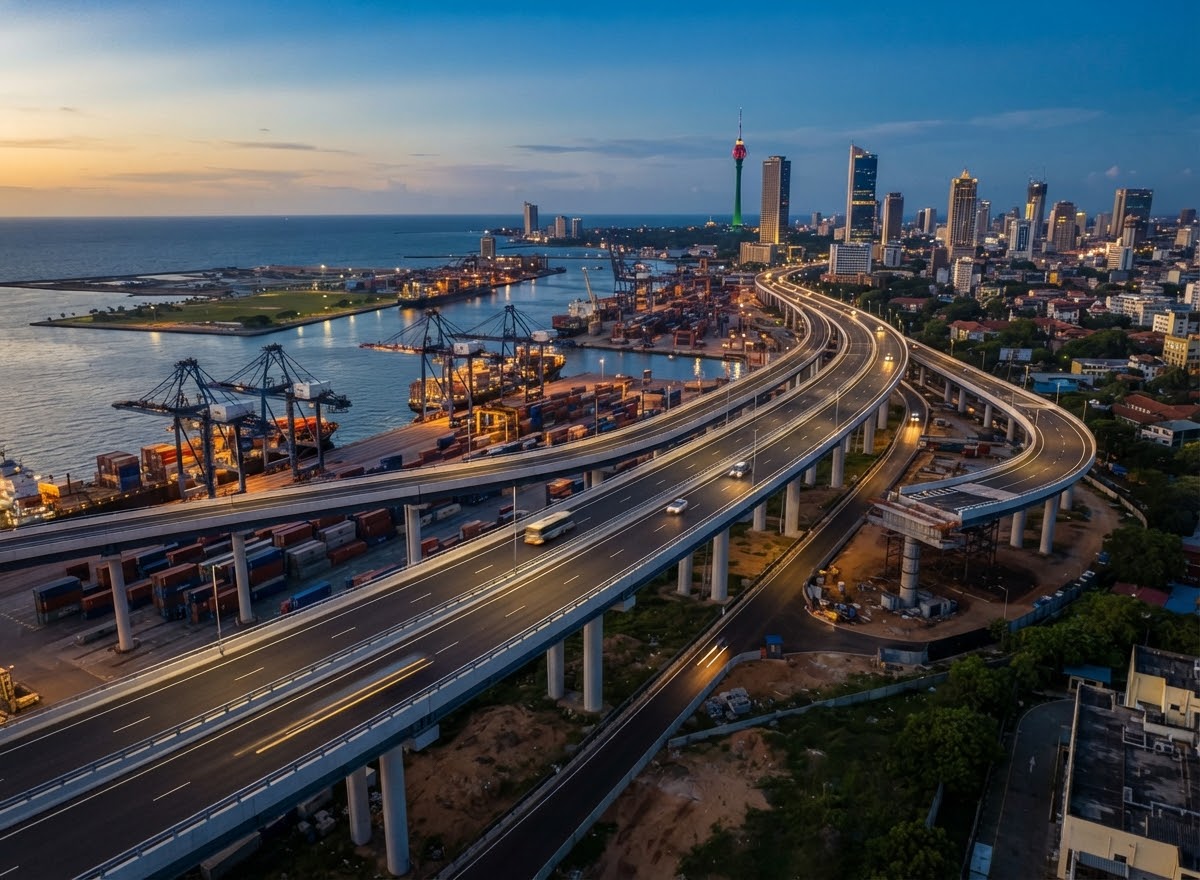
Sri Lanka has officially designated the 5.729-kilometre Port Access Elevated Expressway in Colombo as an expressway, following the publication of a special government gazette notification.
The order, issued by Transport, Highways and Urban Development Minister Bimal Niroshan Rathnayaka under Section 9(1)(a) of the National Thoroughfares Act, No. 40 of 2008, was published in Gazette Extraordinary No. 2516/02 on November 23, 2026.
The latest notification follows an earlier gazette issued on November 13, through which the same road was declared a national highway under Gazette Extraordinary No. 2514/36.
Located in the Colombo District of the Western Province, the elevated expressway has an average width of 23.5 metres. It begins at the Kelanitissa Power Plant Junction, connecting to the Kelanitissa System Interchange near the Colombo-Katunayake Expressway and Colombo-Kandy Road, and terminates in the vicinity of Chaithya Road.
The main structure comprises a 5,132-metre elevated, two-lane dual carriageway viaduct constructed over land belonging to the Colombo Port and its internal road network.
The expressway features three interchanges, two of which provide direct access to the Port of Colombo through dedicated connections at Ingurukade and within the port premises.
However, the third interchange, located towards Port City and Galle Face, remains incomplete.
The gazette schedule specifically describes the Port City and Galle Face interchange as having provision for future ramp connections, with the ramps only partially completed.
The entry and exit ramps at Ingurukade and the Port of Colombo have been constructed as single-lane structures using steel and concrete girders.
In contrast, the partially completed entry and exit ramps at the Port City and Galle Face interchange are designed as dual-lane elevated viaducts.
The formal designation under the National Thoroughfares Act provides the expressway with its official legal classification, while the gazette also sets out its route, dimensions and infrastructure components.










Leave a comment