
By The Pulseline News Desk
Credit extended to Sri Lanka’s private sector reached Rs. 2.1 trillion during the first nine months of 2026, reflecting continued growth in bank lending. However, a shift towards short-term borrowing and a decline in long-term lending have raised questions about whether the country’s credit expansion is adequately supporting new investment, industrial growth and productive capacity.
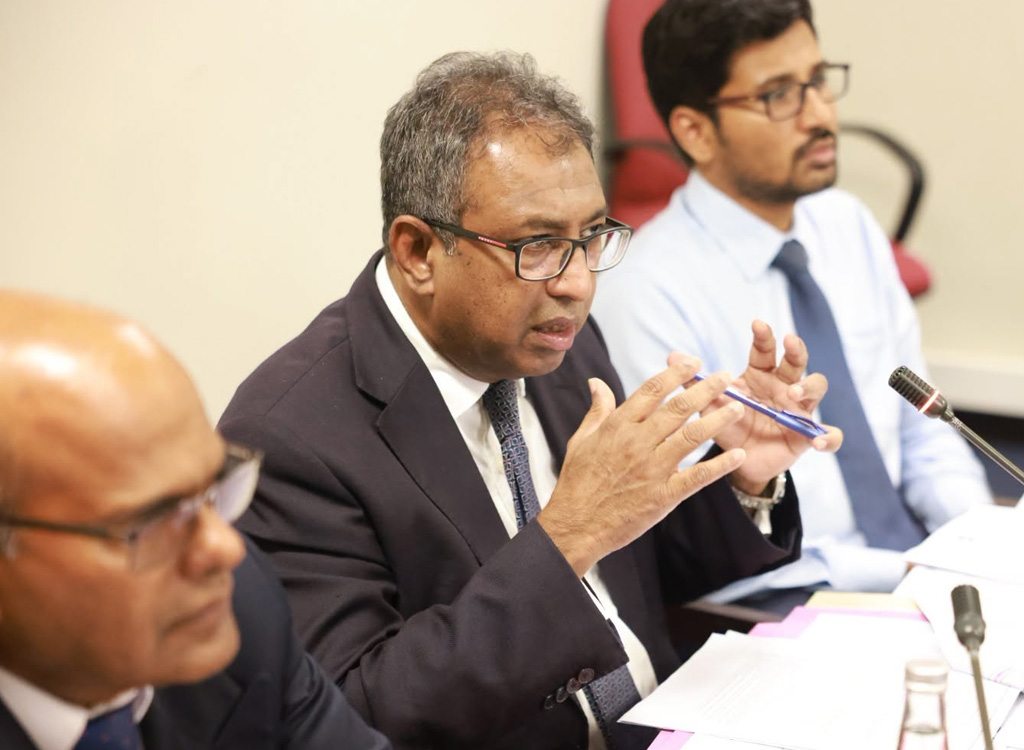
The figures were disclosed by Central Bank officials during a recent meeting of the Parliamentary Committee on Public Finance (COPF), chaired by MP Harsha de Silva.
Private sector credit during the January–September period had reportedly increased from Rs. 1.9 trillion recorded during the corresponding period last year. Licensed commercial banks had accounted for approximately 74% of the total lending, highlighting their dominant role in financing private sector economic activity.
However, Committee members had focused on the changing composition of lending, particularly the growing share of short-term loans at a time when Sri Lanka needs to expand productive investment and strengthen its economic recovery.
According to figures presented to the Committee, short-term loans had accounted for 47% of total lending, compared with 42% previously. In contrast, the share of long-term loans had declined from 35% to 29%.
The shift had prompted questions about whether the banking sector was directing sufficient resources towards capital formation, new investments and the expansion of production capacity, rather than predominantly financing short-term requirements.
The growth of different lending categories, including mortgage and vehicle loans, was also examined.
The distinction is significant for an economy seeking to move beyond recovery towards sustained growth. While increased credit availability can stimulate consumption and business activity, long-term financing is particularly important for businesses investing in machinery, infrastructure, technology and capacity expansion.
Inflation targeting and monetary policy
The Committee had also examined the Central Bank’s monetary policy framework, including its decision to maintain the headline inflation target, measured by the Colombo Consumer Price Index (CCPI), at 5% over the next three years.
Central Bank Governor Dr. Nandalal Weerasinghe and senior officials had explained the rationale behind maintaining the target, while informing the Committee that seven special reports had been submitted to Parliament on occasions when inflation fell below the lower limit of the target range of 3%.
The discussions had also covered the relationship between monetary policy, investment and Sri Lanka’s longer-term economic growth potential.
Committee members had stressed that monetary policy alone would not be sufficient to deliver sustainable economic expansion, pointing to the need for structural reforms in trade, labour and land.
Human capital development, improvements in productivity and attracting foreign direct investment were also identified as essential components of a strategy to strengthen the country’s growth potential.
Banking sector stability improves
Providing an update on the stability of the financial system, Central Bank officials reported an improvement in the quality of banking sector assets.
The banking sector’s Stage 3 non-performing loan ratio had declined from 9.7% to 8.8%, while capital adequacy and liquidity levels had remained above the minimum regulatory requirements.
The improvement had indicated a gradual strengthening of banks’ loan portfolios, although the quality and direction of new lending remain important considerations as credit expands.
The Committee had also examined developments relating to National Development Bank (NDB).
Officials had informed members that the forensic audit conducted in connection with the bank, together with the report of the Sri Lanka Accounting and Auditing Standards Monitoring Board, had been referred to the Attorney General on October 15, 2026.
Regulatory restrictions had also been imposed on NDB, including limitations on dividend distributions, branch expansion and directors’ remuneration.
Central Bank warns of financial scams
The meeting had also addressed concerns over institutions illegally accepting public deposits and financial scams increasingly involving artificial intelligence.
Officials had discussed fraudulent content created using AI-generated images and cloned voices of prominent public figures, including the Central Bank Governor, the Prime Minister and Members of Parliament, to mislead the public.
The Central Bank had said it was coordinating with the Telecommunications Regulatory Commission, Sri Lanka Computer Emergency Readiness Team (CERT), the Police and Meta to address these threats and prevent the circulation of fraudulent material.
The discussions had taken place with the participation of Deputy Minister Chathuranga Abeysinghe and several MPs.
While the increase in private sector credit points to an expanding flow of financing into the economy, the changing structure of lending presents a wider policy challenge: ensuring that credit growth translates into productive investment, higher output and sustainable economic expansion, rather than simply an increase in borrowing.











Leave a comment