
By The Pulseline News Desk
Sri Lankan electricity consumers may have to wait longer for the benefits of the country’s expanding renewable energy programme to translate into lower electricity bills, with the Government unable to provide a specific timeline for future tariff reductions.
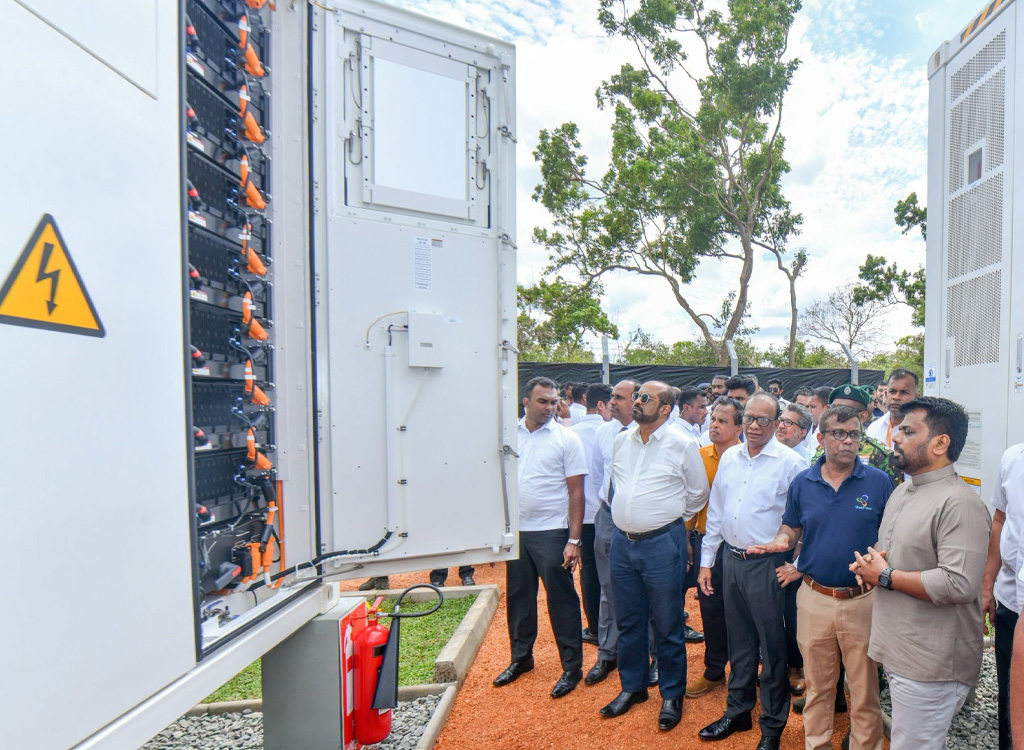
Energy Minister Anura Karunathilaka has said the Government’s strategy was to increase the contribution of solar and other renewable energy sources, while introducing battery storage projects, with the broader objective of reducing electricity generation costs.
However, he has said it was not possible at this stage to state when consumers could expect tariffs to fall or by what percentage.
Responding to a question on when electricity users could expect lower bills as renewable energy and battery storage projects are brought into the system, Karunathilaka has said tariff reductions would depend on the actual costs recorded during each period.
“As we have explained, our plan is to bring in more solar power and renewable energy sources and reduce the cost of generation,” the Minister has said.
According to Karunathilaka, the Ceylon Electricity Board (CEB) and other relevant institutions make their cost and tariff assumptions on an annual basis.
“As these things are gradually added and our costs come down, the assumptions made for each year will also decrease,” he has said.
The Minister has explained that electricity tariffs are determined on the basis of these underlying costs, meaning that any reduction in generation costs would ultimately be reflected in the tariff-setting process.
“Therefore, we cannot say percentage-wise that it will decrease by this much after this period,” he has said.
Renewable energy at centre of cost reduction
The Government has increasingly positioned renewable energy as a key component of its strategy to reduce the cost of electricity generation and lessen the country’s dependence on more expensive conventional sources.
Solar power is expected to play a growing role, alongside other renewable sources and battery storage systems designed to address the intermittent nature of renewable generation.
The expansion of battery storage is particularly important as Sri Lanka increases its reliance on solar power, since electricity generated during periods of strong sunlight can be stored and subsequently released when demand rises or solar generation declines.
However, the Minister’s comments indicate that the Government is not linking the introduction of individual renewable energy projects directly to an immediate reduction in consumer tariffs.
Instead, the financial impact of these projects will be assessed through the broader electricity cost structure and incorporated into the periodic tariff-setting process.
Consumers still waiting for clearer relief
For consumers already facing pressure from electricity costs, the absence of a specific timeline leaves uncertainty over when the anticipated savings from the renewable-energy transition will become visible in household electricity bills.
The Government’s position is that lower generation costs should eventually benefit consumers, but the scale and timing of any reduction will depend on how quickly renewable capacity is added, how generation costs evolve and the assumptions used in each annual tariff calculation.
Karunathilaka has therefore stopped short of committing to a specific reduction target or date.
The approach effectively places the emphasis on the gradual transformation of the electricity generation mix rather than promising an immediate tariff cut.
As more renewable energy is incorporated into the national grid and generation costs change, the Government expects those changes to be captured through the tariff-setting mechanism.
For consumers, the key question now is not whether renewable energy is expected to reduce generation costs, but how quickly those savings will translate into lower electricity bills.












Leave a comment