
By The Pulseline News Desk
The amount recoverable from university lecturers who have breached their service agreements and bonds by remaining overseas could be close to Rs. 30 billion across Sri Lanka’s university system, the parliamentary Committee on Public Enterprises (COPE) has revealed.
The Committee has called for a formal mechanism to recover the outstanding funds from academics who have violated their contractual obligations, raising wider concerns about financial accountability and the management of public resources within state universities.
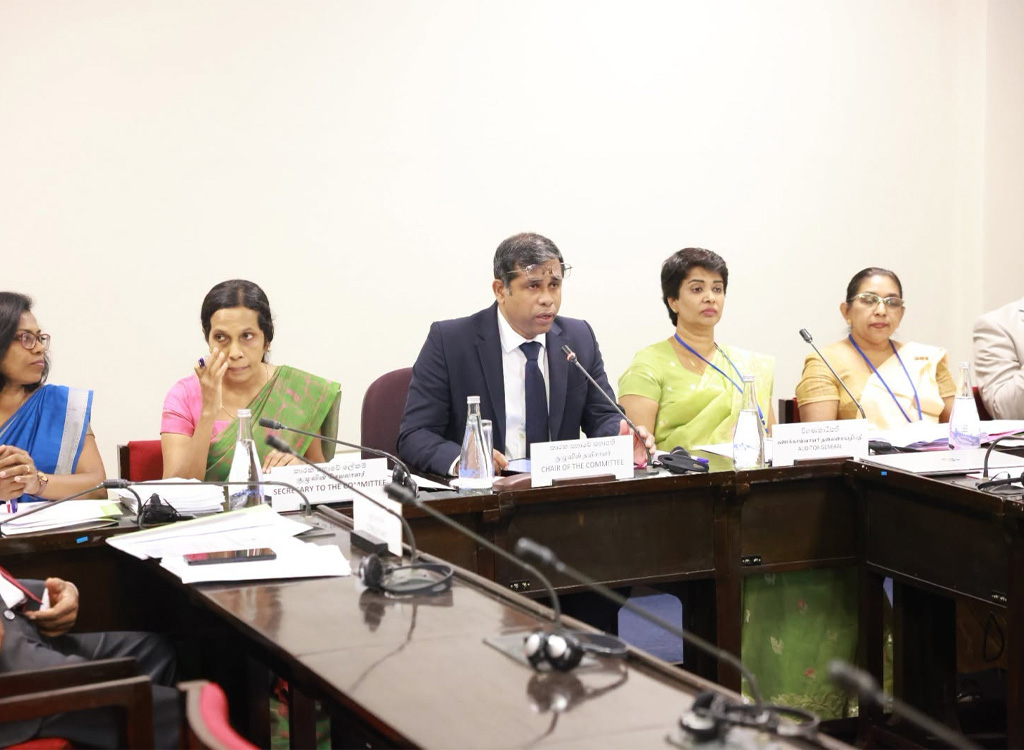
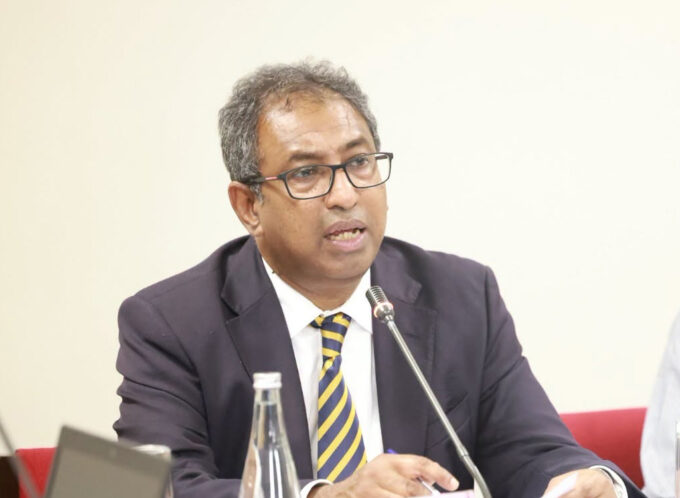
The issue was highlighted at a recent COPE meeting held in Parliament, chaired by MP Nishantha Samaraweera, where the 2023 and 2024 audit reports and the current performance of the Eastern University of Sri Lanka were examined.
In a media statement, COPE has said officials had been instructed to establish a systematic process to recover funds from lecturers who had breached their bonds and remained abroad. The Committee has also stressed that the issue required attention across the entire university system rather than being addressed as an isolated problem at individual institutions.
Governance and financial management under scrutiny
The examination of the Eastern University has brought several weaknesses in its financial management, administrative processes and institutional governance to light.
COPE has noted that although the university receives nearly Rs. 3 billion annually from the Government, its Audit and Management Committee does not include a Treasury representative.
Concerns were also raised over vacancies in the Internal Audit Unit and a potential conflict of interest arising from a Senior Assistant Internal Auditor, who is directly involved in financial operations, serving as the Chief Internal Auditor.
The Committee has also examined allegations involving conflicting certificates submitted in support of academic qualifications and promotions, questions over eligibility requirements and the disappearance of personal files belonging to the officers concerned.
Taking into account complaints lodged by students and parents, as well as findings from investigations conducted by the University Grants Commission (UGC), the COPE Chairman has directed that a comprehensive investigation be conducted and a report submitted within three months.
Rs. 3.6 million overpayment and Rs. 99 million in salary irregularities
Audit observations have also revealed irregularities in the granting of study leave and the application of terms of service.
The Committee was informed that an error had occurred in calculating study leave granted to a lecturer who was still serving on probation.
In another case, a female lecturer who had resigned to contest an election and subsequently returned to service had received an overpayment of Rs. 3,633,900. COPE has directed university authorities to take immediate steps to recover the amount.
Procurement practices had also come under scrutiny after the Committee had found that national procurement guidelines had not been followed in purchasing medical equipment. It was further revealed that disciplinary action recommended by an investigative committee into the matter had not been implemented.
Another significant finding concerned 38 members of the support staff who had bypassed the fingerprint-based attendance system and taken leave exceeding their annual entitlements, ranging from five to 83.5 days.
Despite the excess leave, no action had been taken to settle or recover Rs. 99,181,457 paid as salaries for the relevant periods.
COPE has directed university authorities to make a transparent biometric attendance system compulsory for all academic and non-academic staff.
Universities Act amendments proposed
The Committee has also examined outstanding payments recoverable from retired and former employees, as well as serving staff.
The Chairman has expressed dissatisfaction with explanations attributing the disappearance of financial records to events such as the civil war, the tsunami and floods, stressing that officials must provide accurate and responsible information to parliamentary oversight bodies.
COPE has further emphasised that the autonomy enjoyed by university governing bodies should not be used as a pretext to avoid financial and administrative accountability.
It was stressed that universities funded by public money must comply with the principles of public financial discipline and maintain appropriate standards of governance.
In a significant move towards strengthening oversight, the Secretary to the Ministry was instructed to submit the necessary amendments to the Universities Act No. 16 of 1978 to Parliament without delay.
The proposed amendments are intended to empower the UGC to intervene and take action in cases of irregularities within university governing bodies.
The findings have brought renewed attention to the challenges of enforcing accountability within Sri Lanka’s state university system, particularly in recovering public funds, strengthening internal controls and ensuring that institutional autonomy is accompanied by financial and administrative responsibility.









Leave a comment