

By The Pulseline News Desk
Sri Lanka’s 1990 Suwa Seriya ambulance service is facing a growing staffing crisis, with stagnant salaries, the absence of a formal recruitment structure and an extended leadership vacancy undermining its ability to maintain emergency medical services.
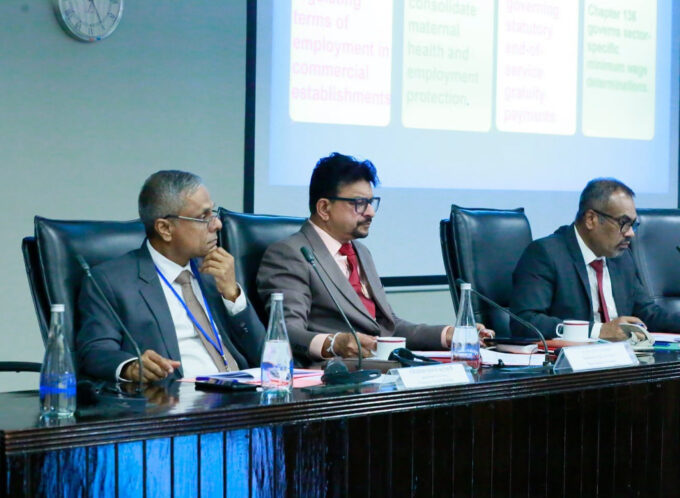
The financial and administrative difficulties facing the service were reportedly highlighted at a recent meeting of a sub-committee of the Parliamentary Committee on Public Enterprises (COPE), where officials had disclosed that employees recruited when the service was established in 2016 continue to receive the same basic starting salaries as newly recruited staff.
Board Director Nalin Perera has reportedly told lawmakers that employees had not received annual salary increments since the service began operating, largely because the foundation does not have a formal Scheme of Recruitment approved by the Department of Management Services.
The absence of an approved recruitment framework has also deprived employees of a clearly defined promotion structure and pension entitlements. “It is regrettable to state that 1990 Suwa Seriya is an institution where employees work without any annual salary increments,” Perera has told the parliamentary sub-committee.
The salary structure has increasingly affected staff retention, particularly among Emergency Medical Technicians (EMTs), who form the backbone of the ambulance service.
During the recent public sector salary revision, which resulted in increases of around 60%, Suwa Seriya field employees has received increases of only Rs.15,000 to Rs.16,000, further widening the gap between their salaries and those of other public sector employees.
According to officials, 48 employees, including 28 EMTs, have resigned so far this year. This follows the departure of 22 EMTs last year.
According to reports, the service is currently facing a shortage estimated at between 100 and 200 field personnel, with trained employees increasingly leaving for better-paying employment opportunities overseas.
The staffing shortage comes at a particularly challenging time, as the Government plans to expand the ambulance fleet with the addition of 150 ambulances next year.
Officials have estimated that between 450 and 900 additional employees will be required to operate the expanded fleet and maintain service delivery.
The difficulties are not limited to operational staff. The organisation has also been unable to attract suitably qualified candidates for senior management positions.
The Chief Executive Officer position has remained vacant for 11 months, while several second-tier management positions are also unfilled.
Chairman Niroshana Ratnayake has told lawmakers that the salary ceiling of Rs.200,000 a month had made it difficult to attract experienced professionals. “Qualified candidates expect between Rs.1 million and Rs.1.5 million, and the only applicants at Rs.200,000 were retirees around 70 years old,” he has said.
Treasury officials have explained that the administrative difficulties stem partly from the manner in which the organisation’s initial cadre and salary scales were approved.
Instead of obtaining approval through the Department of Management Services, the initial recruitment structure and salary arrangements were approved directly by the Cabinet.
Consequently, any changes to recruitment arrangements, cadre positions or salary scales require fresh Cabinet approval, creating additional administrative hurdles.
Lawmakers have stressed the need for the 1990 Suwa Seriya Foundation and the Ministry of Health to expedite the submission of a Cabinet paper to formalise the Scheme of Recruitment.
The proposed framework is expected to establish a structured salary system, introduce annual increments and create clearer career progression opportunities for employees.
The issue has wider implications for Sri Lanka’s emergency healthcare system. The 1990 Suwa Seriya service, established in 2016, provides free pre-hospital emergency medical assistance and ambulance transportation, making the availability of trained personnel essential to its continued operation.
With further fleet expansion planned, the staffing and remuneration issues have raised questions about the service’s ability to recruit and retain the medical and operational personnel required to sustain its nationwide emergency response network.








Leave a comment