
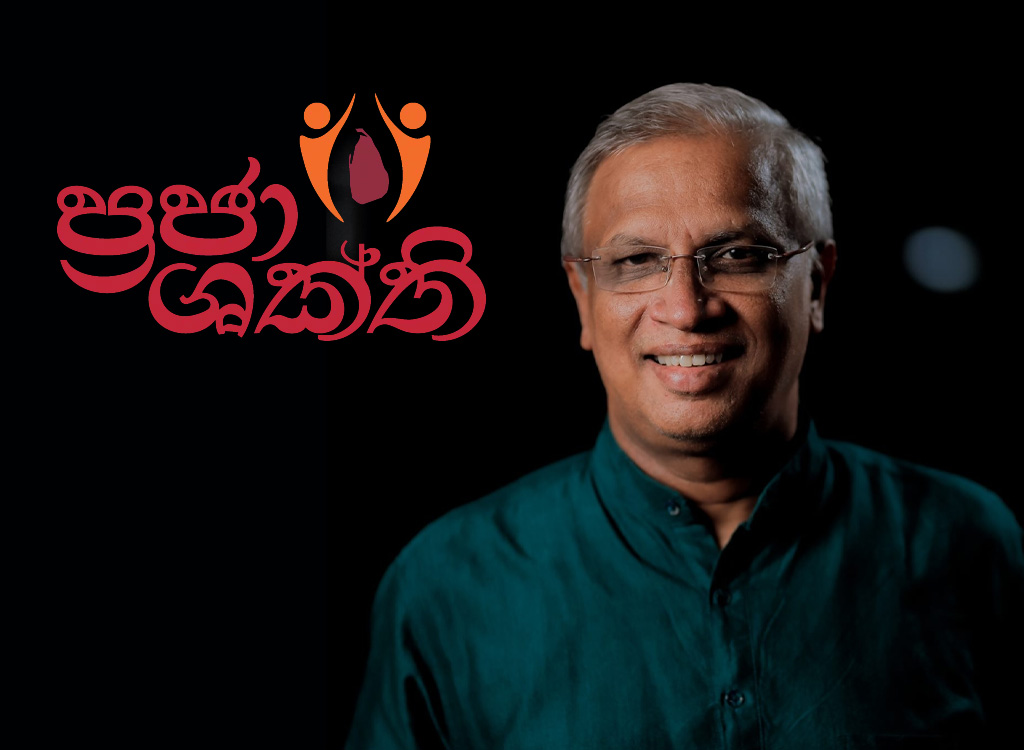
The Ilankai Tamil Arasu Kachchi (ITAK) has expressed its opposition to the government’s “Prajashakthi” programme.
ITAK media spokesperson and former member of parliament (MP), M.A. Sumanthiran has noted that this is a mechanism carried out based on a political party, noting that it operates in parallel to the state machinery and sets a wrong precedent.
The former MP has further stated that development activities, which should be carried out by elected local government representatives, are instead being undertaken through the “Prajashakthi” programme, thereby obstructing the functions of those institutions. “The development work that should be carried out by the Local Government representatives elected by the people is being carried out through the Praja Shakthi programme, thereby obstructing the activities of those institutions,” he has observed.
Sumanthiran has further stated that the programme is contrary to the Constitution and added that legal action will be taken against it in the future.
The “Prajashakthi” programme was launched by President Anura Kumara Dissanayake (AKD) on 4 July last year. It was noted that the programme was launched as a key initiative of the current government, aiming to empower communities and ensure the fair distribution of economic benefits across society.
President AKD said at the launch, “Numerous stalled projects have been successfully renegotiated and restarted. In addition, we have received a substantial number of proposals for new investment projects, many of which were approved at the recent Cabinet meeting. Therefore, our focus is now on new investments and development projects. Through these effective and results-driven investments, we can simultaneously achieve economic stability and economic growth.
“However, if these economic benefits do not flow to the rural population, then even achieving growth in statistical terms is insufficient. This is why we must pursue economic growth on one hand and economic expansion on the other. If rural people are not given economic opportunities and included as stakeholders in the economy, they will become marginalised. Our core approach must therefore be to expand the economy and integrate rural communities into it.
“This is possible only if the current rural economic activities are transformed into more productive, efficient and profitable ventures. These sectors should be developed to become thriving businesses. Widening their access to economic opportunities is also vital. Hence, we are prioritising the creation of new economic avenues for the rural population, making them active players in the economy.”








Leave a comment