
By Madhusha Thavapalakumar
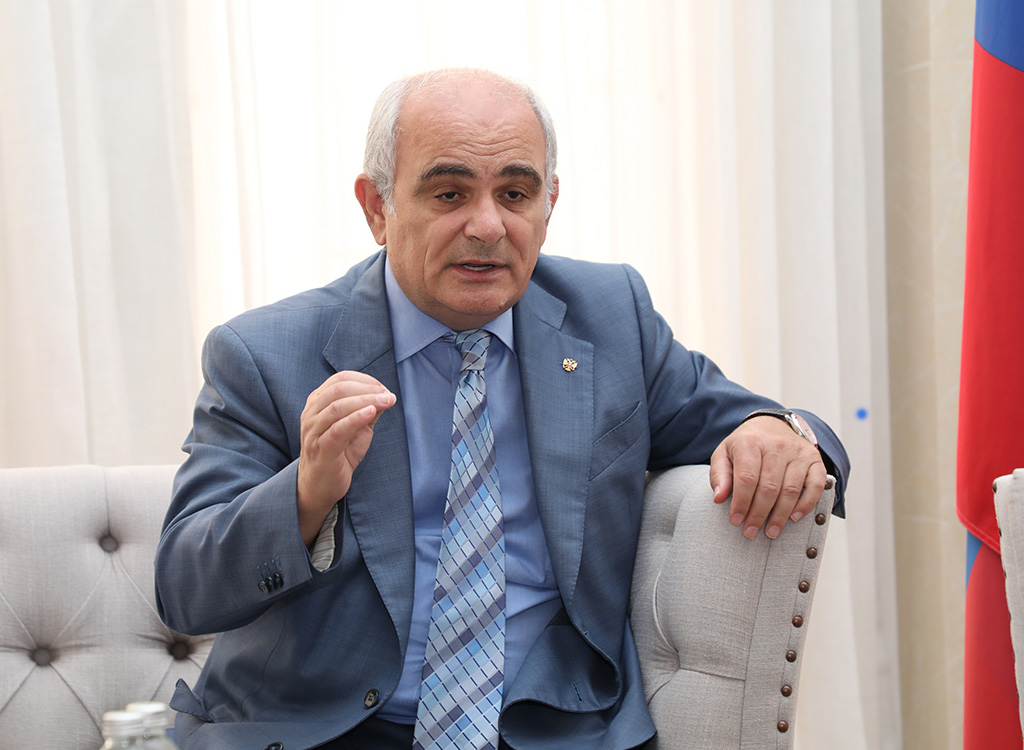
Russia’s Ambassador to Sri Lanka said this week that Russian investors are willing to invest in the country but are unable to identify suitable projects, bringing renewed attention to Sri Lanka’s investment pipeline at a time when authorities are reporting a recovery in foreign direct investment (FDI).
“Where to invest, no projects, we are ready to invest but no projects,” the Ambassador said. He further noted concerns among members of the diplomatic community about the investment environment: “To be frank, some ambassadors were concerned about the business climate. The climate is not very easy to invest here because of some problems. Anyway, no investments, no projects.”
The remarks suggest that, from the perspective of some foreign missions, Sri Lanka may not be presenting sufficiently structured, visible, or accessible opportunities for investment, or that constraints are discouraging entry.
The comments come as Sri Lanka attempts to reposition itself as a stable investment destination following its sovereign default and subsequent macroeconomic stabilisation programme.
FDI inflows recover in 2025
According to the Board of Investment of Sri Lanka (BOI), FDI inflows reached $ 1,057 million in 2025, representing a 72% increase compared to 2024. The figure marks the first time since the crisis period that annual inflows have surpassed $ 1 billion.
The BOI reported that 188 companies infused FDI during the year. Of these, 24 were new investment projects contracted in 2025, contributing $ 134 million, or 13% of total inflows. The remaining $ 923 million originated from expansions and additional capital injections by existing investors.
The composition of inflows included $ 167 million in equity capital, $ 213 million in reinvestments, $ 567 million in intra-company borrowings, and $ 110 million in foreign commercial borrowings.
Manufacturing accounted for 46% of total inflows, followed by port development at 26% and tourism at 11%. Singapore, India, France, the Netherlands, and Luxembourg were the top five source countries in 2025.
In parallel, the BOI granted approval for 146 investment projects with a total committed value of $ 1,906 million, including 70 new projects and 76 expansion projects. Of this approved pipeline, $ 896 million is expected to materialise as foreign capital. Sri Lanka has set an FDI target of $ 1.5 billion for 2026.
While the data indicate a rebound in inflows, the structure of the inflows shows that the majority came from reinvestment and expansion rather than entirely new greenfield projects.
BOI: projects are available and structured
BOI Director General Renuka Weerakone said the assertion that Sri Lanka lacks projects does not capture the current situation.
“There are many projects that are available for investment and if you even go to the BOI website, there are many ready-to-invest projects that have been hosted there, which we have also shared with our foreign missions, where they can themselves promote it to prospective investors,” she said.
She said the BOI is expanding industrial and export-oriented zones in line with government policy, particularly in the north, east, and northwest of the country, in order to diversify regional development.
“We would also be showcasing structured projects, which have been looked at and browsed for as maybe pre-feasibility done on most of them and where we have the lands already in possession of BOI to offer for these particular sectors of investment,” she said.
Weerakone also referred to recent engagement with Japan as part of efforts to deepen bilateral investment ties.
“We signed an MOC with the Japanese delegation last week, where a very senior minister was also down here,” she said, indicating that positioning Sri Lanka as a destination for Japanese firms remains a priority.
“Our zones are available to set up ready-to-invest sites. That is how we are taking it this year,” she added.
In addition to land development and structured project promotion, the BOI has launched an accelerator programme with a two-year action plan aimed at strengthening institutional capacity, improving facilitation services, and enhancing coordination with line ministries and regulatory agencies.
Regulatory complexity and transparency
Verité Research Economist Anushan Kapilan said that beyond project listings, investors evaluate the broader business environment before committing capital.
“One of the main issues is that doing business is very hard,” he said. He noted that Sri Lanka’s past global rankings reflected procedural hurdles and regulatory delays. “When investors see that processes are complicated and time-consuming, it discourages entry.”
Kapilan said foreign investors expect to understand procedures clearly before investing.
“Someone from abroad who wants to come, they need to make sure that they know how to do the business just by even looking at a website and online they need to be able to find things,” he said. He explained that investors should be able to access information about approvals, compliance requirements, and timelines without relying on informal networks.
Addressing the argument that strict regulations are necessary to prevent corruption, Kapilan said complexity can sometimes have the opposite effect.
“Sometimes you have too many rules, and very hard rules; and it is very hard to follow those rules,” he said. He noted that when procedures are overly complicated, businesses may look for shortcuts rather than complying with unclear or burdensome requirements. “To create business opportunities and to create more FDIs, what sometimes happens is that corruption becomes the way to enter.”
He argued that the solution lies in simplifying procedures and increasing transparency rather than adding more regulatory layers.
“The solution to even to reduce corruption, everything is simplifying the rules and making things easier, very transparent,” he said.
“When it’s written transparently somewhere and when you can do things without knowing some guy, like online, everything is transparent. That will actually reduce the problem of corruption also.”
Kapilan said digitisation and standardised procedures can reduce discretion, shorten approval timelines, and increase predictability, which are factors foreign investors consider critical in emerging markets.
Structural constraints in a regional context
Frontier Research Head of Macroeconomic Advisory Chayu Damsinghe said Sri Lanka’s FDI challenge must also be understood within regional patterns.
“FDIs overall, that is a problem that many parts of the world outside of East Asia actually face,” he said. He noted that India’s FDI inflows as a percentage of GDP are comparable to Sri Lanka’s. “So both of us are equally bad at that.”
Damsinghe said countries that historically attracted high FDI volumes typically did so through either natural resource extraction or low-cost export-oriented manufacturing.
“The kinds of investments globally that have attracted FDI historically have been either things that are resource extraction based,” he said. “Whereas the other type of FDI that is historically coming is for the kind of low cost, high labour manufacturing that Southeast Asia in particular has had an advantage in.”
Damsinghe said Sri Lanka does not hold a clear competitive edge in either of the two traditional FDI-attracting models, natural resource extraction or low-cost, labour-intensive manufacturing. In his view, the country lacks the scale of extractive resources seen in some African economies and does not have the sustained low-wage manufacturing advantage that parts of Southeast Asia have historically leveraged.
He also pointed to structural constraints in key factor markets, including land availability, labour dynamics, and energy costs. According to him, these systems are largely structured around domestic consumption patterns rather than designed to support large-scale production-oriented industrial activity, which can limit the country’s attractiveness to export-driven investors.
At the same time, Damsinghe noted that services may present a more viable pathway. He said South Asian economies have historically been more competitive in sectors with a strong service component, and suggested that Sri Lanka’s investment strategy could be better aligned with services, technology-driven industries, and knowledge-based activities rather than focusing primarily on traditional manufacturing-led models.
Quality of investment and future targets
The Ambassador’s remarks come as Sri Lanka has introduced revised regulations under the Strategic Development Project Act No. 14 of 2008, setting out updated sector-specific investment thresholds to qualify for tax concessions. The Finance Ministry gazetted the new framework on 8 February, outlining corporate income tax holidays ranging from five to ten years depending on sector, investment size, and job creation.
Under the revised structure, investments above $ 50 million qualify for tax holidays subject to employment thresholds, with projects exceeding $ 300 million eligible for a 10-year concession in infrastructure, services, utilities, and tourism sectors, excluding casinos and betting. Manufacturing projects above $ 150 million with at least 250 local jobs also qualify for a 10-year tax holiday. Separate thresholds apply to agriculture, education, technology establishments, and ICT.
The regulatory update coincides with renewed bilateral engagement. The “Industrial Investment Dialogue” between Sri Lanka and Japan was reconvened on 17 February, after a ten-year hiatus, under the patronage of Minister Sunil Handunnetti. Japanese Ambassador Akio Isomata reiterated the importance of establishing a single-window system for investment approvals, emphasising that effective implementation would be critical.
Ambassador Isomata said anti-corruption measures are important and encouraging but described them as a prerequisite rather than a substitute for a broader economic development strategy. He also called for clearer sector-wise industrial promotion policies and articulated roadmaps to guide foreign investors.
The combination of revised tax concession thresholds, structured project listings, regional zone development, and renewed investment dialogues forms the current policy framework through which Sri Lanka is seeking to attract large-scale foreign investment.
Source: The Morning Money
Disclaimer: The views and opinions expressed in this article are those of the writer and do not necessarily reflect the official position of this publication.













Leave a comment