
By Dr. Nadee Dissanayake
Wars often appear far away on the world map. But in today’s interconnected world, distance is no longer a shield.
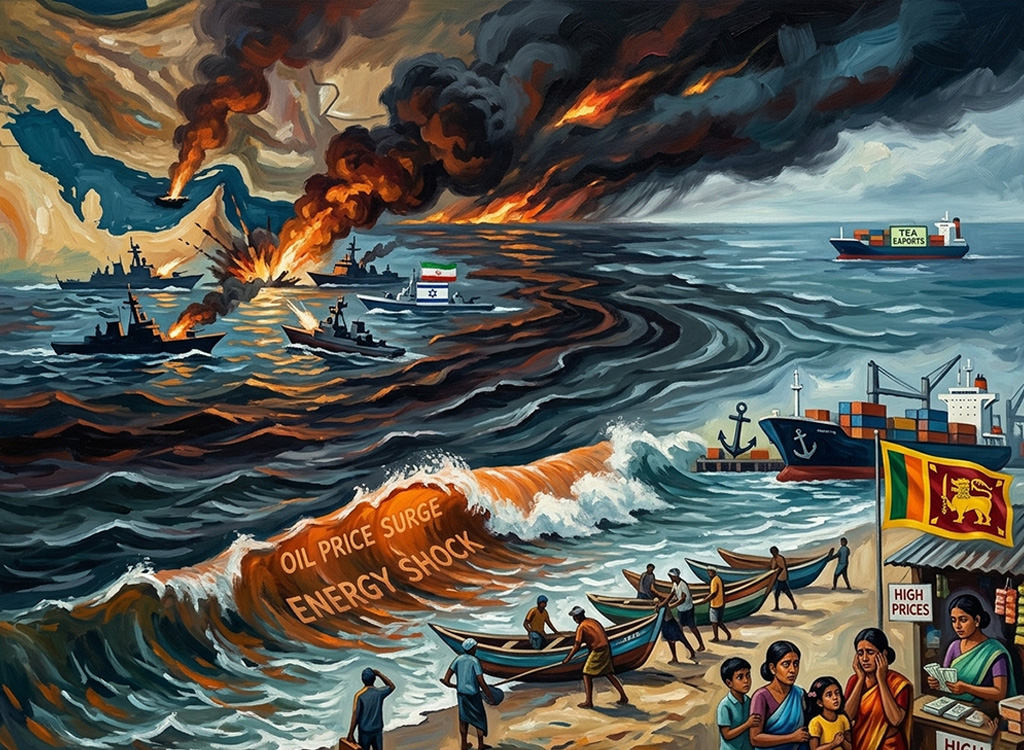
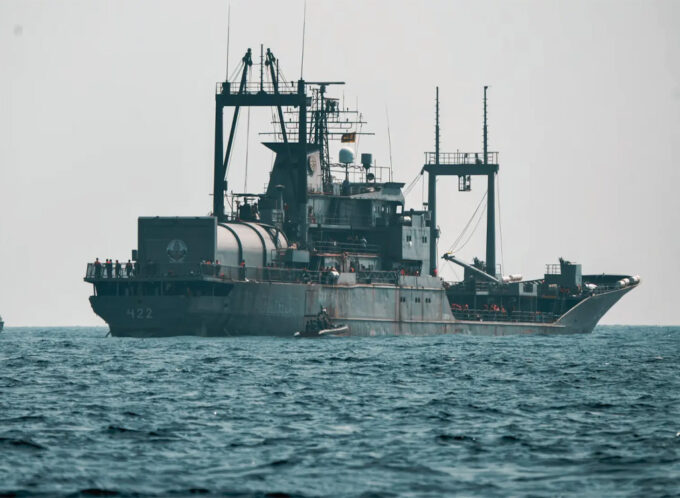
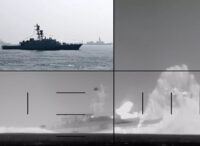
The unprecedented military escalation currently unfolding in the Middle East between the US, Israel, and Iran proves that geographic distance does not guarantee isolation, especially as naval engagements connected to the conflict have already reached the Indian Ocean just off Sri Lanka’s shores.
Sri Lanka is not a party to this conflict, and there is no direct security threat to the nation. However, as a small island economy connected to global trade, energy markets, tourism flows, and overseas employment, Sri Lanka inevitably feels the ripple effects of these historic geopolitical shifts. Understanding these impacts is important, not to create fear but to encourage awareness and preparedness.
The energy ripple effect
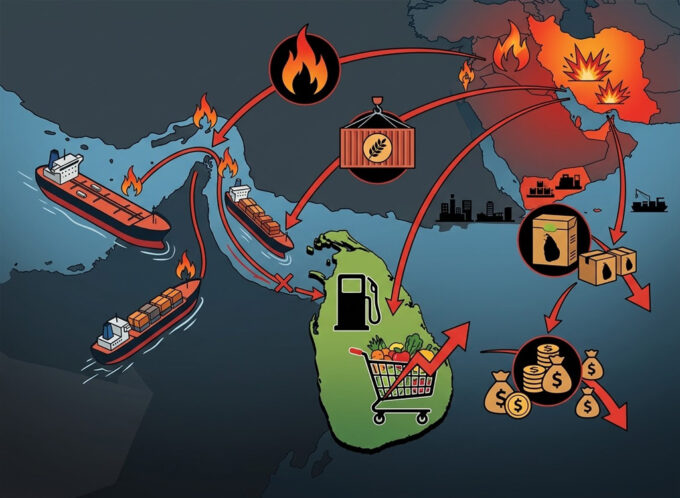
One of the first areas where the effects of this conflict are felt is energy. Following the recent strikes and the subsequent blockade of the Strait of Hormuz – a critical bottleneck for global shipping – energy markets reacted immediately. Benchmark crude prices surged by over 15% in a matter of days, climbing past $ 80 a barrel as nearly a fifth of the world’s daily oil supply was suddenly stalled.
For Sri Lanka, this matters greatly because the country imports all of its petroleum requirements. When global oil prices increase, the impact eventually reaches local fuel stations, transport costs, electricity generation, and even food prices.
Economists often point out that in small open economies, oil price fluctuations can significantly influence inflation. In other words, events that take place far away in energy markets quickly shape the cost of living at home.
Navigating trade and shipping
Another key channel through which global conflicts affect Sri Lanka is shipping and trade. As an island nation, the country depends heavily on maritime routes for both imports and exports. Tea, garments, rubber products, and many other goods leave the country through international shipping networks.
With vital Middle Eastern waterways disrupted and hundreds of commercial vessels dropping anchor to avoid the conflict zone, shipping companies face skyrocketing insurance premiums and severe security concerns. This inevitably leads to increased freight costs and delayed delivery schedules.
Even small increases in shipping expenses can affect export competitiveness, especially for island economies where transportation already forms a large portion of total trade costs.
Tourism and the confidence factor
Tourism is another sector closely tied to global stability. Sri Lanka has worked hard to rebuild its tourism industry after recent economic challenges. However, tourism is extremely sensitive to international perceptions, and global flight routes are currently facing massive disruptions.
When an active war dominates the news, travellers often view global events through a broad lens of uncertainty. This means some travellers postpone long-distance trips or reconsider travel plans altogether.
Maintaining clear communication about safety and stability helps reassure visitors and travel partners that the island remains a secure destination. Confidence is just as important as infrastructure.
The human connection: Overseas workers
Sri Lanka’s overseas workforce forms a deeply personal and economic link with the Middle East. Remittances from migrant workers contribute significantly to the country’s foreign exchange earnings and support thousands of families.
Although the direct conflict is concentrated in specific areas, regional instability influences economic activity, employment conditions, and investment patterns across the broader Gulf. For many Sri Lankan households, remittances are more than an economic statistic; they are a vital source of daily income. Protecting the well-being and security of overseas workers therefore remains an urgent national priority.
Public psychology and building domestic resilience
Beyond economic factors, global conflicts also influence public psychology.
In the digital age, information spreads rapidly through social media. Rumours about fuel shortages, currency instability, or trade disruptions can circulate quickly, creating unnecessary anxiety. History has shown that during global crises, perception often moves faster than reality, triggering temporary economic reactions like panic buying or speculation.
As this conflict unfolds, medium-term consequences could include sustained energy price pressure and broader global inflation trends. However, global crises also serve as reminders of the importance of resilience. For Sri Lanka, diversifying energy sources, strengthening export markets, improving logistics efficiency, and expanding digital service industries are practical strategies to reduce vulnerability.
Sri Lanka has recently taken important steps towards economic stabilisation, including fiscal adjustments and structural reforms. While global uncertainty influences market sentiment, continuing this policy discipline is essential to weathering external storms. Countries that build economic flexibility during uncertain times are often better positioned to grow when stability returns.
The way forward
For citizens, the most important message is simple: Sri Lanka is not involved in the conflict, and economic effects, while noticeable, are indirect and manageable. Panic or speculation does not help anyone. Instead, informed awareness helps households make sensible financial decisions, allows businesses to plan, and enables policymakers to respond thoughtfully to changing global conditions.
The world today is deeply interconnected, but while Sri Lanka cannot control global conflicts, it can strengthen its preparedness. Resilience is not built during calm periods alone; it is shaped by how nations respond to uncertainty. With careful policy, steady communication, and informed public understanding, Sri Lanka can navigate these ripples with stability and confidence.
(The writer is an independent researcher)
Disclaimer: The views and opinions expressed in this article are those of the writer and do not necessarily reflect the official position of this publication.







Leave a comment