
By Kusum Wijetilleke
Across a growing number of democracies, parliamentary systems are failing in a manner that is both subtle and deeply corrosive. The failure is not primarily constitutional collapse, coups, or the suspension of elections, though in some cases these symptoms have also appeared. Instead, it is the gradual hollowing-out of the legislature as an institution. No longer a representative body of the polity, not even a check on the Executive; legislatures have become operational, so-called “rubber-stamps”, a mechanical body that reinforces the ruling ideology which betrays that many political parties, and by extension, Nation States, are ruled by and through, personalities and personal loyalties.
Politics, in such an environment, ceases to be institutional and becomes performative: organised around party leadership and ideological signalling rather than deliberation, scrutiny or accountability. At the heart of this shift lies a core democratic pathology: the elected legislature increasingly represents the party leader or executive, not their electorates.
Executive auxiliary not representative legislature
Classical democratic theory, whether rooted in Madisonian constitutionalism, Weberian institutionalism, or post-war parliamentary thought, rests on a foundational assumption: that legislatures function as counterweights to executive power. Even in systems characterised by strong party discipline, legislatures are expected to scrutinise policy, represent sectional and regional interests, check executive overreach, and serve as arenas of internal contestation within governing coalitions. What we are witnessing instead is a structural inversion. Legislatures are no longer sites of constraint; they have become instruments of executive consolidation. This shift cuts across constitutional forms: presidential, semi-presidential, and parliamentary systems alike now exhibit the same drift: the erosion of legislative autonomy in favour of executive dominance, increasingly justified through ideology, crisis narratives, or charismatic leadership.
Congressional abdication in presidential systems
The most striking contemporary example is the United States. Although constitutionally designed around a strict separation of powers, Congress has increasingly operated in lockstep with the executive presidency, particularly during periods of unified party control. Rather than acting as a co-equal branch, legislators routinely prioritise party loyalty over institutional prerogatives, congressional oversight becomes conditional on partisan alignment, and legislative independence is reframed as disloyalty rather than representation. The result is a profound democratic distortion: members of Congress increasingly behave as delegates of the party or the president, rather than as trustees of the electorate. Juan Linz famously warned that presidential systems are vulnerable to democratic instability when executive legitimacy overwhelms institutional restraint. What distinguishes the present moment is that even historically robust legislatures now surrender their authority voluntarily, driven not only by electoral fear, but by ideological alignment and the normalisation of executive dominance as a political virtue.
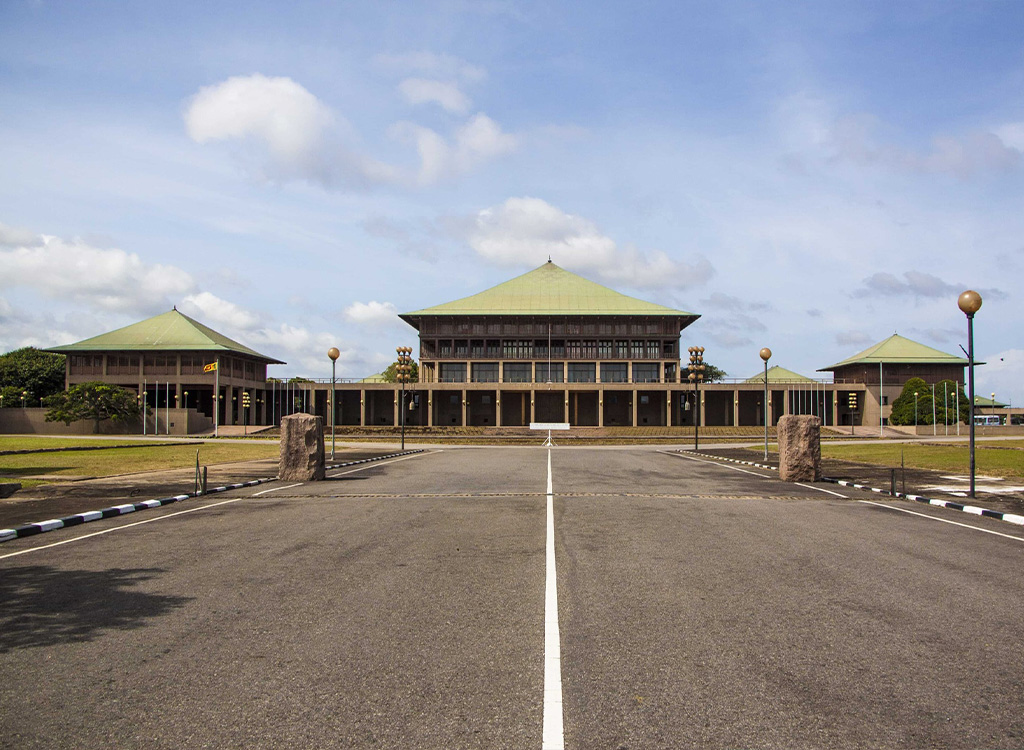
Sri Lanka presents an even clearer case of parliamentary erosion, cutting across multiple governments and ideological banners. During Mahinda Rajapaksa’s Post-War consolidation, Parliament ceased to function as an autonomous institution: mass crossovers from the opposition created an overwhelming executive majority.
Parliamentary debate collapsed into ritual, the result being an unrestrained expansion of Executive Power. The legislature did not merely support the executive; it abdicated its constitutional role, granting the president free rein in governance, appointments and policy.
Yahapalanaya was arguably worse, by virtue of literally preaching “good governance”. Some institutional compliance aside, this period too demonstrated that this pathology is not limited to nationalist or authoritarian politics. Despite constitutional reforms that weakened the presidency, Parliament became subservient to a Prime Minister that exercised power closer to an executive authority under the 19th Amendment.
Most starkly, the ‘Central Bank bond scam’ failed to generate sustained parliamentary pushback, especially from the senior group of MPs, political survival trumped institutional integrity, the legislature remained loyal to the Prime Minister despite repeated governance failures, protecting power, not enforcing accountability, a corner stone of “good governance”.
Under Gotabaya Rajapaksa, parliamentary collapse reached its most damaging form up to that point. Policies that were empirically indefensible and incoherent, were nonetheless implemented with near-total legislative silence. There was no meaningful scrutiny of: organic fertiliser policy, tax cuts or monetary mismanagement. Here, Parliament did not merely fail to restrain the executive, it enabled a predictably damaging policy framework.
The current NPP government represents a continuation, not a rupture of this pattern; not a “system change”. Despite a manifesto and campaign rhetoric that promised a decisive break from prior economic orthodoxy, the government has fully adopted the economic framework and stability narrative of the previous regime, retaining the same IMF-anchored policy architecture, and reframing continuity as necessity without legislative contestation. Having spent the entire official campaign, amounting almost 20 months, telling the electorate that the IMF program would be renegotiated, a new Debt Sustainability Analysis (DSA) would be presented and people’s lives would be materially improved using the additional fiscal space created. Instead, the legislature has now passed two consecutive National Budgets that continue the harmful austerity of the previous government. A policy cycle that continues to under-invest in the country’s education, health, social assistance and most critically, in its stock of productive assets.
Parliament is entirely subservient to the executive, effective power appears concentrated in 4-5 senior party figures and there is no visible independent legislative reasoning. This creates a paradoxical democratic outcome: electoral rupture without policy rupture, mediated not by parliamentary debate but by executive reinterpretation. It is simply President Anura Kumara Dissanayake’s personal popularity and the trust his personal brand has now developed with the electorate, that is keeping the Government afloat.
That is why the legislative majority is so comfortable with the unprecedented concentration of power by a political party in the country’s Finance Ministry and Treasury Department. This parliamentary majority does not question the contradiction between mandate and action; anybody that is familiar with democratic ethics will find this extremely disturbing.
The decay of institutional politics
Political theory offers several complementary lenses through which to understand this shift, for one, party-state fusion, drawn from comparative authoritarianism literature, in which the boundaries between party, state, and legislature progressively dissolve. Parliamentary majorities cease to function as pluralistic representative bodies and instead operate as extensions of the ruling party’s strategic core, mobilised to legitimise executive decisions rather than to deliberate upon them.
A second lens is ideological substitution for institutional process. In this framework, policy coherence is no longer generated through parliamentary debate, evidence-based contestation, or procedural scrutiny, but is instead justified through moral, historical, or civilisational narratives, whether nationalism, reformism, anti-elite politics, or perpetual crisis management. Ideology becomes a shortcut for legitimacy, allowing executives to bypass institutional mediation while maintaining popular support. Guillermo O’Donnell’s concept of ‘delegative democracy’ captures the behavioural logic underlying this transformation: voters elect leaders not to govern within institutional constraints, but to rule decisively and unencumbered. Legislatures, courts, and oversight bodies are recast as obstacles rather than safeguards, enabling executives to claim a direct mandate that overrides institutional mediation.
The democratic cost of this transformation is most severe in politically under-developed and socially divided polities. Where voters lack deep civic education, strong institutional memory, or trust in democratic norms, the erosion of parliamentary independence often goes unnoticed. Over time, this normalises executive dominance, enables policy reversals without accountability, and accelerates ethical decay in governance. Democracy remains formally intact but substantively hollow, electoral rather than institutional, procedural not deliberative.
Parliamentary systems are not failing because they are outdated, but because their animating principle, legislative autonomy, is being steadily abandoned. When legislatures no longer challenge executives, reflect plural interests, or enforce accountability, democracy devolves into a spectacle of ideology and personality rather than a system of governance. Under such conditions, elections change faces but not power structures, and politics gradually ceases to belong to the polity.
(The writer is a political commentator, media presenter, and foreign affairs analyst. He serves as Advisor on Political Economy to the Leader of the Opposition of Sri Lanka and is a member of the Working Committee of the Samagi Jana Balawegaya (SJB). A former banker, he spent 11 years in the industry in Colombo and Dubai, including nine years in corporate finance, working with some of Sri Lanka’s largest corporates on project finance, trade facilities, and working capital. He holds a Master’s in International Relations from the University of Colombo and a Bachelor’s in Accounting and Finance from the University of Kent (UK). The writer can be contacted via Email [email protected]and Twitter: @kusumw)
Disclaimer: The views and opinions expressed in this article are those of the writer and do not necessarily reflect the official position of this publication.












Leave a comment