
By Dinouk Colambage
As the war between the U.S. – Israel – Iran enters its third day, the objectives of this conflict are becoming less and less clear. From pre-emptive measures, to preventative steps to change inducing actions, the reasons behind the war are a muddled muttering of justification from political blocs who are looking for reasoning after the fact.
Shortly after the first missile barrage that struck Tehran on Saturday (28) evening, U.S. and Israeli officials rushed to justify the unilateral military action as a necessity to ensure the security of both countries. Fronting up to the media in his signature baseball cap, with the letters USA printed across, U.S. President Donald Trump outlined his reasoning behind his administrations’ decision to embroil itself in the strikes on Iran. Chief among this reasoning was a pre-existing threat to the safety of the U.S. Elaborating further, President Trump explained that intelligence had been received that Iran was developing a nuclear weapon which would soon have the capability of reaching the United States of America. While the U.S. Defence Intelligence Agency has in fact warned about such a threat, they have stated that this will only be a possibility by the year 2035 and would be dependent on Iran actively pursuing such a weapon.
The justifications followed the natural path which led to the U.S. stating that such action was necessary to cripple the Iranian’s nuclear programs. U.S. Special Envoy to the Middle East, Steve Witkoff, had stressed a week prior to the attacks that Iran was days away from developing a nuclear bomb. In the months and weeks leading up to the Feb. 28 attack on Iran, including at his State of the Union address, President Trump claimed that the U.S’ military strikes on Iran in June 2025 had completely obliterated the Iranian nuclear program. It does beg the question, that if the U.S. had successfully destroyed the Iranian nuclear program, how did the Iranians commence a fresh program within seven (7) months, and bring it to a stage that required further military intervention?
Justifying the war
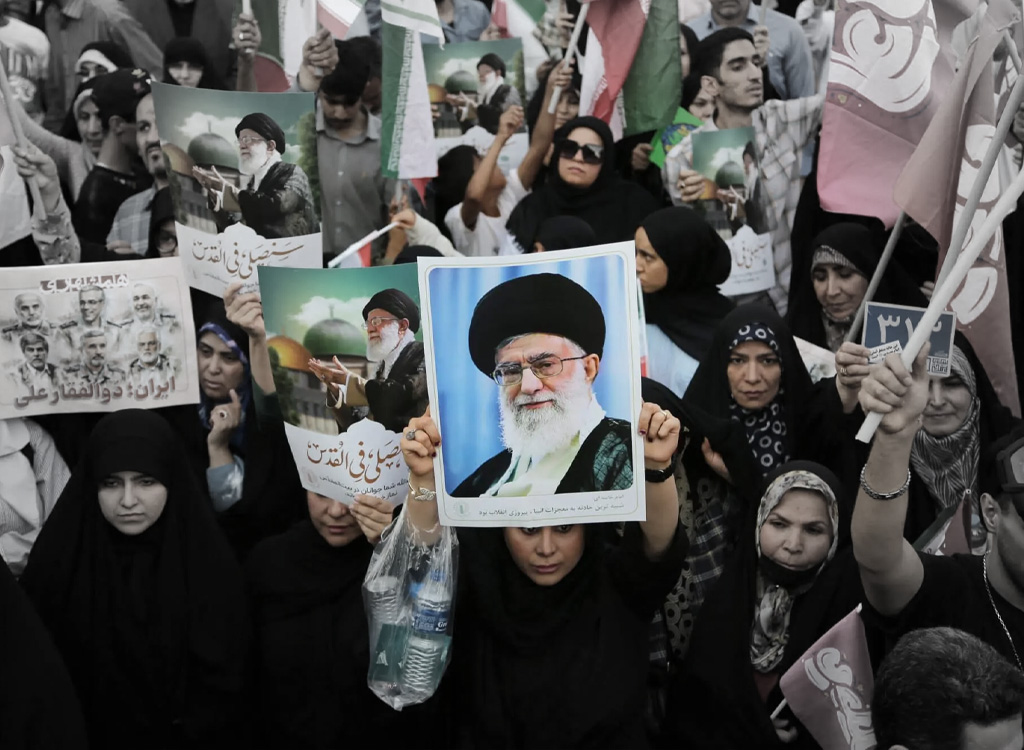
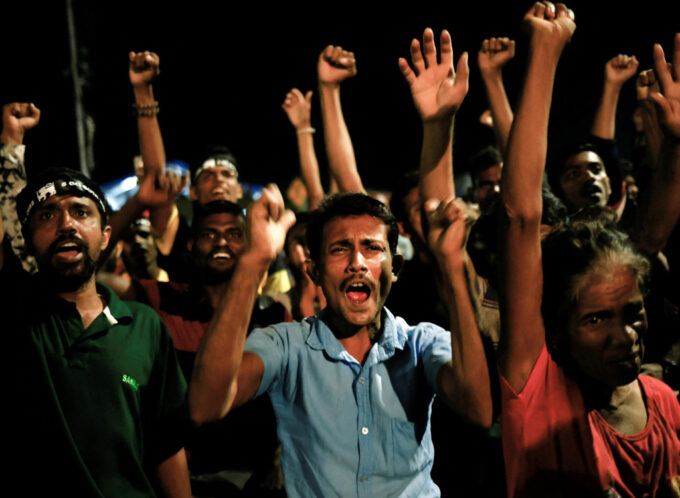
This has then led the justifications of the war in Iran along to the undeniable fact that the attacks launched by the U.S. and Israel on Iran was to topple Ayatollah Khamenei’s regime, in support of public protests. Early in January, the streets of Tehran had been taken over by protesters who were demanding an end to the reign of the Ayatollah. President Trump quickly voiced his support for the protesters, going as far as suggesting foreign assistance was on its way. No such foreign intervention took place, and the Ayatollah and his government swiftly and brutally disposed of the protesters. While the U.S. President continued to call upon the Iranian people to rise up and overthrow the regime, there was little indication of what, if any, support would emerge from the U.S.
On Feb. 28 when the attacks were launched on Iran, they were not focused strikes on Iranian military targets, but rather was a complete bombardment of the country. A girl’s primary school in Minab in southern Iran was one such target. Offering no military value, the bombing of this school has resulted in over 150 people killed and a further 100 injured, with many believed to be children. While the U.S. has offered a watered-down response, promising to investigate the incident, there has been little further mention of this atrocity.
While such an attack deserve its own focused analysis and investigation, it demonstrates the undeniable fact that the political goal of regime change is beyond the Israeli and U.S. military intervention. Such high degrees of collateral damage would only distance the already anguished public from the foreign interveners.
Complicated relationship
Iranians have a complicated relationship with America. During the reign of Mohammad Reza Pahlavi, the last Shah of Iran, the U.S. was viewed as a close ally of Iran. Former U.S. President Jimmy Carter, during a visit a State visit to Iran in 1977, praised the country as being “an island of stability in one of the more troubled areas of the world”. The love-affair between the two nations was not long lived, by January 1979 the Shah was forced to flee Iran in the face of growing public discontent and rising support for Ayatollah Khomeini, who was in living in exile in Paris. Many of the supporters of the Shah, which included secular upper-class landowning Iranians, were forced to flee the country. In their place the radical clerics, leftists, students and workers, who faced suppression and oppression under the Shah, were given the space to rise up and install a regime of their choosing through the Iranian Revolution.
Today many Iranians are displaced around the world, having fled the retaliatory persecution from those revolutionaries in Iran. So it is unsurprising that the announcement of Ayatollah Khamenei’s death was received with jubilation and celebration by these Iranian diaspora groups. However, it is here that the U.S. is blinding themselves into believing that a lasting regime change is practical.
While protesters emerged in the thousands in Iran earlier this year, it was clear that leadership was lacking from both the political blocs as well as civil society. Faced with brutal repression, the protesters were dispersed and unable to re-gather to lead a second charge. Faced with foreign interference, as was the case during last year’s bombing of the Iranian nuclear facilities, a rare moment of unity among the political blocs was witnessed, with the Iranian Parliament voting to close the Strait of Hormuz in response to the attacks. A demonstration that when faced with external threats, the political blocs within Iran were willing to unite.
With Ayatollah Khamenei and his family dead alongside several military commanders, it is excusable that it was assumed that Iran was ripe for an overhaul of the regime. However, for the past several months, with the risk of all-out war with the U.S. and Israel looming large, contingency plans have been in place. Institutionally the Ayatollah and his government are firmly entrenched. The opposition in the country is weak and divided, with no clear contender from the role emerging from their ranks. The speed at which the Iranians acknowledged the death of Ayatollah Khamenei suggests that the eventuality of his death had not been lost on the power brokers. Swiftly a three-member Leadership Council has been appointed, comprising of President Masoud Pezeshkian; the chief justice of the Supreme Court, Gholam-Hossein Mohseni-Ejei; and a member of the Guardian Council, Ayatollah Alireza Arafi. While the Assembly of Experts elects the new Supreme Leader of Iran, the Leadership Council will govern in the interim.
For President Trump and the U.S. the possibility of a successful regime change would hinge on a contender outside of the political blocs emerging and being capable of uniting the remnants of the protesters from earlier this year along with the rest of the Opposition. Of course, any alternative government which emerges from the war, to replace the existing administration, will face not only an unyielding debt to the U.S. and Israel, but domestically will be framed as a puppet government. While Iranians overseas have learnt to embrace their adopted nations, back in Iran America is viewed as “the Great Satan”. Since Ayatollah Khomeini first deployed the moniker following the Iranian Revolution in 1979, this derogatory term has held fast. With over forty-seven (47) years of use, it is difficult to imagine that the people of Iran would openly welcome an Iranian government which is viewed as allying itself with the U.S.
Suspicion and hatred
The failing of the Trump administration to engineer a regime change in Iran is due to the fact that they have not recognized the suspicion and hatred which Iranians hold towards America. The ill-feelings towards the U.S. has been instilled in the Iranian people since 1979. Following the seizure of the U.S. embassy in Tehran along with several dozen hostages, the U.S. subjected Iran to sanctions. Over the years these sanctions have seen temporary reprieves, as the Iranians and various U.S. administrations have attempted to broker a lasting peace. However, under the most recently expanded sanctions imposed by President Trump, Iran has seen inflation rise to as high as 40% while food price inflation has reached 70%. While Iran has been able to maintain a degree of oil sales, much of their transactions take place via “shadow fleets” and is overly reliant on China purchasing their product. While the January protests in Iran was a result of the economic collapse experienced by the State, the Iranian government has managed to maintain control by positioning the U.S. as the cause of their problems.
Iran is not a newly emerging Middle Eastern power striving to make its mark on the global stage, yet instead has a long history steeped in culture and advancements that at one time guided the rest of the world. Identifying themselves as the bastion of West Asia, Iran has made it point to differentiate themselves from the rest of the Middle East. Coupled with the centuries old Sunni and Shi’ite tensions, Iran is a nation not devoid of pride and historical relevance. Having spawned the Persian Empire, which ruled from as far as the Balkans across to the Indus in modern day Pakistan, the people of Iran are a proud citizenry which would not allow themselves to be subjugated.
With all of the above factors in play, it is of little surprise that Iranians are unwilling to accept the imposition of a U.S. backed puppet government. In the event the U.S. is successful in installing a loyalist regime, it is unlikely to maintain its position of power for a prolonged period of time. America need only look towards Iraq, Afghanistan and Libya, nations that saw their governments overthrown via military intervention, only for the newly introduced administrations to collapse in the face of growing turmoil and rejection by the public. It is, therefore, not difficult to imagine Iran following a similar path if such an administration was to be opposed on them.
Iran’s political and religious leadership has certainly been dealt a blow by the ongoing attacks, however, the contingency plans have taken effect and a sense of normalcy has returned to the corridors of power in Iran. With the absence of any popular backed alternative to the current regime, the goal of sustained regime change by President Trump and his backers appears out of reach.
(The writer is a former Director of International Affairs to former President Ranil Wickremesinghe)
Disclaimer: The views and opinions expressed in this article are those of the writer and do not necessarily reflect the official position of this publication.







Leave a comment