
By Dr. Nadee Dissanayake
In the race for economic recovery, Sri Lanka often overlooks one of its most cost-effective tools: nonviolence.
Too often dismissed as a moral ideal or cultural trait, nonviolence is also a strategic asset – one that quietly underpins economic stability, political reform, and social resilience. Last week’s article argued precisely this point. The real question now is practical: how can nonviolence be made to work as a concrete strategy for governance and national development?
This week’s focus is not philosophy, but action. If nonviolence is to endure, it must be deliberately cultivated by governments, institutions, and citizens alike. Left to chance, it weakens. Embedded in systems, it strengthens.
Government: Governing with restraint and predictability
The most powerful signal of nonviolence in any society comes from the state itself. Government sets the tone for how disagreement is handled. This does not mean avoiding tough decisions or unpopular reforms. It means being deliberate about how those decisions are made, communicated, and enforced.
First, the government must treat public dissent as information, not insubordination. Peaceful protest reveals where policies are misunderstood, where burdens feel unfair, and where communication has failed. When authorities respond with restraint, listening before reacting, they reduce escalation and preserve legitimacy. Even firm decisions gain acceptance when people feel heard.
Second, consistency matters more than rhetoric. Nonviolence loses credibility when laws are enforced selectively or when responses vary depending on who is protesting. Predictable rules, applied evenly, reduce fear and suspicion. For investors, citizens, and public servants alike, predictability is the backbone of stability.
Third, institutional channels for dialogue must be strengthened. Parliamentary committees, consultative councils, and public feedback mechanisms should not exist merely on paper. When these platforms function well, frustration flows into process rather than into the streets. Over time, this lowers the temperature of public life.
In practical terms, governing nonviolently means resisting the temptation to govern emotionally. Calm authority, clear explanations, and proportional responses build far more durable compliance than force ever can.
Public administration: Quiet guardians of civic discipline
Public servants are often overlooked in discussions of nonviolence, yet they are its daily custodians. How a tax officer responds to a complaint, how a local official handles a dispute, and how a regulator communicates enforcement – all of these interactions shape citizens’ trust in the state.
Administrative nonviolence begins with professionalism. Clear procedures, respectful language, and timely responses reduce friction before it escalates. When citizens feel humiliated or ignored, anger grows. When they feel respected even when outcomes are unfavourable, cooperation becomes possible.
In an economy seeking private sector confidence and foreign investment, a predictable and non-hostile public service is not a courtesy; it is a competitive advantage. Investors assess not only policies but how smoothly systems function in practice. A calm, rules-based administration signals reliability.
Training matters. Conflict-sensitive communication, basic negotiation skills, and stress management should be part of public sector capacity building. These are not ‘soft skills’; they are efficiency tools. Administrations that rely on intimidation spend more time managing resistance. Those that rely on respect spend more time delivering results.
Technology can also support nonviolence. Digital platforms that reduce face-to-face confrontation, provide transparent information, and track grievances help prevent misunderstandings from becoming conflicts. In this sense, effective e-governance is also peaceful governance.
Political actors: Winning without destroying trust
Political competition is unavoidable in a democracy. What is avoidable is turning competition into permanent hostility. Parties, leaders, and activists play a decisive role in normalising either restraint or confrontation.
Responsible political leadership requires resisting short-term gains that damage long-term trust. Mobilising anger may energise supporters, but it also deepens division and raises expectations that cannot be sustainably met. When politics becomes a constant state of crisis, reform becomes impossible.
Nonviolent politics does not mean weak opposition. It means principled opposition – challenging policies without delegitimising institutions, criticising leaders without dehumanising rivals. This distinction is vital. Democracies collapse not from disagreement but from the erosion of shared rules.
Media engagement is part of this responsibility. Political actors must recognise that every statement shapes public behaviour. Calm language invites calm response. Reckless language invites escalation.
Citizens: Participation without destruction
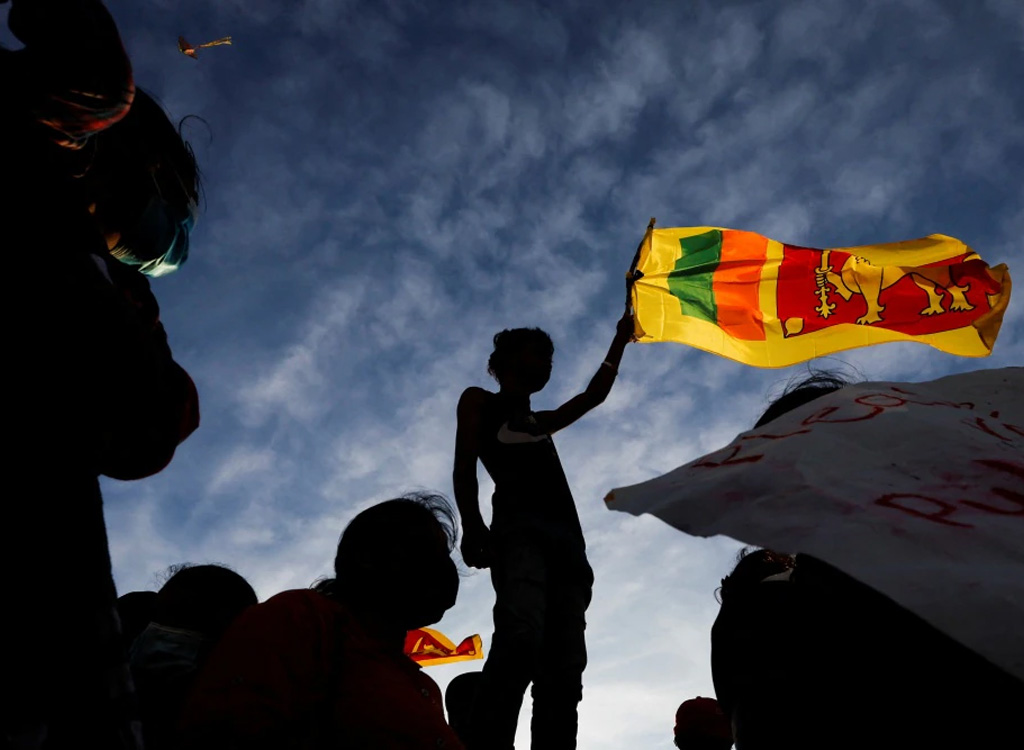
Nonviolence ultimately survives or fails at the citizen level. Public patience is not infinite, especially after years of economic strain. Yet the method of expressing frustration determines whether change is accelerated or delayed.
Peaceful civic engagement is not passive. It involves organising, questioning, voting, debating, and monitoring power. What it avoids is crossing the line into destruction that harms ordinary people more than decision-makers.
Citizens strengthen nonviolence when they insist on accountability without abandoning dignity. When protests remain peaceful, they attract broader support, including from those who may not fully agree with the cause. This moral authority is a strategic advantage, not a weakness.
Community-level dialogue also matters. Many conflicts escalate not because of national politics but because of local misunderstandings. Religious leaders, civil society groups, and professional associations can act as stabilisers, translating grievances into constructive demands.
Youth and digital citizenship: Redefining courage
Sri Lanka’s youth are shaping a new civic space – fast, digital, and emotionally charged. Nonviolence in this space looks different from traditional street protest, but it is no less important.
Online restraint is a modern form of civic discipline. Sharing verified information, avoiding personal attacks, and resisting outrage cycles are skills that must be learnt. Education systems, universities, and youth organisations have a role in teaching digital ethics, critical thinking, and respectful disagreement.
Leadership matters here as well. When young people see authority figures responding calmly to criticism, they learn that engagement works. When they see insults rewarded with attention, they learn the opposite.
Encouraging youth participation in structured policy discussions, local governance, and innovation platforms channels energy into problem-solving rather than confrontation. Nonviolence thrives when young people believe their voices can influence outcomes.
Nonviolence as policy infrastructure
Perhaps the most important shift Sri Lanka needs is conceptual. Nonviolence should not be treated as an afterthought or a cultural slogan. It should be recognised as policy infrastructure just as essential as fiscal rules, legal frameworks, or regulatory systems.
Countries that manage disagreement peacefully implement reforms faster, collect revenue more efficiently, and recover from shocks more smoothly. In fragile economies, avoiding disruption is often as important as promoting growth.
Embedding nonviolence means designing institutions that absorb pressure rather than explode under it. It means valuing restraint as competence, not weakness. And it means understanding that methods shape outcomes as surely as policies do.
Choosing the harder, stronger path
Nonviolence is demanding. It requires patience in moments of anger, discipline in moments of fear, and humility in moments of power. But it is precisely this discipline that allows societies to endure stress without breaking.
Sri Lanka’s recovery remains fragile. Economic indicators may improve, but trust takes longer to rebuild. Nonviolence is the bridge between reform and legitimacy, between recovery and resilience.
The choice is not between order and chaos, or strength and softness. The real choice is between short-term control and long-term stability. History suggests that societies which invest in restraint, dialogue, and dignity are the ones that emerge stronger.
Nonviolence is not the absence of conflict. It is the intelligence to manage conflict without destroying the future.
For Sri Lanka, making nonviolence work may be one of the most practical and strategic decisions it can make.
(The writer is an independent researcher)
Disclaimer: The views and opinions expressed in this article are those of the writer and do not necessarily reflect the official position of this publication.












Leave a comment