
By Rohan Samarajiva
Based on the telecom reform experience, some expect to see dramatically lower prices in other infrastructure sectors such as fuel as soon as the government monopoly is ended. Not seeing lower prices, the claim is then made that liberalization was wrong. This article seeks to explain how inter-firm rivalry works in imperfectly competitive infrastructure industries and what must be done to get lower prices.
Preconditions for competition
In essence, competition is about consumer choice: if I do not like the price-quality bundle you offer, I will go to a different distributor. For this to be effective, alternative distributors must exist; the price-quality bundles they offer must be distinguishably different. In response, a distributor subject to hard-budget constraints (i.e., not an SOE) will be compelled to change the price-quality bundle or go out of business. When competition exists, prices will decrease, or quality will increase, or both will happen. More will have access to the product/service. That is the ideal case. There are many exceptions, especially in infrastructure industries.
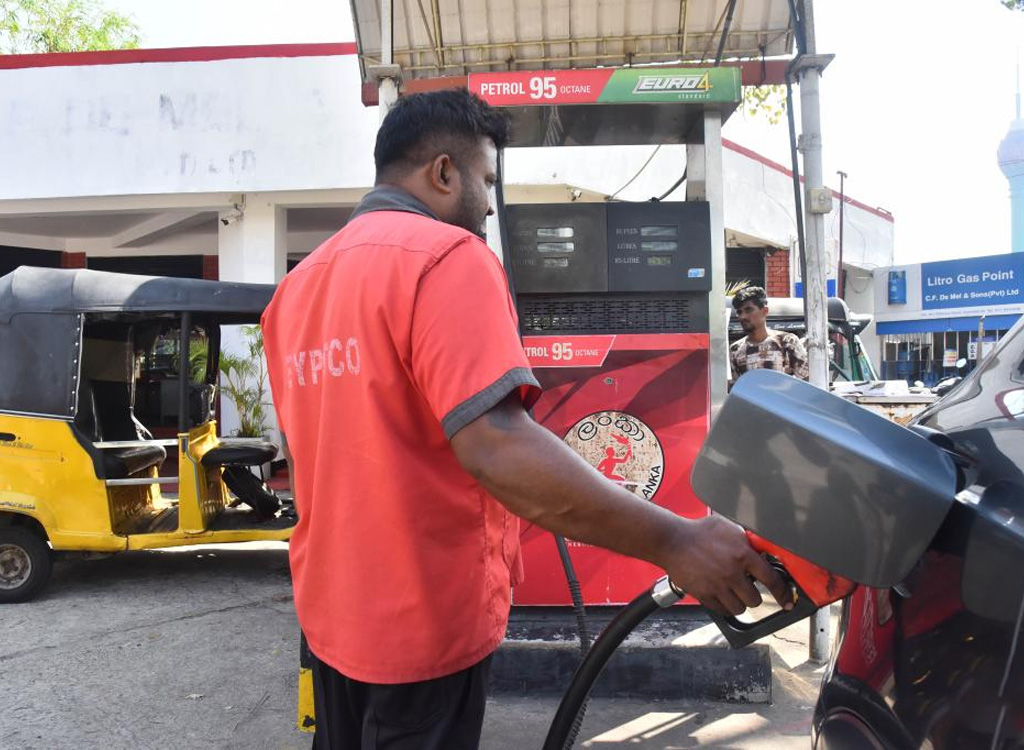
Until Lanka IOC was permitted entry in 2003, the first condition was not satisfied; the sole distributor was Ceypetco. Now there are close to 900 fuel stations that are part of Ceypetco; over 250 with LIOC; and 150 each with Sinopec and RM Parks (Shell). In 2003 LIOC was given a minority share of the common facilities managed by Ceylon Petroleum Storage Terminals Co. (CPSTL) and its own storage in Trincomalee. The later entrants were not permitted to invest in CPSTL.
At the outset, LIOC was mandated to follow government-set Ceypetco prices. It was compelled to compete solely on quality. Over time, this rule was relaxed in the agreements, but the price-setting Gazette includes ambiguous language. The new entrants had incentives to shadow Ceypetco prices. It appears from recent actions by Sinopec that the entrants are beginning to exercise pricing autonomy based on their agreements with government.
In terms of energy security, the reasoning behind entry was to diversify imports and funding for imports. Each distributor would manage its own imports and would pay for them by obtaining foreign exchange using the rupee income generated from sales.
But other than Ceypetco, only LIOC can control the entirety of its supply chain from the fuel-carrying tanker to the consumer. They have their own storage in Trincomalee and three of their nominees serve on the CPSTL board and can ostensibly influence what happens from port to storage. The other entrants simply obtain services from CPSTL for fee. All have to pay for CPSTL’s inefficiency and failure to invest.
Storing fuel from different companies in common storage tanks is a practice found worldwide. Where different companies have built tanks in different areas, it is common to have swap and settlement arrangements. There is nothing inherently anti-competitive about these practices though oversight by competition authorities is common.
Pricing
Before 2002 the per-litre prices used to be painted on the pump. That was how static prices were under monopoly. The stations were grungy; it was rare to find a usable toilet. All this changed with the entry of LIOC. The reform plan included three players, though competitively selected Sinopec withdrew when the reform government was defeated in 2004. CPSTL was to be owned by the three players in proportion to market share. If the third player had entered, CPSTL would have ceased to be a state-owned company. Even in the absence of retail price competition, LIOC’s practices and the credible threat of additional entry caused Ceypetco to improve service, investing in modern pumps, etc.
The fuel-price formula was first implemented in 2018, discontinued by the Gotabaya government, and then reactivated in 2022. Such formulae are not normally applied in competitive markets. When the dominant firm is state-owned, a formula can inject some discipline into pricing to preclude burdening taxpayers. When profligate governments enter into agreements with the IMF, this element tends to be made a condition. This was the case in Sri Lanka’s two recent Extended Fund Facilities (EFF).
Firms that have hard-budget constraints (all, other than Ceypetco) will not want to set prices below CIF [cost, insurance, freight] plus taxes. These elements are for the most part outside the firm’s control except for skill in negotiating contracts and playing in the spot market which can affect the biggest cost component (and the absence of corruption). If kickbacks are embedded in contractual prices for coal or diesel, the corruption will be invisible. It will be relatively easy to park the ill-gotten gains abroad.
In most countries, true competition does not exist in fuel distribution, even with multiple distributors. From the perspective of the consumer, not all the fuel stations are equal because of transaction costs. Certain locations in North America, where 3-4 fuel station are located at an intersection or in proximity may come closest to competition. These stations tend to display prices in large fonts visible from afar. Because the options do not involve additional driving, there is actual choice. The result is pressure to keep prices low and quality high. But even where additional driving is required, competitive pressures cause prices to remain within a band.
Given the above-described imperfections of competition and the existence of essential facilities such as port terminals, pipelines, and storage tanks, sector regulation was considered in 2002. But a petroleum act that would have empowered the Public Utilities Commission to engage in minimal, competition-focused regulation was stillborn. The first defence against the leveraging of power over the essential facilities was to have CPSTL owned by all the distributors, allowing them to exert pressure for efficiency and investment. Even that mechanism has not been fully utilized. When the market was opened to Sinopec and Shell, no efforts were made to revive the original design for CPSTL. As evidenced by excessive overtime payments to employees amidst COVID and the economic crisis, CPSTL’s primary function is to extract rents for the benefit of its employees. There is little investment in new pipelines and tanks.
The current industry structure is highly imperfect, though still better than the pre-2002 monopoly. The structural measures that can be taken to minimize oligopoly pricing have not been taken. The considerable competition powers in the PUCSL Act, No. 35 of 2002, lie unused because the industry has not been brought under regulation.
Differences from telecom reform
The three prongs of telecom reform worked in a complementary manner to deliver the good results. In 1996 two fixed-wireless operators were licensed (the first condition, satisfied by 2002 and 2022 reforms allowing entry). They provided viable alternatives to SLT, especially in the lucrative corporate segment, and created external pressure on the incumbent. In August 1997, 38.5 percent of SLT was divested and a management contract was entered into with NTT, leading to internal changes in company culture and establishing hard-budget constraints for the incumbent (incomplete for Ceypetco). The regulator was given greater powers through an amendment and acted aggressively, including on tariffs and quality of service. It also rebalanced international and domestic revenue streams enabling competitors in the domestic segment to function (fuel distribution is not formally regulated). In addition, per-line costs both to operators and to consumers came down rapidly because of scale economies arising in the large Chinese and Indian markets (this would be the equivalent of introducing lower-cost inputs for imported fuel). The combined effect caused all telecom operators to deploy new business models that yielded the low prices.
In the fuel-distribution industry, not much has been done other than allow limited entry. Unless the reforms are completed, the desired results cannot be achieved in the short term. But as the recent deviation from Gazetted prices shows, incremental progress is being made even in the absence of government action on meaningful reforms.
Disclaimer: The views and opinions expressed in this article are those of the writer and do not necessarily reflect the official position of this publication.












Leave a comment