
By Dr. Nadee Dissanayake
In Sri Lanka, the story of progress, resilience, and hope is deeply intertwined with the strength of its women. As the country navigates social change, economic recovery, and generational transitions, Sri Lankan women continue to stand as a powerful force shaping the attitudes, ambitions, and values of the nation’s youth.
Their influence is not limited to visible leadership or public recognition; it is rooted in everyday life – in sacred motherhood, demanding careers, emotional endurance, and the silent struggles that define survival and responsibility. Through these lived realities, women inspire and guide young people in ways that are deeply personal and nationally significant.
Sacred motherhood and silent strength
Motherhood in Sri Lanka carries a sacred emotional depth that goes far beyond caregiving; it is a lifelong commitment built on sacrifice, protection, and unwavering dedication. From the earliest years of a child’s life, mothers become the first teachers of values, discipline, kindness, perseverance, and respect.
Across villages, towns, and cities, women wake before dawn, manage households, prepare children for school, care for elders, and often contribute financially to the family. Even during economic hardship, they prioritise education, ensuring that school fees are paid, tuition classes are attended, and aspirations remain alive.
Youth growing up in such environments learn resilience not from theory but from observation. They witness how strength is practised quietly, how love is expressed through responsibility, and how determination shapes survival.
However, behind this nurturing presence lies an emotional burden that society rarely acknowledges. Sri Lankan women often carry the responsibility of holding families together during uncertainty. They manage stress, absorb fear, mediate conflicts, and provide reassurance during crises. Whether facing financial strain, social pressure, or personal challenges, they maintain emotional stability for the sake of their children.
This hidden labour becomes an invisible classroom for youth. It teaches coping, patience, and endurance qualities essential in a world where young people face anxiety about education, employment, and identity. Through their mothers and caregivers, youth learn that real strength does not seek recognition; it simply persists.
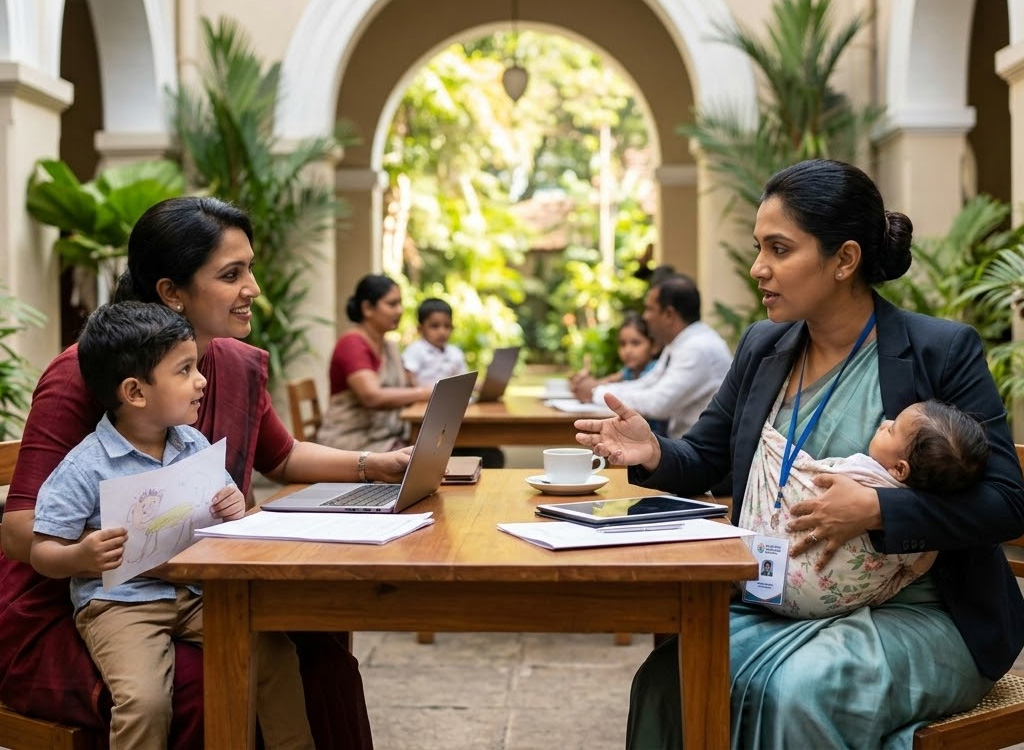
At the same time, the modern Sri Lankan woman has expanded her role beyond traditional boundaries. She moves between home and the workplace with remarkable energy, often managing multiple responsibilities within a single day. From preparing meals at dawn to leading meetings, from supporting children’s studies to building professional careers, women embody adaptability and determination.
Their journey into tough career paths has not been easy. Many face societal expectations, workplace discrimination, safety concerns, and the challenge of balancing family and professional responsibilities, but they continue to progress, demonstrating resilience in the face of structural and cultural barriers.
Young people observing this transformation begin to reshape their understanding of gender, leadership, and ambition. Girls feel encouraged to dream beyond limitations, while boys learn to respect capability and collaboration.
Beyond the home: Redefining success
For many women, career life is not solely about ambition but about survival and dignity. Across Sri Lanka, women work in diverse sectors from agriculture and garment factories to banking, healthcare, education, and entrepreneurship. Many manage both income generation and household responsibilities simultaneously.
In single-parent households, women shoulder the entire burden of survival. In small businesses, they invest savings, take risks, and create opportunities not just for themselves but for others.
These realities leave a deep impression on youth. They begin to understand that success is rarely instant or effortless. It is built through discipline, sacrifice, and persistence. The struggle of women becomes a powerful lesson in work ethic and responsibility.
Work, survival and dignity
Beyond homes and workplaces, women shape youth as teachers, mentors, and community leaders. In classrooms, female educators nurture potential and guide students through academic and emotional challenges. They often extend their roles beyond teaching, offering life advice, encouragement, and support.
Many young people remember a teacher who believed in them, a mentor who listened, or a leader who provided direction during uncertainty. These interactions influence confidence and career choices, leaving lasting marks on personal development.
Women also lead community initiatives supporting vulnerable families, organising social programmes, and promoting unity during difficult times. Through these efforts, youth learn the importance of service, empathy, and collective responsibility.
Sri Lankan women are increasingly stepping into fields once considered unconventional, including technology, engineering, law enforcement, and entrepreneurship. Their journeys are filled with obstacles, but their determination challenges long-standing stereotypes.
Young people witnessing these achievements learn that leadership is earned through perseverance and that courage is built through consistency. Such examples shape a generation that values merit, inclusivity, and equality. The presence of women in diverse professional spaces expands the imagination of what youth believe is possible for their own futures.
Despite these contributions, the most valuable side of Sri Lankan women often remains hidden. Their ability to hold families and communities together rarely receives public recognition. They volunteer in religious institutions, organise welfare initiatives, support neighbours, and provide emotional guidance to youth groups.
These acts may seem small, but they sustain social harmony and community resilience. Youth observing these behaviours learn that nation-building is not limited to policy or politics; it begins with compassion, responsibility, and service at the grassroots level.
The digital era has opened new avenues for women to influence youth. Through social media and online platforms, Sri Lankan women share personal journeys, educational insights, health awareness, and career guidance. These stories resonate strongly because they are authentic. They speak of challenges, restarts, and growth, making them relatable to young audiences navigating their own uncertainties.
Mentors, community builders and digital voices
Digital spaces have allowed women to become mentors beyond physical boundaries, offering inspiration and practical knowledge to a generation immersed in technology.
The influence of women on youth is not merely inspirational; it is behavioural. Young people learn by watching how women manage stress, respond to adversity, make financial decisions, and support others. These everyday actions create role models rooted in reality.
When youth see integrity in action, they internalise it. When they observe responsibility, they adopt it. Influence becomes a generational transfer of values, shaping attitudes towards leadership, ethics, and social responsibility.
For Sri Lankan youth, women also represent emotional safety. Mothers, sisters, teachers, and mentors create spaces where young people feel understood and supported. In a time marked by uncertainty and rapid change, this emotional connection becomes essential. It builds confidence, reduces isolation, and nurtures hope. Hope, in turn, becomes the foundation for ambition and national progress.
However, to sustain and strengthen this influence, society must move beyond appreciation to meaningful support. Women require safe workplaces, equal career opportunities, recognition of unpaid care work, and systems that support working mothers. Mentorship platforms, entrepreneurship support, and inclusive policies can further enhance their impact.
When women are supported, their influence on youth multiplies. When their struggles are acknowledged, their strength becomes sustainable and transformative.
From appreciation to action
The future of Sri Lanka will ultimately be shaped by its youth, their values, skills, and sense of purpose. These qualities, however, are being cultivated every day by the women who nurture, guide, and lead them.
From sacred motherhood to fearless professional life, from emotional endurance to energetic leadership, Sri Lankan women embody a balance of compassion and courage that defines national character. They influence not by authority but by authenticity, inspire not by perfection but by perseverance, and impact not through words alone but through the realities they navigate daily.
Within their struggles lie lessons of survival. Within their responsibilities lie models of leadership. Within their sacrifices lies the blueprint of a stronger, more resilient nation. The power of Sri Lankan women is not simply a social narrative or a cultural tribute; it is a living force shaping the direction of the country.
As youth rise to face the challenges of the future, they carry within them the strength, wisdom, and resilience inherited from the women who guided them. In that influence lies the true promise of Sri Lanka’s tomorrow.
(The writer is an independent researcher)
Disclaimer: The views and opinions expressed in this article are those of the writer and do not necessarily reflect the official position of this publication.











Leave a comment