
By Prof. Tissa Vitarana
The biggest danger and challenge we face is climate change due to global warming. At this juncture, I offer my condolences to the relations of all those who were affected during Cyclone Ditwah. I also sympathise with all those who have lost their houses and other possessions and their income sources. I appeal to the Government to do all that they can to meet the needs of the people at this very difficult time and I’m glad they have obtained foreign aid.
The root cause of climate change is the continued use of fossil fuel like petrol and gas as the source of energy for industries and vehicles. I appeal to Industrialised countries to pay compensation to all poor countries whose carbon footprint is as small as Sri Lanka.
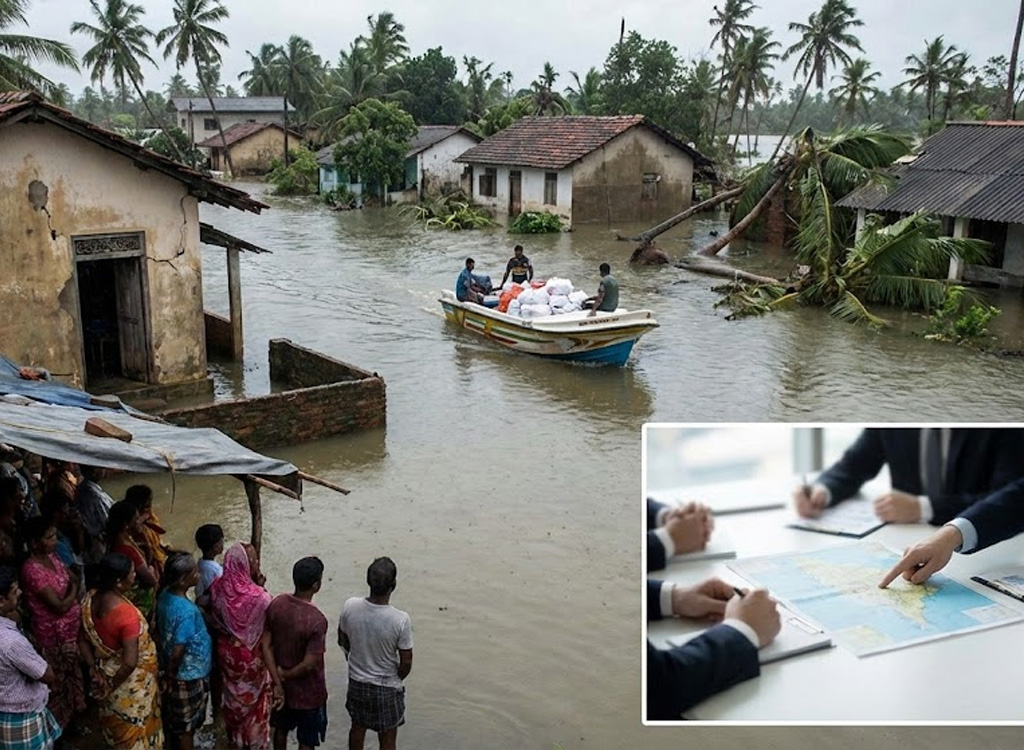
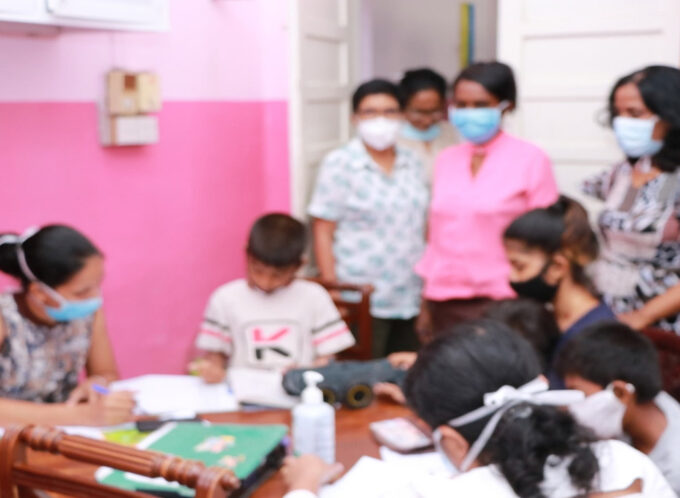
As a consequence of global warming, extensive and unpredictable climate changes are becoming a serious problem. The increase in the frequency and strength of floods and droughts is affecting the lives of people and economies globally. In Sri Lanka, the usual North East Monsoon turned into a major event. Cyclone Ditwah killed well over 600 persons in the North East and the Hill country. The torrential rains led to severe floods and landslides which destroyed houses and cultivations. People were forced to leave their submerged and severely damaged houses and take refuge in public buildings, like schools, on higher ground. In many areas, they obtained their meals from relations or friends’ houses. This is one of the worst disasters caused by weather in decades. Hundreds of lives were lost (a recent official count gives a figure of over 600). Over 1.8 million people have been displaced in all Districts. Thousands of houses are completely destroyed, while tens of thousands are partially damaged. Over 100,000 persons have obtained temporary shelter in safer areas.
Transport was severely affected. Floodwaters and landslides blocked or damaged roads, bridges and railways. Fallen trees damaged electricity lines. In all affected Districts, schools and offices were closed. International and domestic airline flights were disrupted. The World Bank estimates there was a direct loss of a sum of US $ 4 billion.
If something similar is repeated during the South West Monsoon, and rice crops, etc., are damaged, we might have to meet a loss of $ 4,000 or thereabouts again then Sri Lanka will go bankrupt. To avoid such an outcome, we will need to change from six monthly rice crops to three monthly crops, weather permitting. If that is not feasible, then we may have to go back to six monthly crops under greenhouse conditions. To do it extensively would be too expensive for Sri Lanka. What alternative course do we have? Perhaps, we will have to get the advice of agriculturists on how we can produce the quantity of rice the country needs. The basic question is how do we ensure that cyclonic conditions do not prevail once again when the rains occur, which would result in the same situation that we are facing today. Perhaps a meeting of the meteorologists and agriculturists will have to decide on the alternative course required. Of course, if there are no cyclones and severe weather conditions associated with the next South West Monsoon, there will be no problem. But this is unlikely.
The estimated damage of $ 4 billion is an underestimate as it is based only on the direct damage due to floods and earth slides. But invariably, other consequences will have to be added on. For example, health problems like diarrhea, dengue and chikungunya as well as those due to the lack of proper nutrition. Hunger and malnutrition which were major problems will get worse. Skin and respiratory diseases due to microbial infections will also increase. The Government has chosen to use our limited foreign exchange (forex) to buy vehicles, which already exceed our needs. This is a crime when the Government hospitals are short of essential medicines and the poor and middle class patients are dying, while the rich go to the private hospitals. The World Health Organisation approved Medicinal Drug Policy of Prof. Senaka Bibile (a member of the LSSP) is not applied properly, and is only given lip service. As much as 40% of the Essential Drug List, that a hospital must have to treat all diseases, prepared by Prof. Bibile, is not available in hospitals with epidemics as the outcome of this lapse. All other sectors of the economy are experiencing identical circumstances.
The Government which claimed to be leftist oriented has exposed its hand and is clearly not so. The recent Budget not only continues the indirect taxation as its main source of internal revenue, but has added a Value Added Tax to it. It has not placed the tax burden on those who have the means to pay, because the upper limit of direct taxes remains at 37 per cent for the rich.
At a time when the economists world-wide warn that poverty levels are rising and the rich are getting richer and the poor poorer, and the rich-poor gap is widening, both within countries and between them. There exists an unstable situation that can lead to a major socio-economic crisis, maybe an explosion, maybe a major war, in this nuclear era where several countries possess nuclear bombs that are capable of destroying humanity. The Government has signed a Defence memorandum of understanding agreement with the US, permitting its armed forces to enter our country. This will allow the Status of Forces Agreement (SOFA) to be implemented. This was about to be signed when Prime Minister Ranil Wickremesinghe headed the ‘good governance’ Government, but I exposed this to the country and he had no mandate, he could not sign it, and lost the subsequent General Election.
Here, I must mention the people have been extremely unwise to elect the Government with a two-thirds majority, because they can alter the Constitution whenever they wish and also implement the SOFA. Along with the UK, the US, which has nearly 100 military vessels in the Indian Ocean, has been using the island of Diego Garcia, which belongs to the country Mauritius, as its main servicing centre. The Mauritian Government went to the International Court of Justice, and got a decision ruling the US and UK forces must quit Diego Garcia and hand it back to the Mauritius. That is why the US is determined to get hold of Trincomalee, the second best Harbour in the world, and the freedom to use any other facility in Sri Lanka and bring in any weapons without Customs inspection or paying any duty. All this can be done under the SOFA under which the law of Sri Lanka does not apply to US troops. For any misdeeds, they have to be charged in US courts under the American law. So, Sri Lanka has surrendered its hard-won sovereignty.
In the 1970-1975 Coalition Government (Sri Lanka Freedom Party, the LSSP and the Communist Party), Dr. Colvin R. de Silva of the LSSP used his powers as the Constitutional Affairs Minister to draft the Republican Constitution and get it passed in the Parliament. That was how Sri Lanka got complete Independence with sovereignty. The LSSP had to fight for 24 years after 1948 to achieve it. Under Jawaharlal Nehru and Mahatma Gandhi, India became a sovereign Republic in three years. I appeal to the Government not to go ahead with the SOFA. Dr. De Silva nationalised the plantations that the British companies owned and broke the UK hold on our economy. Leslie Goonewardene of the LSSP as the Transport Minister broke the monopoly of the private bus companies by establishing the Ceylon Transport Board. Then LSSP Leader, Dr. N.M. Perera, as the Finance Minister, rescued the country from the triple crisis of 1972-1973 in the short period of one and a half years using Leftist policies. Besides the periodic economic crisis of the capitalist system, when production exceeds demand, the oil prices went up by seven times due to actions taken by the Organisation of the Petroleum Exporting Countries, and the worldwide drought that led to a food scarcity, e.g. a ton of sugar rose from Pounds 37 to over 600.
(The writer is the LSSP Leader and a former Minister)
Source: The Morning
Disclaimer: The views and opinions expressed in this column are those of the author, and do not necessarily reflect those of this publication.





Leave a comment