
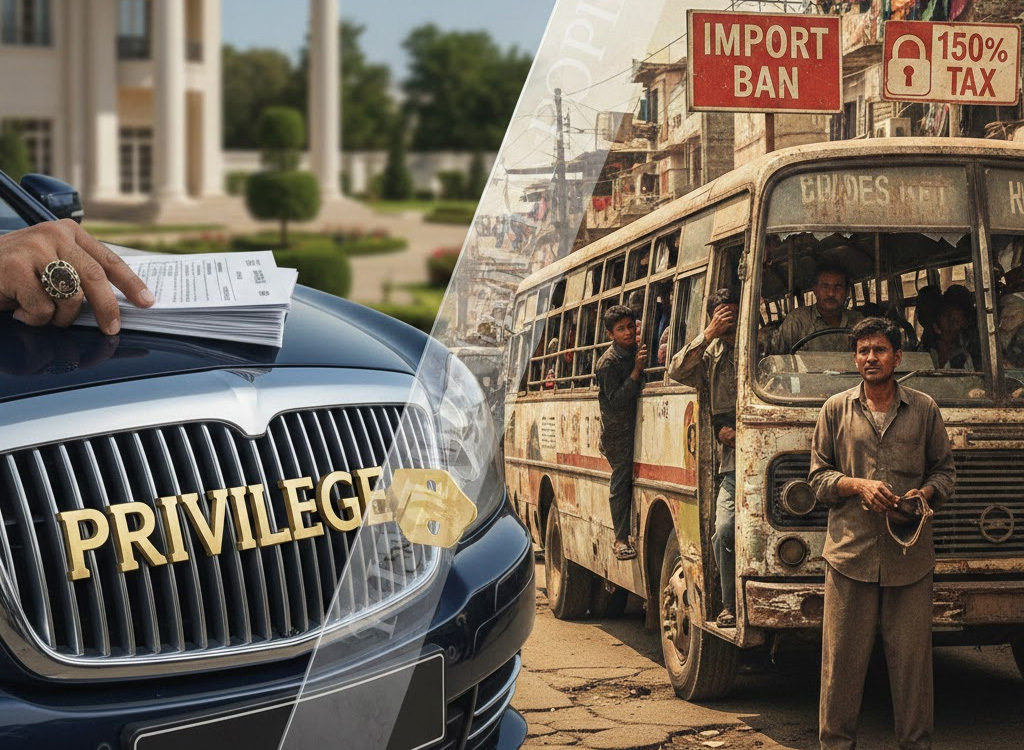
There are few symbols more telling of Sri Lanka’s uneasy relationship with reform than the duty-free vehicle permit. It began decades ago as a token of gratitude for service, but over the years it evolved into something far less defensible, a currency of privilege, traded behind the façade of public duty. The present discussion about reviving permits for senior officials upon retirement is a measure of whether the State is capable of breaking habits that have long corroded its moral authority.
For all the rhetoric of reform, the country still struggles to distinguish reward from indulgence. Nearly 2,000 permits have reportedly been issued under the latest concessionary scheme, more than 500 of them within the past year. This, while ordinary citizens endure an import ban and some of the highest vehicle duties anywhere in the world. The contrast could not be starker. At one end, an official rewarded with a tax-free luxury; at the other, a commuter priced out of basic mobility.
The President’s pledge in Parliament to end the permit culture was received with relief because it suggested that Sri Lanka might finally be ready to let fairness triumph over favour. To reopen the door, even slightly, would undo that fragile trust. It would confirm the public’s suspicion that in this country, no reform is ever final, that every promise carries an asterisk.
Permits have never been compensation for service. They are discretionary gifts, distributed through political channels, often converted to cash soon after issue. In the past, their resale fetched sums that would make a mockery of any public sector salary. Each such transaction represented money the Treasury would never see again, a loss quietly shifted onto those who pay taxes without privilege or exemption. It is an economic distortion and a moral one too, for it converts public office into a personal lottery.
This culture of sanctioned indulgence has deep roots. Every attempt to abolish it has been followed by a creative revival under a different name. Temporary allowances become permanent expectations, and soon the logic of entitlement replaces the principle of equity. Once such concessions return, they seldom leave. Reform collapses not with a grand announcement, but with a quiet exception.
The economic argument against the permit system is clear enough. With effective duties on most passenger vehicles exceeding 150%, each tax-free permit represents a substantial fiscal hole. When multiplied by thousands, these holes become chasms. The funds lost are the funds needed to mend roads, equip hospitals, and strengthen schools. To continue granting exemptions while preaching fiscal discipline is to ask the public to bear the cost of hypocrisy.
Public servants should be compensated fairly through salaries that appear in the national budget and are subject to parliamentary scrutiny. Integrity is sustained by systems that can be seen and measured, not by favours dispensed in private.
The issue before the Government is to do with consistency. A state that cannot keep its word on something so visible will find it difficult to convince citizens or investors of its sincerity on deeper reforms. Sri Lanka’s recovery depends as much on trust as on revenue.
The permit culture is a relic from a gentler but less honest age, when privilege was mistaken for prestige. To resurrect it now would not merely offend economic sense. It would declare, once again, that old habits in this country never die, they only wait for the next exemption.
Source: The Morning
Disclaimer: The views and opinions expressed in this article are those of the writer and do not necessarily reflect the official position of this publication.










Leave a comment