
By Veeragathy Thanabalasingham
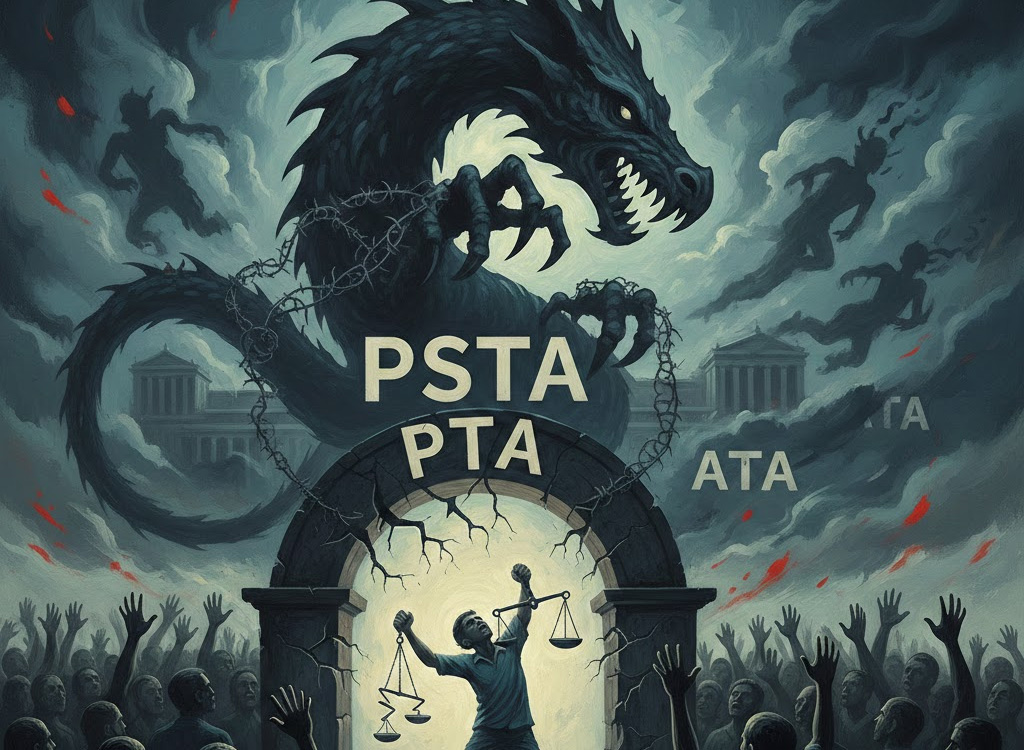
The draft of the proposed Protection of the State from Terrorism Act (PSTA), published by the National People’s Power (NPP) Government in December 2025, is the third attempt aimed at replacing the Prevention of Terrorism Act (PTA), which has been in force for the past 47 years. The Government has given the public until 28 February to comment on the draft law.
In the recent past, the Counter-Terrorism Act (CTA) was proposed by the Maithripala Sirisena-Ranil Wickremesinghe Government in 2018 and the Anti-Terrorism Act (ATA) by President Wickremesinghe’s Government in 2023.
Political parties, human rights organisations, legal experts, religious organisations, and civil society groups have strongly criticised the draft presented by the incumbent Government for having more draconian provisions than the previous two drafts.
The main allegation is that none of these drafts contained provisions to ensure that the violations of people’s fundamental rights and gross abuses that had been taking place under the PTA for more than four decades would no longer take place.
The draft PSTA, published last December on the website of the Ministry of Justice, not only contains provisions that extensively expand the powers of the president and the security agencies, but also carries the risk of severely restricting democratic freedoms and civil liberties of the people.
‘A dangerous piece of legislation’
It remains to be seen to what extent the Government will be willing to take into account the constructive observations and alternative proposals presented in the public discourse on the new draft and effect meaningful changes. But no one can guarantee that the current effort will not meet the same fate as the previous two attempts to replace the PTA either.
Like its predecessors, the proposed PSTA contains a broad and vague definition of terrorism that could be used to suppress democratic dissent and curtail freedom of expression. It is pointed out that what are termed as terrorism offences in the draft are framed so broadly that they place ordinary citizens at risk, carrying penalties of up to 20 years’ imprisonment.
Describing the draft PSTA as one of the most dangerous pieces of legislation in this country, former Minister of External Affairs Prof. G.L. Peiris has warned that the draft, if implemented in its current form, would be a death knell for democratic freedoms and expose the country to serious international and economic repercussions.
The proposed law provides wide-ranging powers to the armed forces, the Police, and the Coast Guard, including entry into homes, seizure of confidential documents, and searching individuals. There are provisions to authorise the Secretary of Defence to issue a detention order for up to one year and to allow the transfer to Police custody of suspects who would normally be placed under judicial supervision.
Moreover, provisions relating to proscription are extremely dangerous. Under the current draft the president may, through a gazette notification, declare any organisation illegal. Such an organisation would be barred from recruiting members, holding meetings, or operating bank accounts, with the order remaining in force until rescinded by the president.
The legislation also allows the president to declare any location a prohibited place, barring entry and prohibiting photography or videography. Violations could result in up to three years’ imprisonment or a fine of Rs. 3 million.
Defining terrorism
It is important to note that the NPP Government has come out with the new draft without taking into account the serious shortcomings already pointed out in the definition of terrorism in the drafts presented by previous governments and the instructions of the Supreme Court in this regard.
After hearing more than 30 petitions challenging the constitutionality of the Anti-Terrorism Bill submitted by the Wickremesinghe Government in 2023, the country’s apex court stressed that what was described as “crimes of terrorism” in the bill should be to a large extent consistent with international law. The Supreme Court did not accept the definition given for terrorism in that bill.
While insisting that the definition of terrorism should be along the lines of the United Nations (UN) definition, the Supreme Court suggested that the provisions in the laws of the UK, Australia, New Zealand, and Canada should be taken into consideration while deciding on the definition.
Defining terrorism is, indeed, an international problem. The reality is that even the UN has not yet found a global consensus on this issue. One man’s terrorist may be another’s freedom fighter. Countries often define terrorism on the basis of the security crises and political problems they face. Sri Lanka is no exception.
It is pertinent to recall here the historic statement made by then Cuban President Fidel Castro when the US-led West declared a global war on terrorism following the 11 September 2001 aircraft strikes on the Twin Towers in New York. He warned that under the guise of a global war against terrorism, they were going to erase the distinction between naked terrorism and legitimate armed struggle.
Broken promises
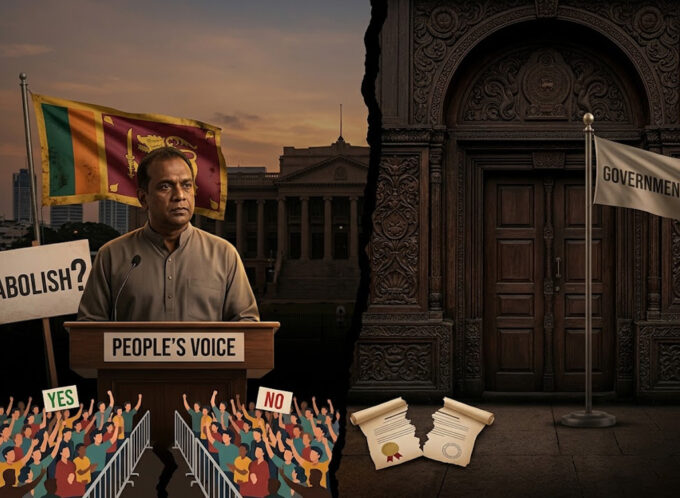
That being so, there is a contradiction in the fact that the NPP Government has published the draft law to replace the PTA. President Anura Kumara Dissanayake promised in his 2024 Presidential Election manifesto to abolish all repressive laws, including the PTA, and to ensure the civil rights of the people in all parts of the country. There is no mention in the manifesto about replacing existing legislation against terrorism.
Moreover, a few weeks after Dissanayake became President, Foreign Minister Vijitha Herath announced that their Government would not repeal or amend the PTA and promised that the new Government would not abuse the law, which has come under heavy criticism at home and abroad. Perhaps that was the first electoral promise that the NPP broke.
Yet another irony is that a Government that had promised to do away with the PTA altogether has now come out with a draft law to replace this law with provisions more draconian than those brought in by the two previous Governments.
There was criticism at the time that previous governments presented drafts containing even more draconian legal provisions with the intention of retaining the PTA as it is. The current Government too seems to be working with the same purpose.
(The writer is a senior journalist based in Colombo)
Disclaimer: The views and opinions expressed in this article are those of the writer and do not necessarily reflect the official position of this publication.









Leave a comment