
By Dinesh Weerakkody
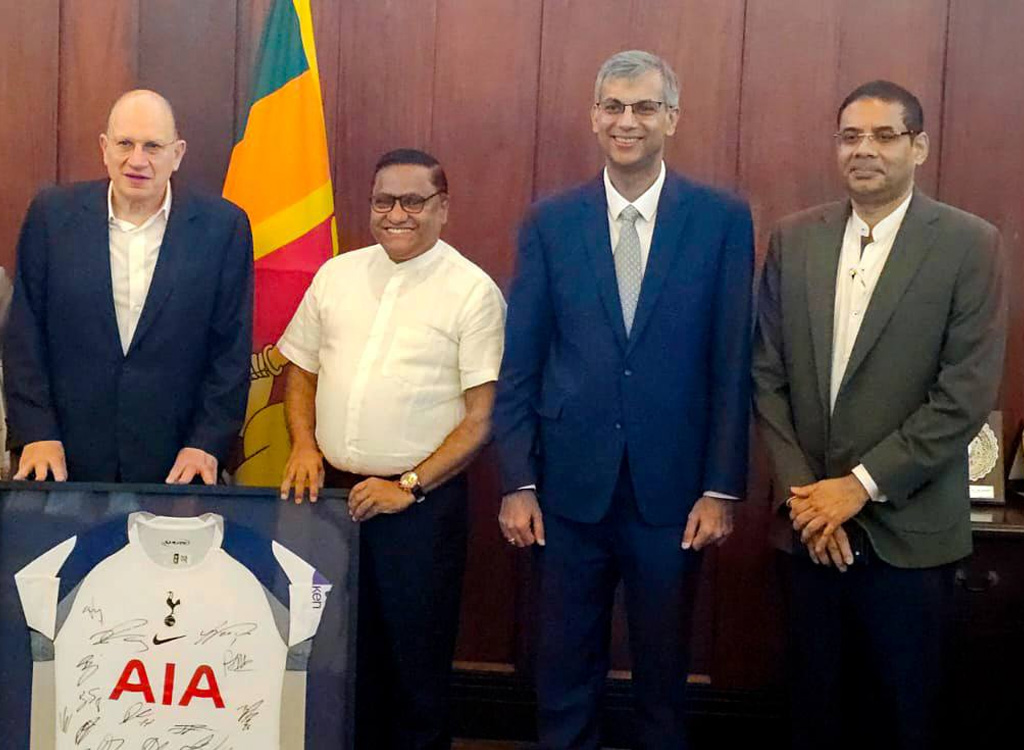
Sir Mark Tucker, delivering the keynote address at the Chairman and CEOs Forum organised by the Sri Lanka Institute of Directors at Port City Colombo, presented a clear framework for leadership and attracting foreign direct investment (FDI), emphasising Sri Lanka’s need to reposition itself in an increasingly fragmented global economy.
Having served as Chairman of the HSBC Banking Group and now Non-Executive Chair AIA Group and Discovery Group of South Africa, Tucker stressed that Sri Lanka must pivot from crisis management to building the capabilities required for sustained economic growth.
Global corporate influence
Beyond his corporate leadership, Sir Mark has contributed significantly to global economic policy. He has served on the Court of the Bank of England and participated in several international bodies shaping financial regulation, trade, and global economic cooperation. In recognition of his contributions to business and finance, he was knighted by King Charles III in 2024.
Mobilising capital
Speaking on “Reconnecting to Capital and Repositioning Sri Lanka in a Fragmented World,” Tucker acknowledged Sri Lanka’s progress in stabilising its economy following the recent crisis. However, he emphasised that stabilisation alone is insufficient to attract long-term investment. “The next stage of growth will rely on country capabilities, not just conditions,” he said, highlighting the need to clearly define investment-enabling conditions and maintain them consistently over time.
From recovery to growth
Tucker underlined that transitioning from recovery to sustained expansion requires reconnecting with global pools of private capital. “Long-term sustainable growth will require capital at scale—far beyond what the public sector alone can provide,” he noted. For investors to commit, they must perceive credible reforms, policy stability, and strong governance standards.
Attracting investors
To draw global capital, Tucker stressed the importance of deepening the reform agenda, strengthening regulatory predictability, and modernising Government processes to reduce execution risk. Competitiveness must improve across policy areas such as tax frameworks, labour regulations, land-use policies, and foreign investment rules.
He also highlighted the need for deeper domestic financial markets, stating, “More liquid capital markets and modernised infrastructure are essential to channel funds into productive investment.” Public-private partnerships, particularly in infrastructure, energy, and sustainable development, will be critical to mobilising capital efficiently.
Governance as a foundation
For these partnerships to succeed, transparent governance and predictable processes are essential. “Transparent governance, balanced investment allocation, and reliable processes attract world-class private partners who bring technology, scale, and execution,” Tucker said. He emphasised that trust ultimately drives capital flows: “Capital only flows where there is trust, and trust is built or eroded by strong or weak governance.”
He also highlighted the importance of national capability building through investments in skills, digital infrastructure, and modern physical assets. Sri Lanka’s strategic location along the East–West shipping route positions it to become a regional hub for trade, logistics, and services, at a time when Asia is emerging as the centre of global growth.
Leadership lessons
Tucker outlined three essential leadership qualities: trust, clarity, and humanity. Leaders must create institutions where integrity and transparency are unquestioned, communicate clearly, and lead with empathy. Developing talent at all levels is equally important; investing in people, nurturing leadership, and creating opportunities for young professionals are vital for Sri Lanka’s long-term competitiveness.
Conclusion
Ultimately, Tucker’s message was clear: the centre of gravity in global growth is shifting towards the Indian Ocean region. Attracting capital is not merely about offering favourable conditions; it requires sustained trust, credibility, and capability. With the right reforms, stable policies, and strategic investment in human capital, Sri Lanka can reconnect with global investors and establish itself as a dynamic player in Asia’s emerging economic landscape.
From a leadership perspective, this reinforces the timeless principles of Stephen Covey’s Level 4 leadership — where influence, integrity, execution, and long-term vision creates sustainable businesses.
References:
AIA’s Sir Mark tells Sri Lanka: Stabilisation alone will not bring capital back
https://en.wikipedia.org/wiki/Mark_Tucker_(businessman)
HSBC chairman Mark Tucker knighted in King’s birthday honours







Leave a comment