
By Veeragathy Thanabalasingham
In South Asia, where popular uprisings have toppled governments in recent years, new governments were elected in late 2024 in Sri Lanka and last month in Bangladesh. Elections in Nepal are scheduled to be held on Thursday (5). In all three countries, however, the forces that led the uprisings have been seen as incapable of influencing subsequent political developments.
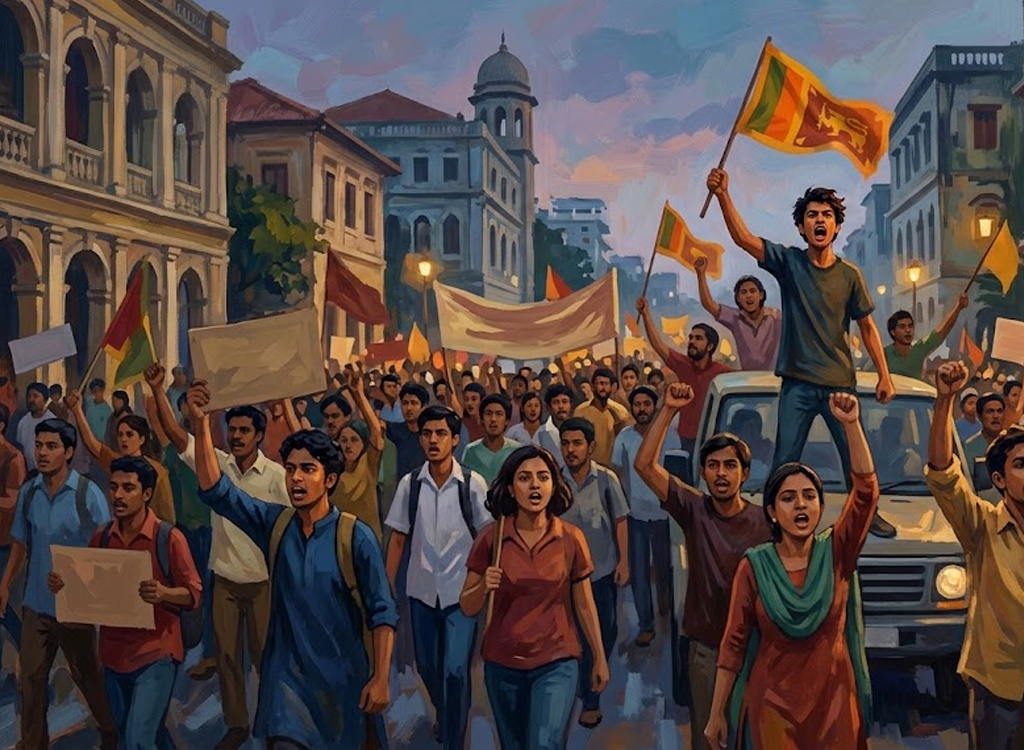
The Janatha Vimukthi Peramuna (JVP)-led National People’s Power (NPP) won the Presidential and Parliamentary Elections two years after the 2022 ‘Aragalaya’ people’s uprising that ousted the Rajapaksa regime. Its victory in the Parliamentary Elections was even bigger than in the Presidential Election. All the traditional political parties, representing the political elite, suffered a crushing defeat.
Despite not being at the forefront of the uprising, the JVP came to power under the leadership of Anura Kumara Dissanayake, cleverly using to its political advantage the popular resentment against the traditional political class responsible for misrule. Some observers had described the NPP’s coming to power as a class shift in political power.
While the NPP benefited from the political gains of the popular uprisings that demanded systemic change and a new political culture, the people’s indifference towards the People’s Struggle Alliance (PSA) formed by youth leaders, Left-wing groups, and political activists who were at the forefront of the uprisings was intriguing.
The PSA presidential candidate Nuwan Bopage received only 11,191 votes (0.08%). In the Parliamentary Elections, they received 26,611 votes (0.27%) nationally and failed to win a single seat in Parliament. In the 2025 Local Government Elections, they won 16 seats with 50,492 votes (0.48%).
Bangladesh’s transition of power
In Bangladesh, the Bangladesh Nationalist Party (BNP) led by Tarique Rahman, the son of late former Prime Minister Khaleda Zia, has won a landslide victory in the first national election since the 2024 popular uprising that ended Sheikh Hasina’s 15-year rule. Rahman is the scion of one of Bangladesh’s two main politically dominant families and was sworn in as Prime Minister on 17 February. The BNP has come to power after 20 years.
The BNP-led alliance won 212 seats in Parliament, securing a two-thirds majority. An alliance led by Islamist political party Jamaat-e-Islami emerged as the main Opposition party with 77 seats. The Islamists were thus able to win a large number of seats because the interim Government led by Nobel laureate Muhammad Yunus had banned Hasina’s Awami League.
In the meantime, the National Citizen Party (NCP) formed by student leaders who led the uprising known as the 2024 July Revolution contested the election in alliance with the Jamaat-e-Islami party. It seems that its leaders realised the danger of entering the fray alone.
The NCP, which fielded candidates in 32 constituencies, was able to win only six seats with 3.05% of the vote. Its Convenor Nahid Islam, who contested from a constituency in the capital Dhaka, managed to defeat the BNP candidate by only about 2,000 votes.
A nationwide referendum was also held along with the Parliamentary Elections to seek popular approval for the July National Charter 2025, which was declared in October last year with a view to enact major constitutional reforms in Bangladesh’s governance structure.
Last October, 33 political parties signed the charter, which contains more than 80 reform proposals aimed at preventing the return of autocratic-fascist rule. Although the BNP also signed it, it registered serious disagreements over a number of important provisions.
As the charter was approved by 60.25% of voters, the new Government of Prime Minister Tarique Rahman, which has a two-thirds majority in Parliament, has the political and legal obligation to carry out constitutional reforms.
On the basis of the charter’s guidelines, important constitutional institutions, including the Election Commission, should be restructured and the responsibility of holding elections in the future should be handed over to an impartial interim government; Parliament should be made bicameral and an upper house of 100 members should be established; and members of the upper house should be appointed through a proportional representation system based on the votes received by political parties in national elections.
Moreover, in the future, any constitutional amendment must be passed with the approval of a majority of the members of the upper house; one cannot hold the office of prime minister for more than two terms; the representation of women must be increased; and the deputy speaker and chairpersons of parliamentary committees must be elected from among opposition parties.
The referendum’s passage imposes specific obligations on the new Parliament. Under the Constitutional Reform Order 2025, the newly elected legislature will function as a Constitutional Reform Council with a fixed tenure of 180 working days to implement the charter’s provisions.
Elected members will be required to take two separate oaths, one as members of Parliament and another as members of the Constitutional Reform Council.
‘A fundamental flaw’
Political analysts say the coming months will test whether the BNP’s commitment to the charter withstands the practical challenges of implementation. The disagreements over specific provisions will require negotiation between the Government and Opposition parties represented in Parliament.
At the same time, despite the fact that Bangladesh needed a democratic transition from an unelected interim Government led by Yunus, political observers question the legitimacy of last week’s elections because it was held after banning one of the country’s largest parties, the Awami League.
The Hindu International Affairs Editor Stanly Johny has posed the following questions on social media: “If the US held an election banning the Democratic Party, would you have called it a success? If the UK held an election banning Labour or Conservatives, would it have been democratic? If India held an election barring the Congress from contesting, would it have been a triumph for democracy? Or can Nepal transition into legitimate democracy by banning the UML or the Maoists?”
He added that although many observers had praised the smooth conduct of the election, they seemed to have forgotten that the ban on the Awami League was a fundamental flaw in the electoral process that had strengthened the Islamist political party.
Failing to reap fruits of revolts
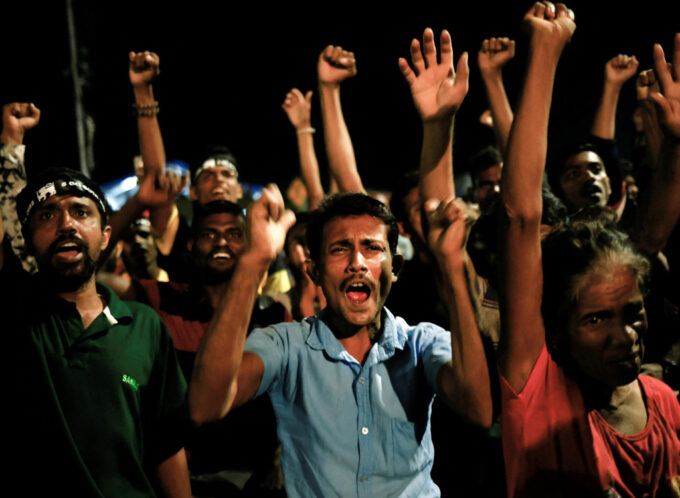
As elections approach in Nepal, reports suggest that the leaders of the younger generation which led the popular uprising that toppled the Government of former Prime Minister K.P Sharma Oli are struggling to find places in the traditional political parties such as the Nepali Congress and the Nepali Communist Party. It seems that like the leaders of Bangaladesh’s NCP, the Nepalese protesters also do not have the courage to contest elections on their own.
Even after the uprising in Bangladesh, the people have brought a traditional political party to power through elections. But in Sri Lanka, the people rejected the traditional parties and brought to power a political party that had never led a government before. This can be seen as a difference between the regime changes of the two countries.
Why is it that in these countries, the youthful forces that overthrew governments through street protests and laid the groundwork for political change are unable to win popular support in elections? Why are they incapable of influencing power structures of post-uprising politics? Why is it that in the end, only a traditional party is able to enjoy the fruits of the revolts?
Bangladesh is the next example in South Asia after Sri Lanka where it is easier for protest movements to topple governments than win elections.
From the Arab Spring to the popular uprisings in South Asia, it has been demonstrated that in today’s world, where social media dominates, movements are able to mobilise people and overthrow governments through street protests, while they are incapable of transforming themselves into political forces that can come to power through elections with the people’s support.
(The writer is a senior journalist based in Colombo)
Disclaimer: The views and opinions expressed in this article are those of the writer and do not necessarily reflect the official position of this publication.








Leave a comment