
By Sudarshana Gunawardana
A Classic Comeback Story
Americans love a comeback story. As then U.S. Assistant Secretary of State for South and Central Asian Affairs Donald Lu remarked in February 2024 at the United States Institute of Peace: “Americans love a comeback story, and in the region, I work on there is no greater comeback story than the story of Sri Lanka.”
He painted a stark contrast: rewind about a year and a half from early 2024, and Sri Lanka was gripped by crisis — mass street riots, endless queues for fuel and food, protesters storming and occupying the President’s residence, even swimming in his pool and cooking in the official kitchen. Yet, by then, the picture had changed dramatically: the currency had stabilised, prices for essentials held steady, debt restructuring assurances were secured, and International Monetary Fund (IMF) funding had begun to flow.
Decisive leadership in the nation’s darkest hour
How did Sri Lanka achieve this remarkable turnaround? The answer lies in decisive leadership during one of the nation’s darkest hours.
Sri Lanka had fallen into a deep debt trap, fueled by decades of populist politics that consistently prioritised spending far beyond revenue. From 1994 onward, successive leaders advanced people-pleasing policies amid waves of promises and public acclaim, while Ranil Wickremesinghe often found himself in the opposition’s thankless role — facing criticism, marginalization, and ridicule. By 2022, the economic meltdown had converged with acute political upheaval, thrusting the responsibility of steering the country onto Wickremesinghe, who at the time held just a single seat in Parliament as leader of the United National Party (UNP).
A constitutional transition unlike regional neighbours
Unlike some regional neighbours — such as Bangladesh in 2024, where protests forced Prime Minister Sheikh Hasina to flee the country, or Nepal in 2025, where youth-led anti-corruption demonstrations escalated into violence, claimed dozens of lives, and ultimately led to Prime Minister K.P. Sharma Oli’s resignation amid widespread unrest and the formation of an interim government — Sri Lanka’s transition remained firmly within constitutional bounds. Wickremesinghe adhered strictly to the Constitution, uniting disparate political forces to restore stability.
Following Prime Minister Mahinda Rajapaksa’s resignation amid the chaotic events of May 9, Wickremesinghe assumed the premiership and swiftly secured parliamentary confidence. After President Gotabaya Rajapaksa fled the country and resigned in July, he was appointed acting president in line with constitutional provisions and subsequently elected as full president with the backing of a parliamentary majority.
Restoring essentials and supply chains
His immediate priority was restoring supply chains for food, medicine, and fuel. By leveraging support from India, the United States, USAID, the World Food Programme, the Food and Agriculture Organisation, and the United Nations Development Programme, he brought essential supplies back to normal levels in a remarkably short time.
Wickremesinghe also addressed the over-centralization introduced by the 20th Amendment to the Constitution in 2020 by championing and securing passage of the 21st Amendment, which restored greater independence to key institutions and reinforced principles of good governance.
Navigating debt default and securing IMF support
Facing a declared default on foreign debt, imports had shifted to cash-only terms and development projects stalled. With the IMF — after approximately 16 prior arrangements since 1965 — serving as the lender of last resort, Wickremesinghe built broad political consensus for an Extended Fund Facility. He carefully negotiated domestic debt restructuring to protect the banking system, followed by agreements with foreign bilateral creditors (despite complexities involving China) and private international bondholders.
These steps unlocked World Bank assistance, strengthened the Sri Lankan Rupee—the local currency—from its 2022 crisis lows (when it hit around LKR 372 per USD amid depleted reserves and hyper-depreciation), and enabled the release of IMF tranches.
Structural reforms for long-term stability
Structural reforms followed: the introduction of cost-reflective pricing to end energy subsidies, the opening of petroleum imports to private players such as Lanka IOC, Sinopec, and Shell, and — through the Sri Lanka Electricity Act, No. 36 of 2024 — unbundling the Ceylon Electricity Board (CEB), the state-owned power sector monopoly. The Act separated generation, transmission, distribution, and system operations into six successor state-owned companies, with the CEB formally abolished and functions transferred effective March 9, 2026. These measures aimed to improve efficiency, reduce massive sectoral debts, enhance transparency, and attract private investment in renewables while preserving initial public ownership.
Institutional safeguards against future reversal
To safeguard these hard-won reforms against future reversal, Parliament passed a set of landmark laws: the Anti-Corruption Act, No. 9 of 2023; the Central Bank of Sri Lanka Act, No. 16 of 2023; the Public Financial Management Act, No. 44 of 2024; the Public Debt Management Act, No. 33 of 2024; and the Economic Transformation Act, No. 45 of 2024. Together, they created enduring institutional safeguards for fiscal discipline, monetary independence, debt sustainability, and economic openness.
Protecting the vulnerable
Social protection measures softened the impact on vulnerable groups: the Aswesuma cash-transfer programme provided direct monthly assistance to low-income families, while the Urumaya initiative granted freehold deeds to long-term occupants and cultivators on state land.
Completing this comprehensive agenda in roughly two years was extraordinary, made possible by Wickremesinghe’s decades of accumulated political experience, policy expertise, and international networks.
The 2024 election and a lasting legacy
In September 2024, the independent Election Commission conducted one of the most peaceful, free, and fair elections according to the EU and other international monitors, featuring a three-way contest. Wickremesinghe contested as an independent candidate (symbol: gas cylinder, evoking the depths of the recent crisis) and finished third with 17.27% of the vote — the first time a third-placed candidate achieved such a share. Anura Kumara Dissanayake emerged victorious with 42.31% in first preferences, necessitating a second-preference redistribution.
Erik Solheim, former Norwegian peace envoy and climate adviser to Wickremesinghe, captured the essence of his legacy in a post-election message on X: “Ranil Wickremesinghe will go into history as the man who restored normalcy to Sri Lanka in the midst of the all-time economic meltdown. Hardly any leader in world history has been re-elected on the basis of implementing an IMF program. We will see more of Ranil.”
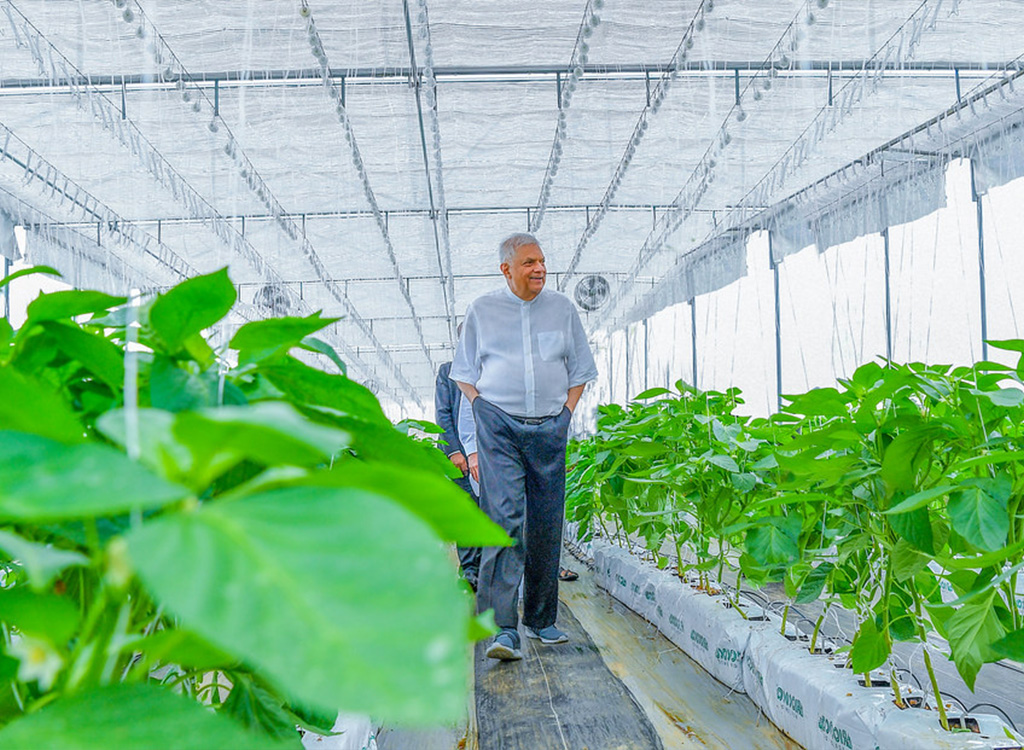
On his birthday, March 24, Ranil Wickremesinghe’s role in guiding Sri Lanka through unprecedented turmoil deserves thoughtful reflection — a testament to steady, experienced leadership in extraordinary times.
(This article is written to mark the birthday of former President Ranil Wickremesinghe on March 24)
(The writer is a former Chairman of Independent Television Networks Ltd. (2022–2024))
Disclaimer: The views and opinions expressed in this article are those of the writer and do not necessarily reflect the official position of this publication.








Leave a comment