
By Kusum Wijetilleke
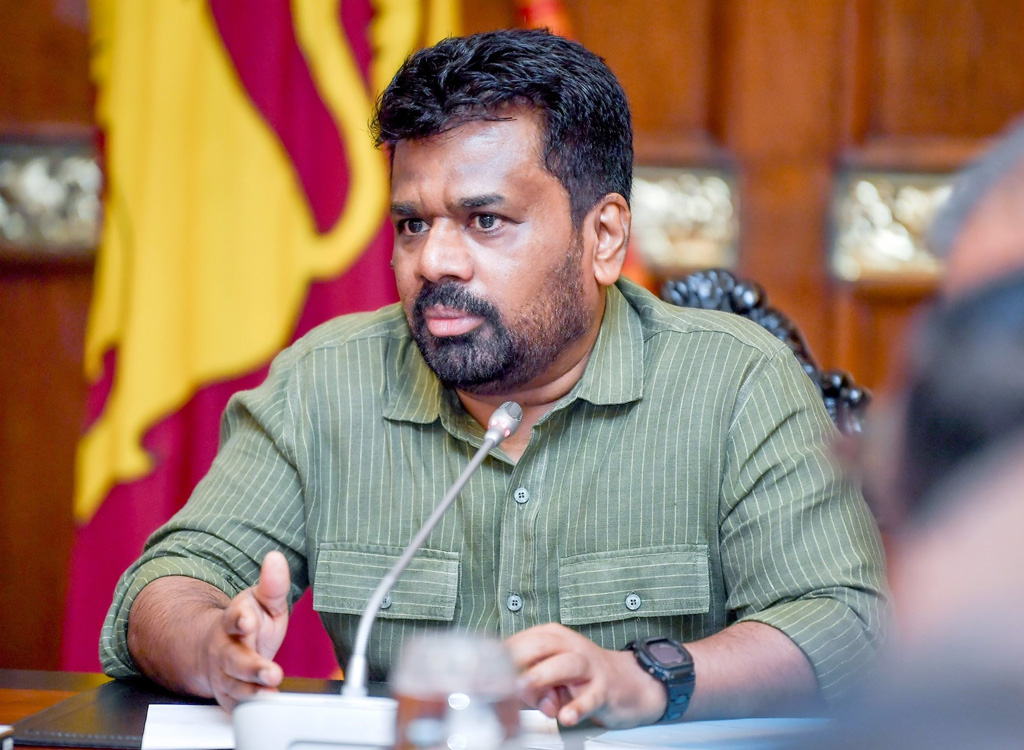
It will soon begin to dawn on the National People’s Power (NPP)-Janatha Vimukthi Peramuna (JVP) Government, and in particular on President and Finance Minister Anura Kumara Dissanayake, that the administration has been sleepwalking towards another crisis. That crisis will not be domestically generated, but externally triggered, most immediately through a deepening global energy shock.
Make no mistake: the world is already in the midst of a global energy crisis. The conflict in the Middle East has further tightened an already constrained market, placing upward pressure on oil and gas prices and increasing volatility across energy markets.
What has masked the full severity of this crisis thus far has been a series of extraordinary and ultimately unsustainable interventions. Chief among these has been the coordinated release of Strategic Petroleum Reserves (SPRs) by the United States, members of the European Union, Japan, and other advanced economies. According to the International Energy Agency (IEA), these releases represented one of the largest emergency drawdowns in history, explicitly aimed at stabilising global markets in the face of supply shocks following the Russia-Ukraine war and subsequent disruptions.
At the same time, the global system has adapted through what can only be described as pragmatic inconsistency. Despite formal sanctions regimes, Russian crude has continued to flow into global markets, often through re-routing, shadow fleets, and discounted pricing mechanisms. Iranian oil exports have also persisted, particularly into Asian markets. These flows, while politically contentious, have been critical in preventing a far sharper spike in global prices. Even US policy has, at times, reflected a degree of tolerance towards these realities in order to maintain supply stability.
Another new normal
The International Monetary Fund (IMF) and the World Bank have both repeatedly warned that energy markets remain vulnerable to geopolitical shocks, with limited spare capacity and heightened sensitivity to disruptions. Similarly, the IEA has highlighted that global oil markets are operating with thin buffers, where even modest disruptions can lead to outsized price movements.
These are not normal market conditions. They are emergency stabilisation mechanisms layered onto an already fragile system. When prices are being actively managed through reserve releases, when sanctioned oil continues to circulate through informal channels, and when geopolitical risk premia are structurally embedded in pricing, it is clear that the global energy system is under stress.
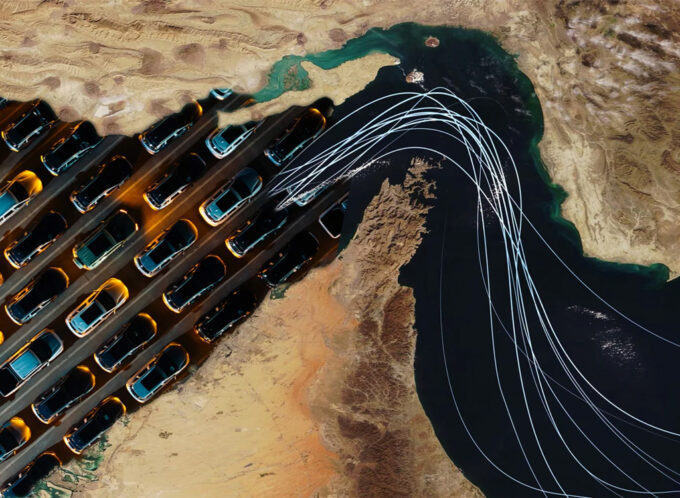
The implication is straightforward: the apparent stability observed in recent months is not organic. It is engineered, and therefore temporary. The damage now being reported across key energy infrastructure in the Gulf – attacks on refineries, disruptions to gas fields such as South Pars, and most critically, the intermittent closure and insecurity of the Strait of Hormuz – signals that elevated energy prices are not a short-term spike but a medium-term reality. Even if hostilities were to cease immediately, the restoration of damaged infrastructure, the recalibration of supply chains, and the rebuilding of confidence in transit routes will take years. If the conflict escalates further, with additional damage to critical nodes in the energy system, prices will continue to climb.
Consider also the emerging reports of damage to major gas-processing facilities in Qatar. While not fully confirmed, even partial impairment of such infrastructure would have significant implications for global Liquefied Natural Gas (LNG) supply. As highlighted in recent technical commentary, the restoration of complex energy machinery is not a matter of weeks or months, it is a multi-year engineering process. For countries like Sri Lanka, heavily dependent on imported energy, this implies sustained exposure to elevated prices with no immediate buffer.
Sri Lanka enters this environment dangerously unprepared. Decades of policy failure have left the country without resilience: no meaningful expansion of utility-scale solar, limited progress in wind or biomass, underutilised hydropower potential, and no serious reform of the Ceylon Electricity Board (CEB) or the Ceylon Petroleum Corporation (CPC). Cost-reflective pricing, in such a context, simply transmits global shocks directly onto households, particularly lower-income groups, without any mitigating framework.
Even legacy assets remain underdeveloped. The Trincomalee Oil Tank Farm, with clear potential as a regional storage and logistics hub, remains largely unfit for purpose after more than three decades of neglect across successive administrations.
On the demand side, the Government’s response has been incomplete. The introduction of the fuel QR system, though delayed, was ultimately the correct move. However, weeks into implementation, there is still no clearly articulated prioritisation framework. In any credible contingency plan, sectors such as agriculture, logistics, healthcare, and other essential services must be explicitly protected. The absence of such prioritisation reflects a failure to internalise the scale and nature of the risk.
This is evident in fuel queues across Colombo, where high-consumption luxury vehicles, such as Bentleys, are queued alongside middle-income commuters and three-wheelers. The issue is not merely one of inequality; it points to a lack of functional prioritisation. A vehicle with high fuel consumption and low essential economic utility is treated no differently from one transporting an essential worker or supporting critical supply chains. This is a policy design failure, not just a social contrast.
The waiting game
This complacency is further reflected in macroeconomic commentary. Following the devastation of Cyclone Ditwah, the Central Bank Governor publicly stated that there would be no impact on debt sustainability. This position is difficult to reconcile with current realities. A sustained oil price shock, combined with supply disruptions and global trade uncertainty, will inevitably affect Sri Lanka’s balance of payments, growth trajectory, and fiscal position.
The transmission channels are clear. Sri Lanka’s fuel import bill already accounts for roughly a quarter of total imports. A sustained increase in global prices will widen the trade deficit, exert pressure on the exchange rate, and compress growth. Lower growth reduces revenue. Higher import costs increase financing needs. Rising yields increase refinancing costs. In such a scenario, previously binding constraints, such as the so-called ‘debt cliff,’ become secondary to immediate liquidity pressures.
At the same time, the Government faces a difficult domestic trade-off. One option is to remain on the current path: pass through higher costs via fuel and electricity price increases, maintain macro-indicator targets, and preserve programme credibility, at the cost of living standards and continued underinvestment in health, education, and social protection. This approach, while defensible from a narrow stability perspective, risks deepening economic and social strain and inevitably, political upheaval.
The alternative is more complex, but potentially more durable. It requires a fundamental reassessment of the current economic framework, not to delay reform but to reorient it. This would mean shifting focus from an overemphasis on fiscal anchors towards measurable external sector development: increasing foreign exchange inflows through manufacturing and high-value exports, attracting targeted Foreign Direct Investment (FDI) into tradable sectors, and exploring IMF-consistent mechanisms to support sector-specific investment and support.
It would also require a more ambitious fiscal strategy. Sri Lanka must move towards a higher tax-to-GDP ratio while fundamentally rebalancing the burden towards higher-income earners, rent-seeking sectors, and corporates benefiting from excessive tax concessions. This must be accompanied by deep institutional reform, particularly within the Inland Revenue Department and Customs, drawing on international examples where digitisation, enforcement, and formalisation have significantly expanded the tax base: see Mexico and Georgia.
Already, the early signals are concerning. Fuel prices have risen sharply, electricity tariff increases are imminent, and broader cost pressures are building across the economy. As growth slows, revenue will come under pressure, feeding back into higher borrowing costs and tighter financing conditions. In such a scenario, Sri Lanka risks returning to the very conditions that precipitated its crisis: a balance-of-payments-driven liquidity shock.
This is precisely why many observers were surprised that the NPP-JVP Government did not pursue one of its own stated priorities: the introduction of a revised debt sustainability framework as the basis for engagement with the IMF. Again, this is not a call for delay or reversal, but for recalibration, using the IMF framework itself to shift towards a more development-oriented trajectory.
The IMF has previously described Sri Lanka’s path to debt sustainability as being on a ‘knife edge’. That is another way of saying the margin for error is extremely narrow. External shocks, such as those now unfolding, can quickly invalidate baseline assumptions. After multiple such shocks, the case for early, proactive engagement with the IMF and bilateral creditors becomes stronger.
This is not without risk. Any signal of renegotiation can affect bond markets and intensify rollover pressures. But waiting too long carries its own danger. In a global environment where multiple countries may soon face similar debt stress, there is a strategic advantage in moving early rather than being forced into reactive negotiations.
Ultimately, this moment demands clarity. The weaknesses in the original design of the IMF programme, criticisms that the NPP-JVP itself previously articulated, have not disappeared. If anything, they have been exposed more clearly by unfolding global conditions. The question now is whether the Government is willing to confront those realities, or whether it will continue on a path that leaves Sri Lanka exposed to the next, and perhaps more severe, external shock and paves the way for reactionary political forces to further reverse the fragile reform process.
(The writer is a political commentator, media presenter, and foreign affairs analyst. He serves as Adviser on Political Economy to the Leader of the Opposition and is a member of the Working Committee of the Samagi Jana Balawegaya [SJB]. A former banker, he spent 11 years in the industry in Colombo and Dubai, including nine years in corporate finance, working with some of Sri Lanka’s largest corporates on project finance, trade facilities, and working capital. He holds a Master’s in International Relations from the University of Colombo and a Bachelor’s in Accounting and Finance from the University of Kent [UK]. He can be contacted via email: [email protected] and X: @kusumw)
Disclaimer: The views and opinions expressed in this article are those of the writer and do not necessarily reflect the official position of this publication.










Leave a comment