
By Rohan Samarajiva
The President floated the idea of no new construction above 5,000 feet elevation and talked of moving out people who currently live there. The Minister representing the Kandy District, K.D. Lalkantha, mused about shifting the entire city of Kandy (which is well below 5,000 feet) to Ampara or Polonnaruwa.
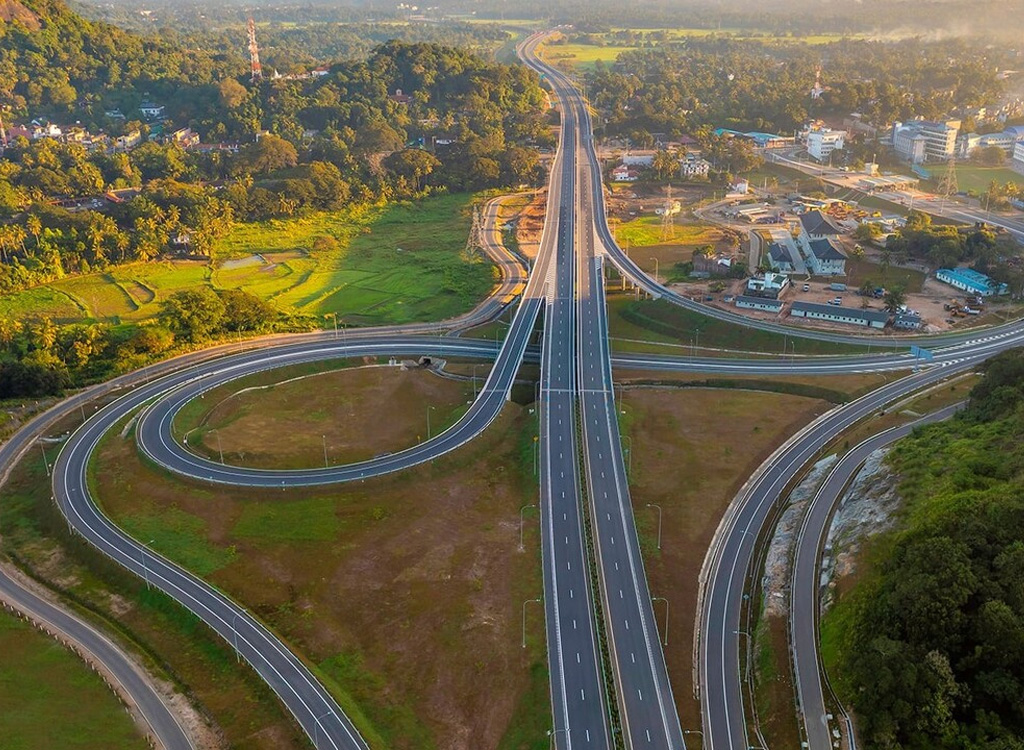
Yet, the Road Development Authority website has a tender notice for a four-lane expressway from Pothuhera to Galagedara, using Rs. 20 billion in taxpayer money allocated in the 2026 Budget. On 6 January 2026, the Parliamentary Consultative Committee was informed that “approximately 287 road sections under the Road Development Authority, covering about 1,481 kilometres, have been damaged, with estimated reconstruction costs of around Rs. 86 billion.” The Committee was also informed that the damage reported by the Railway Department amounted to approximately Rs. 300 billion.
Does the government not perceive the dissonance? Does this mean that Kandy and the areas above 5,000 feet are no longer slated for relocation? Where will the money for new expressways and road repairs and railway reconstruction come from? And why is the government spending scarce resources to haul more vehicles into the central region that has been designated as environmentally fragile in two National Physical Plans?
Expressways into fragile areas
It is surprising that politicians whose worldview includes an affection for planning are ignoring the National Physical Policy and Plan 2050 (NPPP 2050) developed through broad consultative procedures and approved by a council headed by the president in 2019. It identifies a central environmental fragile area that is “highly vulnerable to landslides and play a crucial role in sustaining water resources.”
The designation goes back further to the National Physical Plan 2011-2030 prepared in 2011. The currently identified areas include the totality of the Kandy, Nuwara Eliya and Kegalla districts and listed DS divisions in the Matale, Ratnapura, Monaragala, Galle, Matara, Kalutara and Colombo districts.
Physical developments in the fragile area are to be strictly regulated. Necessary improvements are to be compliant with urban development plans, declared under the UDA Law of 1978. Many of the young in these areas are to be attracted (not coerced) into moving to the economic development areas identified in the plan, particularly the diagonal corridor between Colombo and Trincomalee. The Department of National Planning objected in writing to plans to build the now tendered Galagedara extension and the proposed Ruwanpura Expressway.
Expressways reduce the friction of travel. After the E01 was built, Galle and Matara are easier to get to. Trips that would not have been taken in the old days are now taken without a second thought. Will this not happen because of the Galagedara extension?
Money
Ditwah requires balancing debt sustainability and disaster response. The massive infrastructure damage must be repaired quickly if the economy is not to stall. The approved supplementary estimate included LKR 250 billion for infrastructure restoration. The World Bank/GFDRR supported Global Rapid Post-Disaster Damage Estimation shows that this sum will not be enough to build back better; for example, to not just rebuild roads but to also support the slopes to prevent repetition of landslides and road damage.
The supplementary estimate was for new money. But mention was made of reallocation. The NPPP 2050 provides an evidence-based rationale consistent with the spirit of the President’s stated wish to safeguard the central environmental fragile area.
This is the time to suspend, if not stop, the construction of expressways that will harm the central region. The money should be reallocated.
Does Rs 300 billion plus for railways make sense?
The NPPP 2050 is silent about the upcountry line, which suffered the most damage. The 2026 budget allocateed Rs. 35.5 billion in capital expenditures for Sri Lanka Railways. Except for the Kandy-Kadugannawa line for which Rs 100 million has been allocated, the budgeted developments are elsewhere. But Ditwah changed the entire railway sector.
Even before the storm, the Uva Line (Peradeniya-Badulla) did not meet international safety standards. In some stretches, the posted speed limits were around 15 kmph. Service had to be suspended because of an earth slip in November, before the cyclone. This is perhaps the most expensive track to maintain. The repairs that have now started will eat up a lot of money without addressing core problems such as slope remediation and track reinforcement. To build back better to a level where uninterrupted and safe service could be provided will require significant capital expenditures.
It makes no sense to commit public funds to upgrade a railway service where the more money the government invests the greater are the losses Treasury must cover. When the southern line was extended to Beliatta, the losses went up. The same happened when the northern line beyond Omanthai was reconstructed.
In the 2026 budget, the amount allocated for recurrent costs, including salaries, is about the same (Rs. 34.6 billion) as the allocation for capital expenditures. Even assuming the bulk of the infrastructure allocation from the supplementary estimate is given to railways it will not come anywhere near the Rs 300 billion reported to Parliament (these numbers always go up).
This does not mean that the Uva Line should be abandoned. It should be developed as a tourist attraction under a public-private partnership. Luxury train tourism, including on-train sleeping arrangements, is growing all over the world. Carefully constructed and maintained rail tracks that follow contour lines are more appropriate for the central environmental fragile area than expressways and multi-lane highways. Slow travel that allows enjoyment of the fragile environment would permit economic value to be realized with minimal harm to the terrain.
(The writer is the Chair of LIRNEasia and Sarvodaya Fusion. Samarajiva can be contacted on Mobile/WhatsApp: +94777352361, X: @samarajiva and www.lirneasia.net)
Disclaimer: The views and opinions expressed in this column are those of the author, and do not necessarily reflect those of this publication.










Leave a comment