
By Vox Civis
Sri Lanka’s recent political history has been shaped as much by warning as by hope. In the run-up to the last presidential and general elections, one of the central arguments advanced by those opposed to the National People’s Power (NPP) was blunt in its simplicity: an economy that had only just clawed its way back from the abyss of bankruptcy was too fragile to tolerate experimentation or to be handed over to those lacking experience. There was, they insisted, no margin for error. Even a minor misstep could send the country spiraling back into crisis.
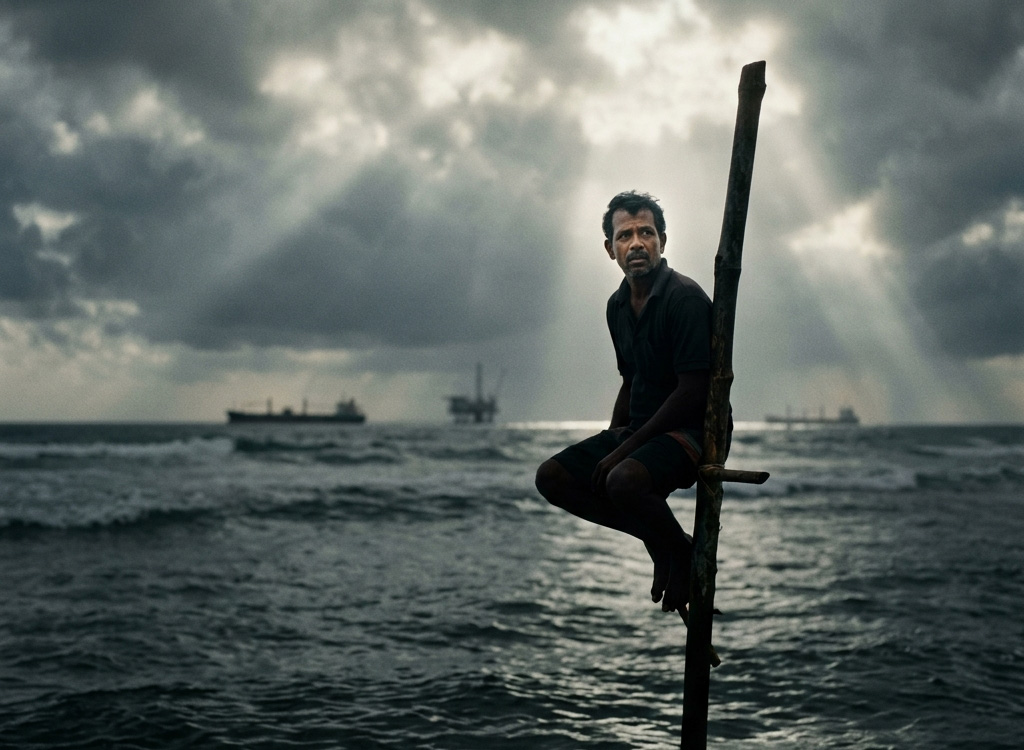
At the time, such warnings were delivered against the backdrop of a relatively stable global environment, one not yet convulsed by war, energy shocks, and geopolitical fragmentation. Today, one and a half years into NPP governance, that context has changed dramatically. The NPP government now finds itself navigating not a calm sea, but the most serious global crisis in decades.
For a political party that is having its first shot at governance, this must surely qualify as the ultimate stress test, not merely of policy, but of competence, adaptability, and strategic vision – all of which are the critical need of the hour. The NPP, which was routinely derided as politically inexperienced, is now confronted with a crisis of such magnitude that failure is not even an option. The consequences of mismanagement are no longer theoretical and given the lingering memories of 2022, they are painfully familiar.
Sri Lanka has lived through challenging periods before – insurgency and shortages in the 70s, ethnic and insurgent wars in the 80s and 90s, a tsunami in 2004, terror attacks in 2019, Covid in 2020, the economic crisis of 2022, and Cyclone Ditwah which remains too recent, too raw, to be dismissed as distant history. Avoiding a return to 2022 is not only an economic imperative but a political necessity. Should the government falter, it will not merely face policy criticism, it will hand its opponents the most powerful refrain in politics: “we told you so.”
Measure of continuity
To its credit, the government, though largely groping its way in the dark has, thus far, demonstrated a degree of restraint that few anticipated. Despite its vehement criticism of the economic framework it inherited, it has largely refrained from dismantling it. The decision not to radically alter macroeconomic policy particularly in relation to fiscal consolidation and external engagement, has provided a measure of continuity. That continuity has, in turn, delivered stability, however modest. Growth has returned, inflation has been contained, and reserves have improved, though marginally.
These are not trivial achievements for a country that was, not long ago, bankrupt. But, if the NPP in particular and the people in general were to assume that the worst was now behind, then we are all in for quite the surprise. By all indications, what lies ahead in an increasingly chaotic world is what could define the nation and its much-proclaimed sense of ‘resilience,’ that has held the nation in good stead in the past.
Yet stability must not be mistaken for resilience. The International Monetary Fund’s (IMF) recent assessment offers a useful, if sobering, perspective. While acknowledging Sri Lanka’s progress; growth reaching approximately five percent in 2025, inflation stabilizing near 1.6 percent, and reserves showing improvement, the IMF has also issued a clear warning. The escalating crisis in the Middle East represents a significant external risk, and Sri Lanka, it notes, is “significantly exposed” to this risk. This is the critical distinction policymakers must internalize: the current stability is a cushion, not a shield. It can absorb minor shocks, but it will not withstand a sustained external assault.
The government’s conduct in recent weeks suggests that it is acutely aware of this vulnerability, even if it has not always communicated it effectively. In Sri Lanka, there is an almost instinctive public reaction when the President addresses Parliament with unusual frequency: a sense that something is not quite right. More often than not, that instinct has proven correct. The President’s recent address was no exception. Though that lengthy address in parliament last Friday (20) was framed as a comprehensive update, it served, perhaps unintentionally, as confirmation of mounting concerns over the way forward and the rapidly dwindling number of options left, to stay the course.
Emerging energy crisis
At the heart of these concerns lies an emerging energy crisis. Fuel shipments are becoming increasingly difficult to secure, with the next arrivals for almost all fuel categories delayed until mid-next month – that too just one shipment for each category of fuel as per the President’s update. Coal supplies which are essential for maintaining uninterrupted power generation via the Norochchalai plant are similarly uncertain. These are not abstract risks as made out to be; they are immediate, tangible threats to economic and social stability.
It would be convenient and politically expedient, to attribute these challenges entirely to the Middle Eastern crisis. Indeed, the government has already moved to bypass standard procurement procedures for oil, LPG, and coal, citing the extraordinary circumstances. However, such an explanation is, at best, mischievous. The coal and LPG shortages did not originate with the current geopolitical upheaval; they had surfaced well before tensions escalated in late February. Earlier assurances from government ministers that procurement processes were transparent, that supplies had been secured, and there was nothing to worry is in stark contrast to the sudden resort to emergency tenders.
The situation surrounding coal procurement amply illustrates the problem. The Lanka Coal Company, the sole entity responsible for supplying the Norochcholai power plant, issued a call for new shipment proposals last week only to withdraw it shortly thereafter upon realizing that unloading capacity constraints made new deliveries unfeasible. This sequence of actions raises unavoidable questions. If shipments were indeed “on track,” as previously claimed, why the need for emergency measures? If the system was functioning as intended, why the sudden deviation from established procedures?
Such inconsistencies have inevitably fueled allegations of incompetence. Whether those accusations are entirely fair is open to debate and to be seen. What is less debatable is the perception they create. In times of crisis, perception can be as damaging as reality. A government that appears uncertain, reactive, or disorganized risks undermining public confidence precisely when it most needs to sustain it.
The need for action
Compounding this perception is a governance style that seems increasingly reliant on committees and consultations. The President has convened meeting after meeting, engaging officials and ministers in an effort to diagnose and address the crisis. While such engagement is necessary, it cannot substitute for decisive action. Committees may generate reports, but they do not, in themselves, resolve crises. The danger lies in allowing process to become a proxy for progress.
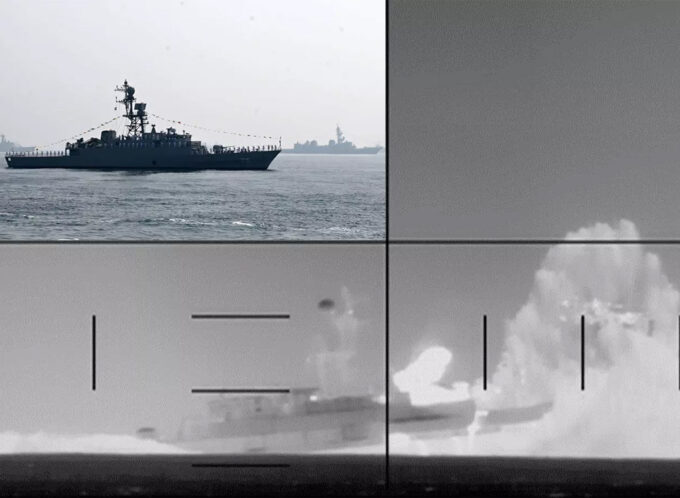
All of this is unfolding against the backdrop of a global conflict whose trajectory remains deeply uncertain. The war involving Iran has already inflicted significant damage on critical oil and gas infrastructure. Even under optimistic scenarios, repairs will take months if not years. Under more pessimistic projections, the conflict could drag on, with profound implications for global energy markets. There is also the ever-present risk of escalation into a broader confrontation, drawing in additional powers and further destabilizing the international system.
For all intents and purposes, the yet expanding Middle East conflict is no longer merely a regional conflict; it is increasingly a strategic contest with global implications that will likely have a profound impact on nations like Sri Lanka. The traditional dominance of Western powers is being challenged, while alternative centers of influence – most notably China and Russia – are asserting themselves more forcefully. The conflict is unfolding not only on the battlefield but also in the financial domain, where the primacy of the US dollar is being openly contested.
For smaller economies like Sri Lanka, these shifts are profound and will reshape the environment in which economic and diplomatic engagement as well as decisions must be made. In such a context, the regime will also need to revisit its ‘non-aligned’ posture for at the end of this conflict, whenever that may be, there will be fewer left who will be in a position to lend a helping hand. Therefore, it is always helpful to be on the right side.
Cost of ‘neutrality’
In this context, Sri Lanka’s foreign policy posture assumes critical importance. The government has sought to emphasize neutrality, declining requests from both Iran and the United States in recent weeks to use ports and airports. While this stance is understandable, neutrality in a polarized world is rarely straightforward. It requires not only careful calibration but also transparency. The existence of undisclosed defense related agreements signed, sealed and delivered with multiple partners by the current regime, raises legitimate questions about the consistency of the country’s strategic positioning.
The complexities are further amplified by Sri Lanka’s reliance on regional partners, particularly India. The assumption that imports routed through India insulate Sri Lanka from disruptions in the Middle East is fundamentally flawed. India itself is heavily dependent on Middle Eastern energy supplies and is already experiencing significant strain. Reports of Indian oil tankers being delayed in the Strait of Hormuz underscore the interconnected nature of the crisis.
At the same time there are reports of Indian shipments making it through the volatile Strait of Hormuz without incident. However, if India were to face shortages, it will inevitably prioritize its own needs. The expectation that it can simultaneously meet the demands of neighboring countries is, at best, optimistic and all the more reason why the government needs to keep its options open.
This reality exposes the deeper structural vulnerability of Sri Lanka’s limited diversification of energy partnerships. Opportunities to strengthen ties with alternative blocs, including emerging economic groupings, have either been underutilized or actively resisted in the past. The consequences of those decisions are now becoming evident. In an increasingly multipolar world, economic survival depends on the ability to navigate multiple relationships simultaneously while not stepping on any toes. India appears to be leading the way in that aspect, maintaining strategic relations with all of the protagonists in the current conflict in order to satisfy its own interests that include securing critical energy supplies.
Back in Colombo, the contradictions within the government’s own messaging have not helped matters. Conflicting statements from senior ministers regarding fuel availability – ranging from assurances of sufficiency until August to warnings of shortages within weeks – have only deepened public uncertainty. Such inconsistencies needless to say, erode credibility and complicate crisis management which the NPP regime will come to learn sooner than later.
Immediate challenge
Yet the challenge facing Sri Lanka is not solely one of immediate crisis response, it is also one of conceptual understanding. There remains, within sections of the political leadership, a narrow interpretation of national security; one that equates it primarily with defence capability. In reality, modern national security is multidimensional. It encompasses energy security, food security, financial stability, healthcare resilience, and the ability to sustain essential services under stress. The COVID-19 pandemic provided a stark demonstration of this reality where Sri Lanka did well in containing the pandemic but failed in the monetary department. It is imperative that those lessons are not forgotten.
In the recent past it has been official government policy that whenever local production is unable to meet demand, the answer has been importation. From staples such as rice and sugar, to fruits and vegetables, to medicines, pharmaceuticals and other items, the only solution on the table has been importation. There has been little or no planning and incentives to boost local production of these items for which the infrastructure and capacity already exist. This crisis should at least now result in an urgent and sustained recalibration of strategy, that complements multi-dimensional national security demanded by the current global reality.
Crises, however, are not only threats; they are also opportunities. The current global upheaval is reshaping trade routes, supply chains, and investment patterns. For countries that can adapt quickly, there are gains to be made. Sri Lanka’s geographic position, long cited as a strategic advantage, could potentially be leveraged in new ways. The disruption of traditional Middle Eastern aviation hubs has created an opening for alternative transit points. The reported interest of major airlines in utilising Mattala as a temporary hub is a case in point. If managed effectively, this could provide a much-needed boost to the economy and help offset losses in tourism revenue.
Similarly, the concept of Sri Lanka as an energy storage and logistics hub, long discussed but rarely realized, has gained renewed relevance. The development of infrastructure such as the Trincomalee oil tank farm and a similar facility in Hambantota could play a pivotal role in this regard. The Colombo Port City that has been struggling to attract investment, could easily be offered as an alternate relocation hub for financial services based in the Middle East. However, realizing these opportunities requires more than favorable geography. It demands vision, coordination, and a willingness to make difficult decisions.
Need for strategic clarity
At present, it is not clear whether the government possesses the necessary strategic clarity. There are signs of initiative, but they are often reactive rather than proactive. The risk is that opportunities presented by the crisis will be recognized too late or pursued too hesitantly.
Ultimately, Sri Lanka stands at a critical juncture. The external environment is deteriorating, and the margin for error is narrowing. The government’s initial emphasis on stability has bought time, but time alone will not suffice. What is required now is a shift from cautious management to strategic leadership.
This will involve difficult choices; on procurement, on diplomacy, on economic priorities. It will require greater transparency, more coherent communication, and a willingness to confront uncomfortable realities. Above all, it will demand an ability to see beyond the immediate crisis and to position the country for the world that is emerging.
That world will be more uncertain, more competitive, and less forgiving. For Sri Lanka, the challenge is not merely to survive it, but to find a place within it. Whether the current leadership is capable of meeting that challenge remains an open question. What is certain is that the cost of failure will be measured not in political terms, but in the lives of 22 million Sri Lankans.
The warning issued during the last election cycle, that there was no room for experimentation, has therefore acquired new resonance. The experiment is now underway, not by choice but by circumstance. Its outcome will determine not only the fate of a government, but the trajectory of a nation still dependent on the IMF for economic support and struggling to secure its future.
Disclaimer: The views and opinions expressed in this article are those of the writer and do not necessarily reflect the official position of this publication.




Leave a comment