
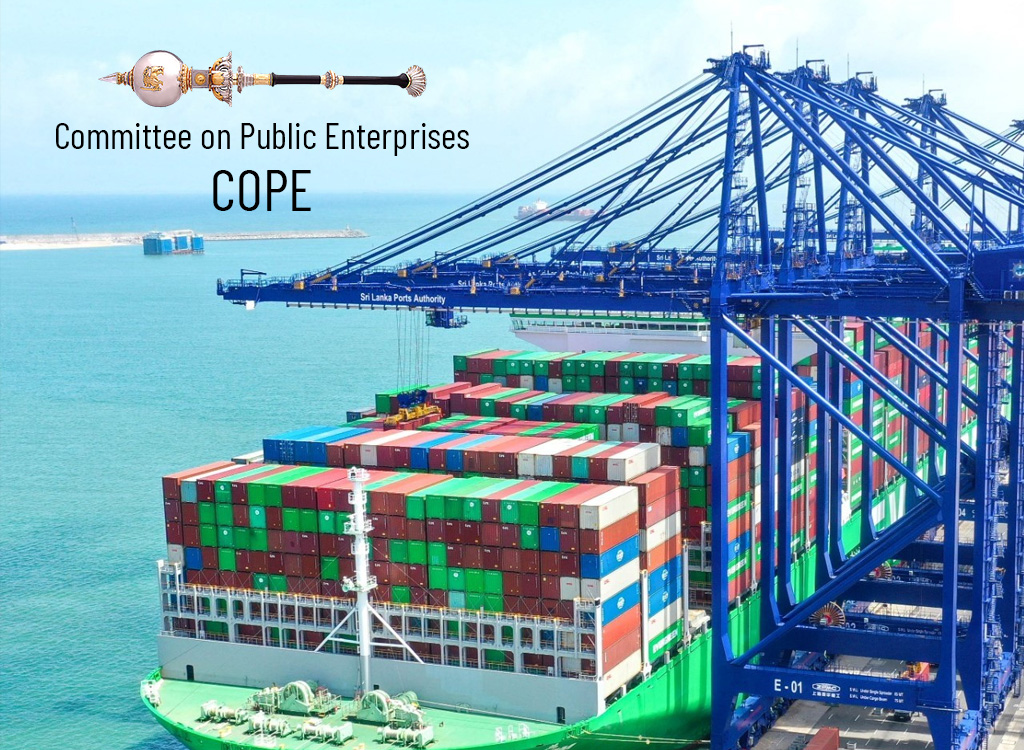
Sri Lanka’s Committee on Public Enterprises (COPE) has raised alarm over prolonged delays and escalating costs in the construction of the East Container Terminal (ECT) at Colombo Port, warning that the project’s slippage has triggered compensation claims running into billions of rupees.
The parliamentary oversight committee, chaired by MP Nishantha Samaraweera, reconvened on November 13 to review Auditor General’s reports for 2022 and 2023 and assess the performance of the Sri Lanka Ports Authority (SLPA), after several issues remained unresolved at its previous sitting in September.
COPE noted that the Cabinet approved a Rs. 40.27 billion contract for the ECT in November 2021, with agreements signed the following month, and an initial completion target of January 03, 2025.
However, the project is now delayed by 548 days, pushing the expected completion to July 2026.
The contractor has since lodged compensation claims exceeding Rs. 4.2 billion due to the delays, prompting CoPE to direct SLPA to submit a full report detailing the causes and financial implications.
SLPA officials told the committee that work had accelerated and expressed confidence the revised timeline would be met.
Lawmakers also scrutinised the SLPA’s expenditure and governance, highlighting that recommendations issued in 2023, including reducing employee food costs, had not been implemented.
SLPA said new measures were now in place, including competitive tendering for catering services.
The committee further examined SLPA’s management of state-owned land, urging legal action in cases where courts have already authorised eviction or recovery.
SLPA said required steps were being pursued.
CPPE members also questioned the reasoning behind renaming the Seeduwa Raddolugama Sports Club as the SLPA Sports Club and hiring players from the club, pressing officials on whether recruitment procedures had been followed.
The discussions underscored persistent concerns over project delays, financial discipline and internal management at the SLPA, with C)PE calling for stronger accountability across the institution.













Leave a comment